


Feeding safety.
Most feeds end with a full, sleepy baby. This page is for the few that don't. Read it once now, so you never have to Google it mid-feed.
Every answer here is checked by an International Board Certified Lactation Consultant, the clinical credential for infant feeding. Where our IBCLC’s guidance differs from a published source, the answer says so.
Step 1
Full, fussy, or in trouble?
Full, and fine
- Slows down or dozes off
- Turns head away
- Closes mouth
- Relaxed hands
Stop, or pause. Still hungry? Offer more.
Needs a break
- Fussing
- Milk spilling from the mouth
- Sputtering
- Arching their back
Pause and let them settle. Still a struggle? Change position, or try a slower flow.
An emergency
- Can't breathe, gasping or wheezing
- Can't cry or make a sound
- Turning blue
- Grabbing at the throat, looking panicked
- Going limp
Call 911.
Sources: CDC; Nemours KidsHealth Guidance from our IBCLC
Step 2: Coughing or choking
If they can cough, let them.
Coughing or sputtering, but still able to cry or make noise? The milk went down the wrong way and the cough reflex is doing its job. Stop the feed, sit your baby upright, let them cough it out, and wait a minute before you try again.
Get it checked. Choking during feeds isn't expected.
If it keeps happening, see your pediatrician or an IBCLC to find out why.
Step 3
Who to call, and when.
Something feels off but not urgent? Call your pediatrician. Think your baby is in danger? Call 911.
Call 911 if your baby
- can't breathe
- chokes on something you can't clear
- loses consciousness
- has a seizure
Call your pediatrician right away if your baby
- is younger than 3 months and has a temperature of 100.4°F (38°C) or higher
- has fewer than 6 wet diapers a day after the first week, a dry mouth, few tears or a sunken soft spot
- vomits forcefully, or the vomit is green or has blood in it
- has blood in their poop
- refuses to feed, or is unusually sleepy and hard to wake
Call your pediatrician if
- feeds are often a struggle, or take much longer than usual
- your baby often wants much more or much less than expected
- your baby isn't gaining weight, or is losing weight
- spit-up seems to bother them, or they arch and fuss during feeds
- after a formula change, they vomit, have diarrhea or can't settle during feeds
- you're worried about how much they eat or how they're growing
Sources: AAP, Fever: When to Call the Pediatrician; AAP, Signs of Dehydration; AAP, Causes of Vomiting; AAP, When to Call 911; FDA, Infant Formula Information for Parents Wet diapers: guidance from our IBCLC
Step 4: Rules for every feed
Five rules for every bottle.
- Hold the bottle. Always.
- Never prop it, not even for a few minutes. Propping raises the risk of choking, ear infections and tooth decay, and your baby may drink more than they need.
- Semi-upright, never flat.
- Head higher than the tummy. How to hold a bottle
- No bottles in bed.
- Milk pools around teeth, even ones that haven't come through yet. Why
- No microwave.
- It heats unevenly and leaves hot spots. How to warm a bottle
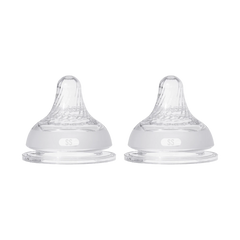
- Check the nipple and the glass.
- Torn nipples and chipped glass go in the bin, before the feed, not after. What to check
The short version.
Feeding safety in 4 lines.
Full or in trouble? Full and fine: stop, or pause. Needs a break: pause and let them settle. An emergency: call 911.
Coughing or choking If they can cough, let them. Choking on feeds often? Get it checked.
Who to call Something feels off but not urgent? Call your pediatrician. Think your baby is in danger? Call 911.
Rules for every feed Every bottle: hold it, keep your baby semi-upright, no bottles in bed, no microwave, check the nipple and the glass.