

First week.
Tiny feeds, lots of them, and a diaper count. The whole week on one page. 3am. Bottle ready. No Google required.
Every answer here is checked by an International Board Certified Lactation Consultant, the clinical credential for infant feeding. Where our IBCLC’s guidance differs from a published source, the answer says so.
First week: 8 things, in order.
About 4 minutes. Read it top to bottom, or tap the one you need. The short version is at the end.
- How muchSmall feeds. Lots of them.
- Hungry or fullCrying is a late sign. Catch the early ones.
- WakingPast 3 hours? Wake them.
- Getting enough?Count the wet diapers.
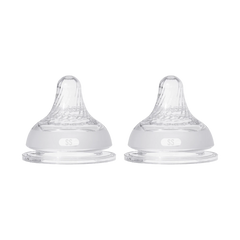
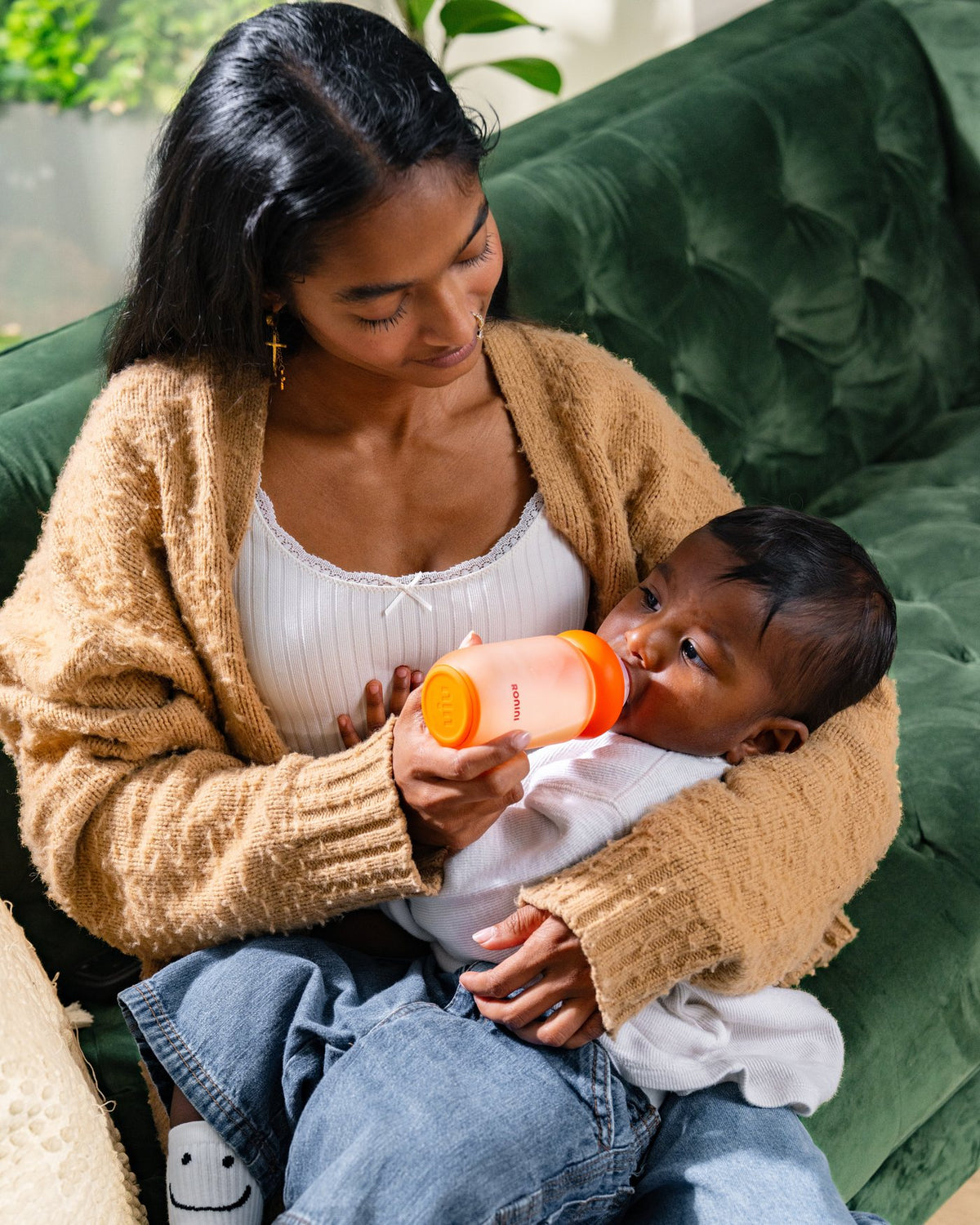
- At the bottleBrush the nipple against their lips or cheek; don’t push it in.
- Two habitsKeep a feeding log.
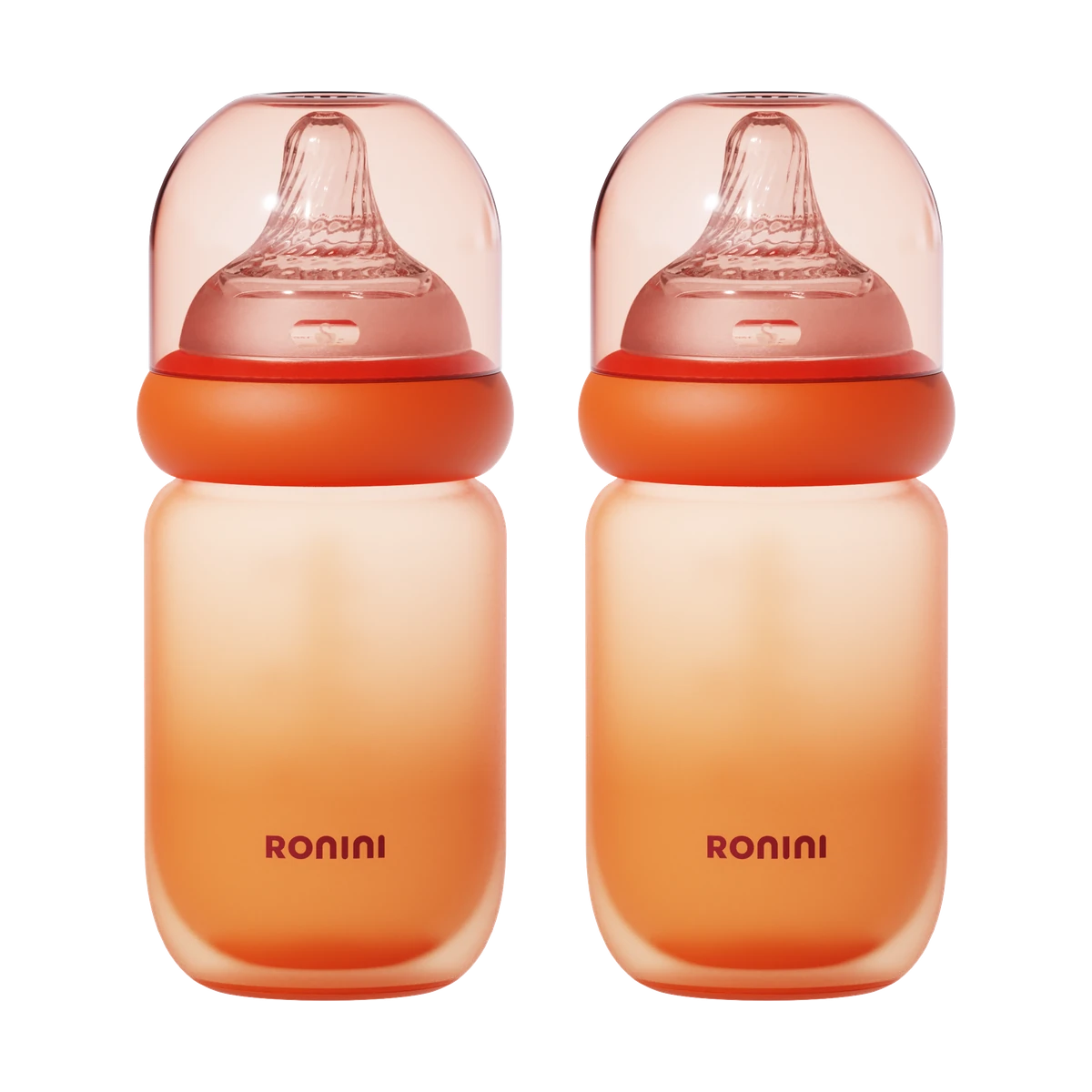
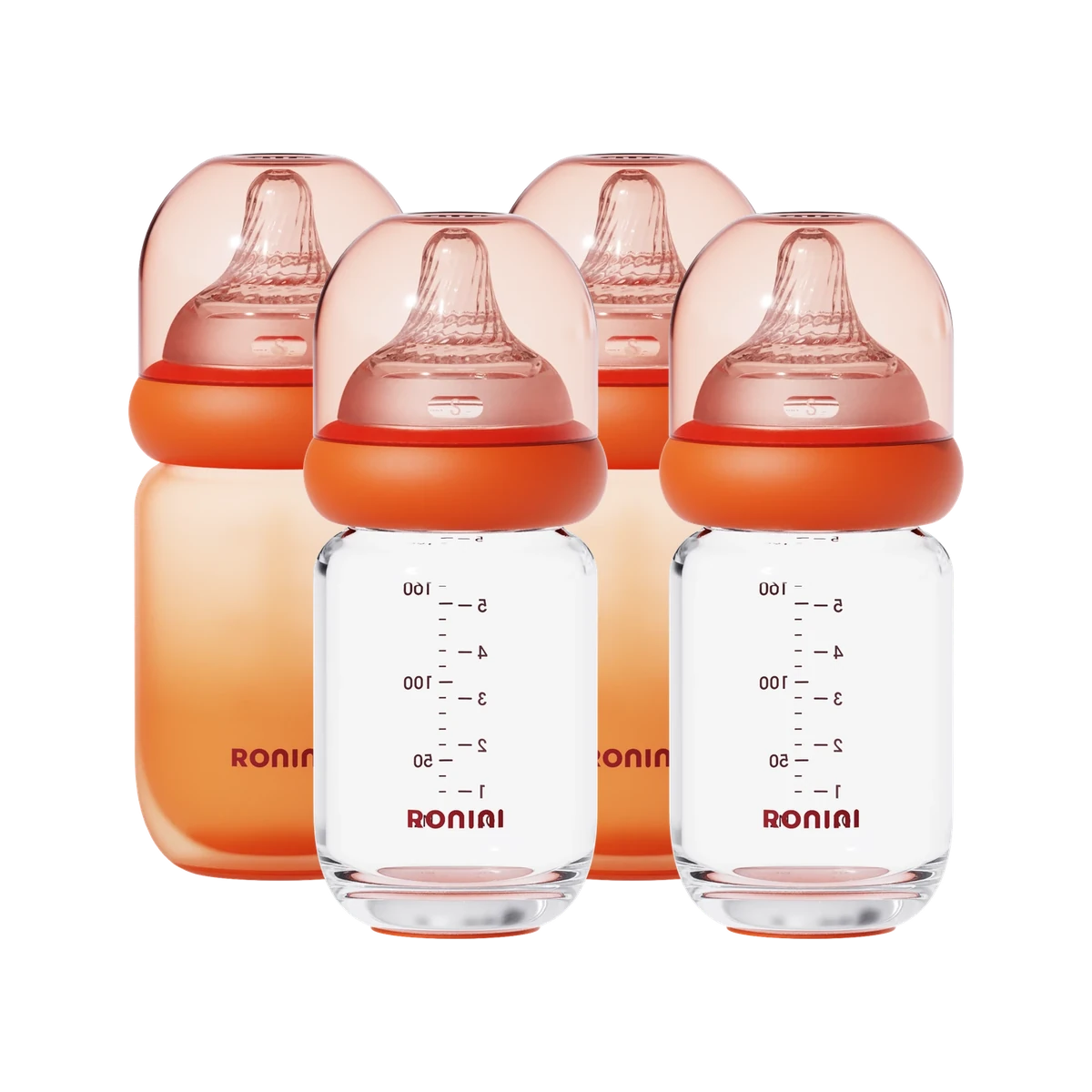
- Decided alreadyAlready decided: a 5 oz bottle, 4 to 6 of them, and distilled water, boiled, for every bottle.
- WaterNo water.
Week one, at a glance
- How much
- 5–15 mla feed on day 1, up to 1–2 oz (30–60 ml) by day 7
- How often
- 8–12feeds a day, about every 2–3 hours. Asleep past 3 hours? Wake them.
- Wet diapers
- 1 per day oldday 3, three diapers. At least 6 a day after week one.
Sources: AAP; Mayo Clinic Day 1 volume, 3 hours, diaper count: guidance from our IBCLC
Step 1: How much
Small feeds. Lots of them.
Feed when your baby shows hunger cues, about 8 to 12 times a day.
- Day 15–15 ml
- Day 71–2 oz
Newborns take about 5–15 ml a feed on day one, rising to about 1–2 oz (30–60 ml) by the end of the week. For a daily total, the AAP uses about 2½ oz of formula per pound of body weight, and no more than about 32 oz in 24 hours. By one month, most babies take 3–4 oz every 3–4 hours.
Sources: AAP (HealthyChildren.org); Mayo Clinic Day 1 volume: guidance from our IBCLC
Step 2: Hungry or full
Crying is a late sign. Catch the early ones.
Hungry
- Hands to the mouth
- Sucking on fists or fingers
- Turning toward the bottle
- Puckering, smacking or licking the lips
- Clenched hands
Full
- Closing the mouth
- Turning the head away
- Relaxed hands
Stop or pause, even with milk left. They don’t have to finish the bottle.
Sources: CDC; Mayo Clinic
Step 3: Waking
Past 3 hours? Wake them.
For the first two weeks, don’t let your baby go more than 3 hours without a feed.
Once your baby is back to birth weight and gaining steadily, you can stop waking them at night and let them wake for feeds on their own. During the day, keep offering a feed every 2 to 3 hours.
Sources: Mayo Clinic; AAP 3 hours: guidance from our IBCLC
Step 4: Getting enough?
Count the wet diapers.
- Day 11
- Day 22
- Day 33
- Day 44
- Day 55
- Day 66
- After week 16+
One wet diaper per day of age this week. At least 6 a day after that.
A newborn may pee as often as every 1 to 3 hours. A pink or brick-red stain in the first week is usually very concentrated urine, not blood. As long as your baby wets at least 4 diapers a day, the AAP says it’s probably nothing to worry about.
Source: AAP (HealthyChildren.org) Diaper count: guidance from our IBCLC
Some loss is expected: usually 7–10% of birth weight, back within about 2 weeks.
Almost all babies are back to birth weight by 3 weeks. If your baby loses more than 10%, or is still under birth weight after that, talk to your pediatrician.
Sources: Nemours KidsHealth; AAP (HealthyChildren.org)
Step 5
At the bottle
Don’t push the nipple in. Brush it against their lips or cheek.
Once partway through, once at the end.
The usual “every 2 to 3 oz” is meant for bigger feeds. It doesn’t fit a feed that’s 1–2 oz in total.
- Over your shoulder, patting the back
- Sitting on your lap, chin supported, patting the back
- Sitting on your lap, rocking gently back and forth
- Face down across your lap, head a little higher than the chest
Source: Nemours KidsHealth
Step 6
Two habits for week one
- Keep a feeding log
- Not for exact numbers. Two tired adults going on memory is how feeds get doubled up or missed. Write down the time and roughly how much. Get the caregiver plan
- Wash every feed. Sanitize once a day.
- Under 2 months, the CDC says sanitize once a day, and wash the basin and bottle brush after every use too. How to sanitize
Step 8
Water
Does my baby need water?
No. Just formula or breast milk.
The AAP explains that extra water upsets the balance of minerals like sodium in a baby’s body, and in serious cases can cause seizures.
Source: AAP (HealthyChildren.org)
The short version.
First week in 8 lines.
How much Feed when your baby shows hunger cues, about 8 to 12 times a day. Feeds are small: about 5–15 ml on day one, 1–2 oz by the end of the week.
Hungry or full Crying is a late sign. Feed at the early ones, like hands to the mouth. Stop or pause at the signs of full, even with milk left.
Waking For the first two weeks, don’t let your baby go more than 3 hours without a feed.
Getting enough? Count wet diapers: one per day of age this week, at least 6 a day after that.
At the bottle Brush the nipple against their lips or cheek; don’t push it in. Burp once partway through and once at the end.
Two habits Keep a feeding log. Wash every feed; sanitize once a day.
Decided already Already decided: a 5 oz bottle, 4 to 6 of them, and distilled water, boiled, for every bottle.
Water No water. Just formula or breast milk.