

Months 3–6.
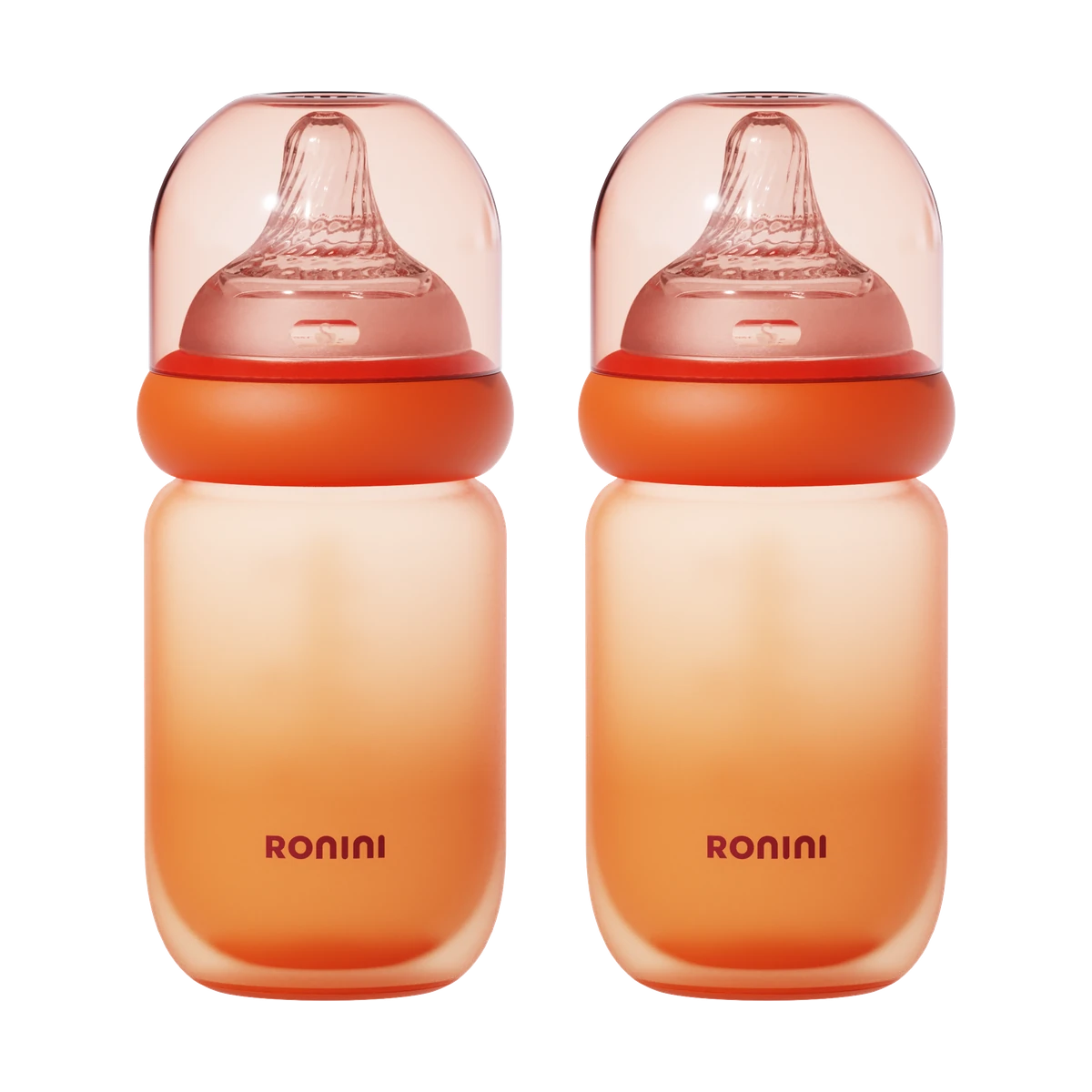
Bigger baby, same-size bottle. This is the stage of distracted feeds, sudden refusals and, for many families, the first days back at work.
Every answer here is checked by an International Board Certified Lactation Consultant, the clinical credential for infant feeding. Where our IBCLC’s guidance differs from a published source, the answer says so.
Months 3–6: 5 things, in order.
About 5 minutes. Read it top to bottom, or tap the one you need. The short version is at the end.
- A bottle
- ≤5 ozfor most babies. Still hungry? Feed more often.
- A day
- ≤32 ozabout 2½ oz per pound of body weight
- Water
- Not yetMilk covers it until 6 months, even in hot weather.
Step 1: How much
Bigger baby. Same-size bottle.
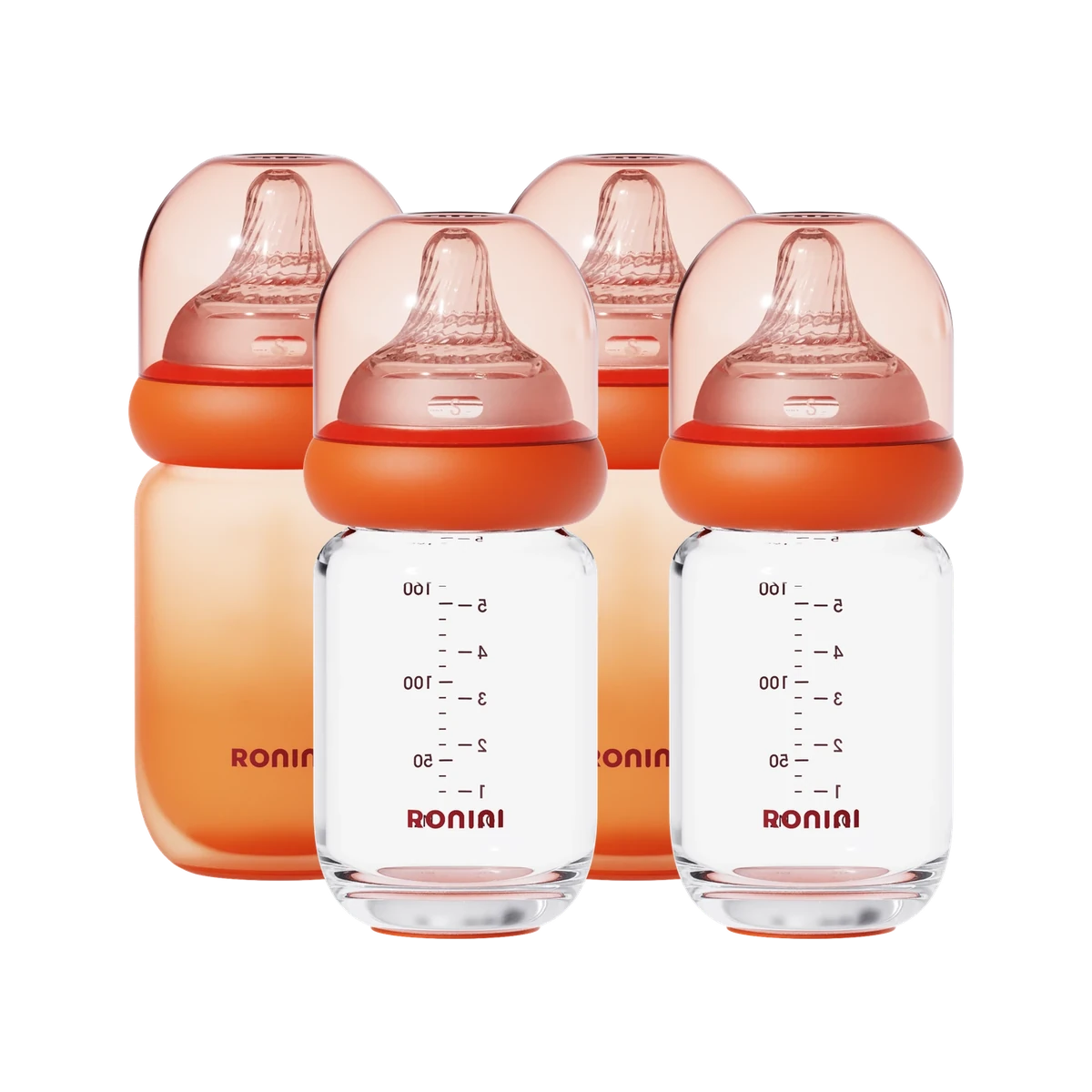
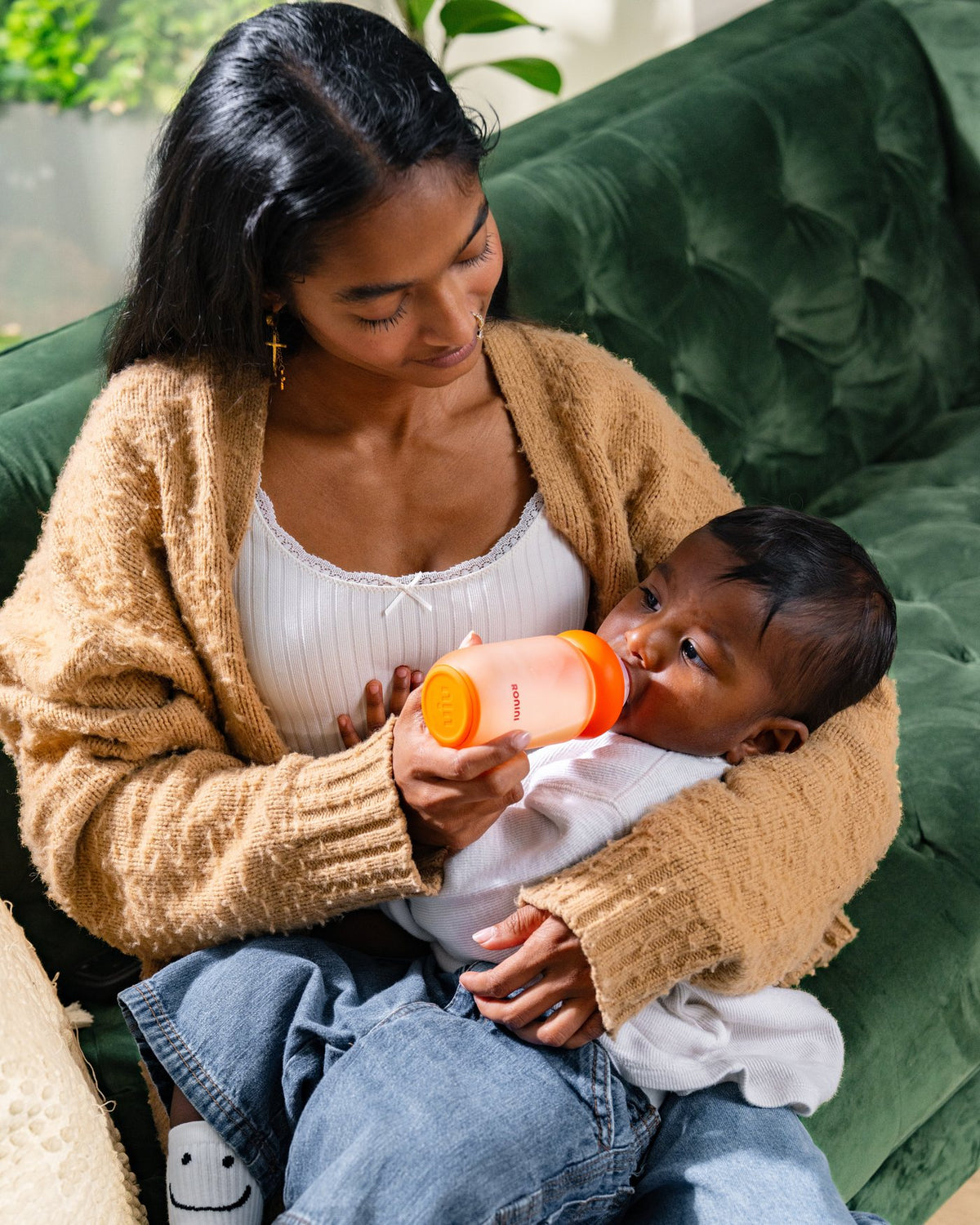
Most babies don’t need more than about 5 oz (150 ml) in one bottle. Still hungry? Offer feeds more often.
The AAP and Nemours describe feeds growing to about 6–8 oz by 6 months. Our IBCLC’s guidance is to keep a bottle at about 5 oz and add feeds, not ounces.
Sources: AAP; Nemours KidsHealth; CDC Guidance from our IBCLC
Yes. Most babies shouldn’t need more than about 32 oz (960 ml) in 24 hours.
The weight guide still applies too: about 2½ oz per pound of body weight per day.
Source: AAP
Could be a growth spurt. 4 months is a common time for one.
Follow the hunger cues and offer more as needed.
Source: Nemours KidsHealth
Step 2: At the bottle
Refusing, distracted, chewing. All normal at this age.
Start with the basics, one at a time.
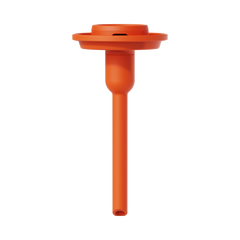
- Is milk flowing?Check the nipple isn’t blocked and the collar isn’t screwed on too tight.
- Good mood, good positionOffer when your baby is calm, comfortable and well supported.
- Try another flowToo fast or too slow can both put a baby off.
- Try another temperatureCold, room temperature or warm.
- Aim for the roof of the mouthPoint the nipple up toward the palate.
- Change the sceneA different time of day, a different room.
Still refusing after all that? Call your pediatrician or a feeding specialist.
Feed somewhere calm: a quiet room, lights down, TV off.
Babies this age are starting to notice everything. Shorter feeds are common now, and your baby may want to eat more often to make up for it. That’s normal and expected.
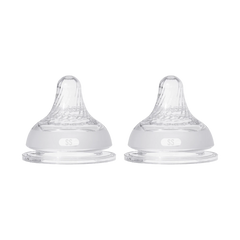
Check the nipple after every feed. Torn or bitten through? Replace it.
Small pieces can break off and become a choking risk. Chewing on the nipple can also mean your baby needs a different flow. The four flows
Source: MedlinePlus Chewing and flow: guidance from our IBCLC
They may start reaching for it around 6 months. Keep holding it anyway.
Holding the bottle yourself is the safer practice.
Source: CDC Guidance from our IBCLC
Step 3: Nights and teeth
No bottles in bed. Even before teeth.
No. It’s about teeth.
Falling asleep with a bottle can cause what dentists call baby bottle tooth decay. That applies even before teeth come through, because they’re already forming under the gums. The rule is simple: no bottles in bed.
Sources: AAP; Nemours KidsHealth; CDC
Some do, some don’t. If your baby wakes hungry, feed them.
Many babies sleep longer stretches by 6 months, but not all. Not sure whether your baby still needs a night feed? Ask your pediatrician.
Step 4: Daycare and work
Labeled, chilled, and someone else’s turn.
Label it, chill it, and tell them how to warm it.
Label each bottle with the date and your baby’s name.Carry breast milk in an insulated cooler with frozen ice packs. It keeps up to 24 hours that way.Ask daycare to warm milk by standing the sealed bottle in warm water. Never the stove or microwave.Leftover breast milk is used within 2 hours after your baby stops feeding.
Usual breast milk times: 4–6 hours at room temperature, 4–6 days in the fridge, about 6 months frozen (up to 12 is OK), 24 hours once thawed. Formula runs on a shorter clock: use prepared formula within 2 hours, and within 1 hour once your baby starts drinking.
Start pumping 2–3 weeks before your first day.
That gives you time to practice and build a small freezer supply. Introduce a bottle by 6 to 8 weeks of age and offer one at least once a day so your baby keeps the skill. Pump whenever your baby gets a bottle, to replace that milk and keep up your supply.
Gradually. Swap one breastfeed a day for a bottle of formula.
Weaning slowly gives your body time to adjust. Going too fast can cause discomfort or inflammation in the breasts. A lactation consultant can help you plan it.
Source: NHS Guidance from our IBCLC
Step 5: Water, cleaning, growth
Still no water. Less sanitizing.
No. Formula or breast milk gives them all the fluid they need, even in hot weather.
Small amounts of water can start once solids do.
Sources: CDC; NHS Guidance from our IBCLC
Not every day, if your baby is healthy and was born full term.
Keep washing everything carefully after each use.
Source: CDC
Yes. Distilled water, boiled, for every bottle, at every age.
The WHO charts, however your baby is fed.
US pediatricians use them for every baby under 2. A formula-fed baby isn’t measured against a different curve.
Source: CDC
The short version.
Months 3–6 in 5 lines.
How much Bigger baby, same-size bottle: most babies don’t need more than about 5 oz in one bottle, or 32 oz a day.
At the bottle Refusing, distracted or chewing is normal now. Feed somewhere calm, and try the basics one at a time.
Nights and teeth No bottles in bed, even before teeth.
Daycare and work For daycare: label it, chill it, and tell them how to warm it. Start pumping 2–3 weeks before your first day.
Water, cleaning, growth Still no water. Less sanitizing: not every day, if your baby is healthy and was born full term.