

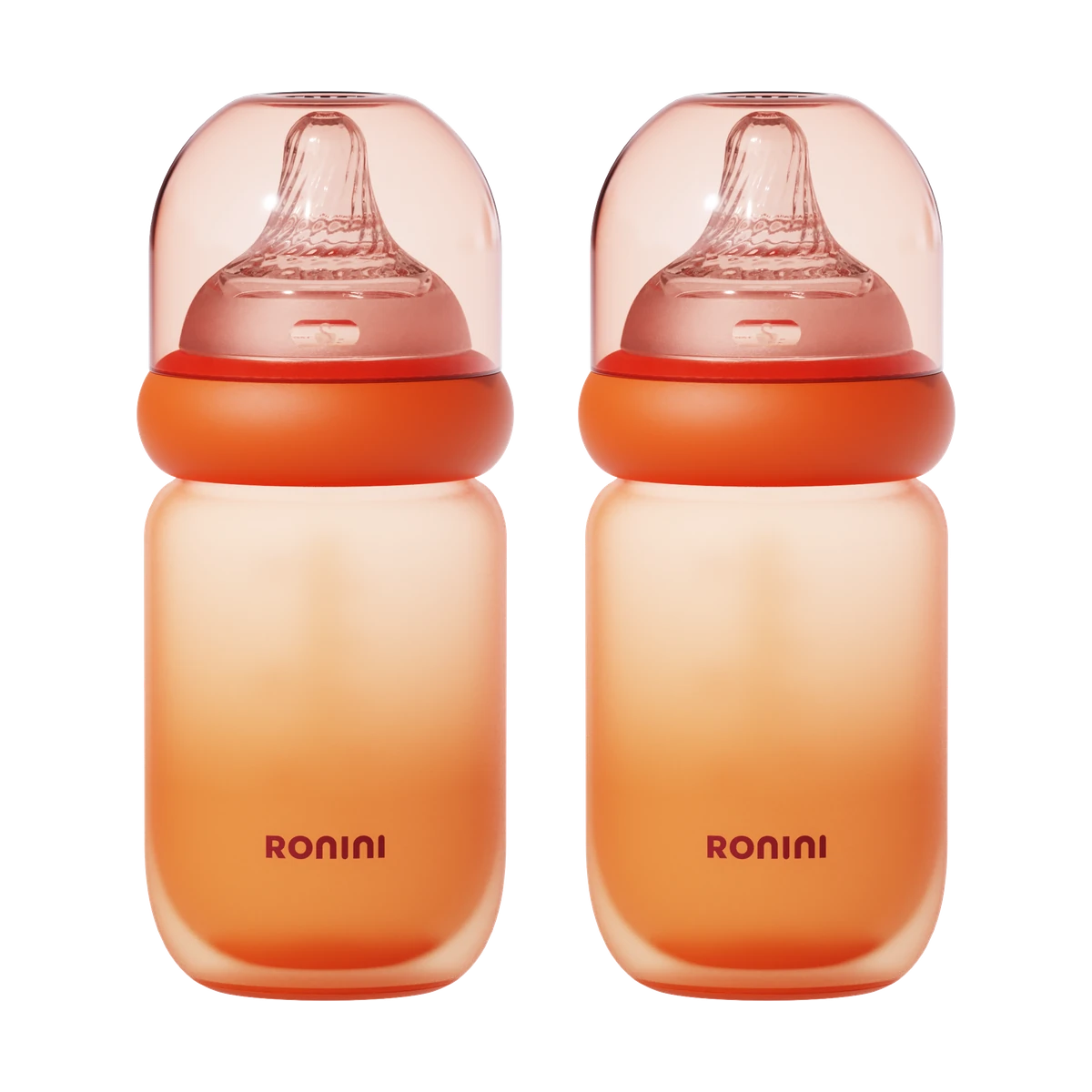
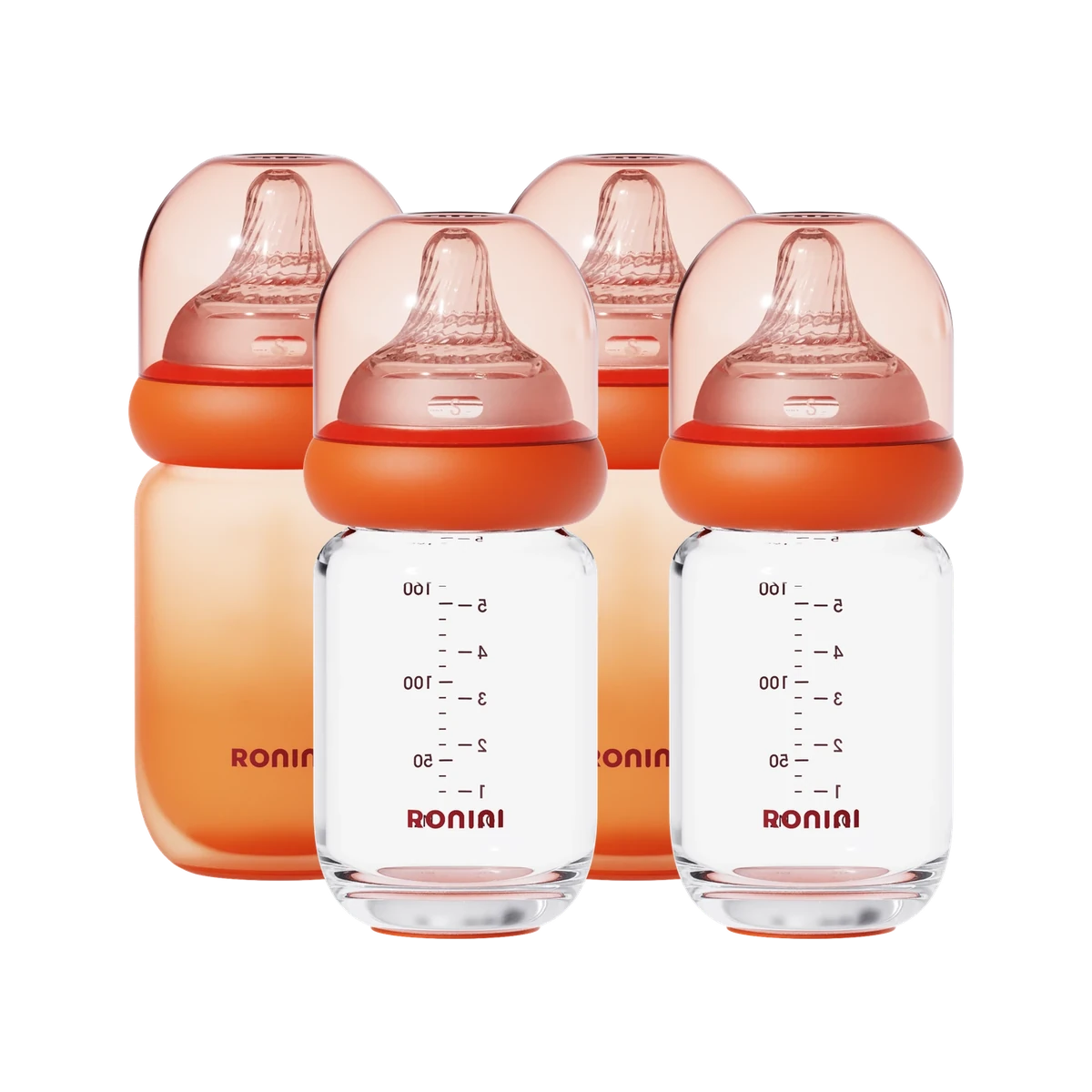
Months 6–9.
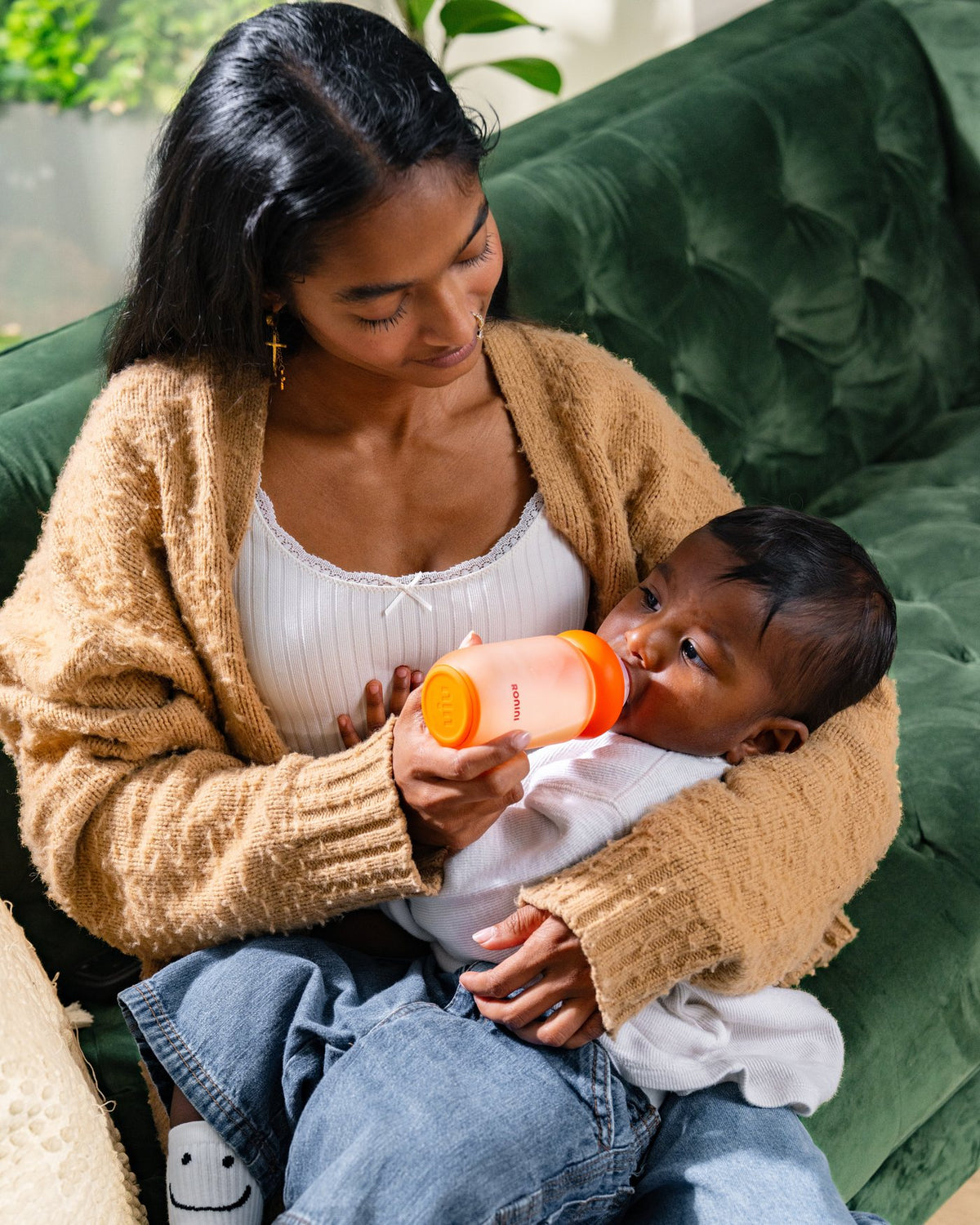
Food arrives. Milk stays the main event. Cups join the table, and the bottle starts its long goodbye.
Every answer here is checked by an International Board Certified Lactation Consultant, the clinical credential for infant feeding. Where our IBCLC’s guidance differs from a published source, the answer says so.
Months 6–9: 5 things, in order.
About 5 minutes. Read it top to bottom, or tap the one you need. The short version is at the end.
- Milk a day
- 24–32 ozFood doesn’t replace it. ≤5 oz a bottle.
- Order
- Milk firstthen solids, until 12 months
- Water
- ≤4 oza day, not every day, from a cup
Step 1: Milk and food
Food is for learning. Milk is still dinner.
- Milk
- Food
- Milk
- Food
- Milk
Start from where you were at 6 months: about 24–32 oz a day.
Solids don’t replace milk. Breast milk or formula stays the main source of nutrition until the first birthday.
Sources: AAP; CDC; NHS 24–32 oz: guidance from our IBCLC
Bottle first, then solids.
Milk is still the main food, so offer it first so your baby doesn’t fill up on solids. The AAP suggests milk first only for the first tries of solids, and the NHS suggests food first. Our IBCLC recommends milk first until 12 months.
Sources: AAP; NHS Guidance from our IBCLC
A rhythm, not a timetable: something to eat or drink every 2–3 hours.
Yes, right up to 12 months.
Solids at this stage are for learning, and for introducing iron and allergens.
Sources: CDC; WHO; AAP Guidance from our IBCLC
Step 2: Water
A few sips. Not a daily drink.
Small sips once solids start. Up to 4 oz (120 ml) a day, and not every day.
Formula and breast milk still give your baby all the water they need. Offer it in an open or straw cup. The AAP and CDC suggest about 4–8 oz a day from 6 months; our IBCLC keeps it lower.
Sources: CDC; AAP; NHS Guidance from our IBCLC
Use filtered water. Skip tap water.
This is about water your baby drinks from a cup. Water for mixing formula is still distilled and boiled, at every age.
Sources: NHS; CDC Guidance from our IBCLC
Step 3: Cups
Open cup or straw. Skip the valve.
- Open cupYes
- Straw cupYes
- Sippy with a valveSkip the valve
Around 6 months, with meals, alongside the bottle.
Babies can practice with an open cup from about 6 months, with your help. The aim is to phase the bottle out slowly, finishing around 12 months.
Sources: AAP; Nemours KidsHealth; NHS; CDC
An open cup or a straw cup.
Sippy cup? Pick one without a valve. Non-spill valves make your baby suck to get anything out, which is just like drinking from a bottle and defeats the point of learning to sip. Treat a sippy cup as a stepping stone, and aim for an open cup by about age 2.
Sources: AAP; NHS; Nemours KidsHealth
Step 4: Bottles and teeth
Milk stays at the table.
No. Keep bottles and cups of milk to feeds and mealtimes.
Sipping on and off all day keeps sugar on the teeth, which leads to decay. Carrying a bottle around can also mean drinking much more than they need.
Sources: MedlinePlus; CDC; AAP
Milk pools around the teeth overnight and causes decay. Breast milk too.
Nemours adds choking and ear infections to the list. If your child needs something to settle with at bedtime, water is the only thing that should go in that bottle.
Sources: AAP; CDC; Nemours KidsHealth; MedlinePlus
The bottle doesn’t. Tooth care starts.
Step 5: Not yet
Cow’s milk, juice, cereal in the bottle: not yet.
- Cow’s milkAs a drink: at 12 months
- JuiceNot before 12 months
- CerealOn a spoon. Never in the bottle.
Not as a drink. That waits until 12 months.
Formula or breast milk until then. Cow’s milk cooked into food is fine after 6 months.
Sources: CDC; MedlinePlus; NHS Guidance from our IBCLC
No, not before 12 months.
No. Cereal goes on a spoon.
Cereal in a bottle can make your baby gag or breathe the thickened milk into their lungs. Eating solids doesn’t change that.
Source: AAP
Not every day, if your baby is healthy and was born full term.
Keep washing everything carefully after each use.
Source: CDC
The short version.
Months 6–9 in 5 lines.
Milk and food Food is for learning; milk is still dinner. About 24–32 oz a day, bottle first, then solids.
Water Water is a few sips once solids start: up to 4 oz a day, and not every day.
Cups Start a cup around 6 months, with meals: open or straw, and skip the valve.
Bottles and teeth Keep bottles and cups of milk to feeds and mealtimes, never in bed.
Not yet Not yet: cow’s milk as a drink, juice, or cereal in the bottle.