
Overview
Breast milk, formula and baby food can all go in your carry-on, in amounts over 3.4 oz (100 ml), and they don’t have to fit in the quart-sized liquids bag. Tell the TSA officer when screening starts, and take them out so they can be screened separately. [1]
Ice packs and freezer packs are fine too, and your baby doesn’t have to be on the trip. [1] Once you’re moving, the usual milk rules apply. Breast milk keeps up to 24 hours in an insulated cooler with frozen ice packs, [2] and mixed formula should be used within 2 hours. [3]
At security Say what you’re carrying, take it out, and expect it to be screened. Nobody will put anything into the milk.
On the way Keep breast milk cold and mix formula only when you need it. And pack one more bottle than you think.
When you land Use, refrigerate or freeze cooled breast milk. Every bottle gets washed before it’s used again.

TSA rules at a glance
| What | Allowed in carry-on? | What to know |
|---|---|---|
| Breast milk, formula, toddler drinks, baby food and puree pouches | Yes, over 3.4 oz (100 ml) | Treated as medically necessary liquids. They don’t need to fit in the quart-sized bag. |
| Ice packs, freezer packs and gel packs | Yes | Allowed whether or not you’re carrying breast milk. Partly frozen or slushy packs are screened the same way. |
| Traveling without your baby | Yes | Your baby doesn’t need to be with you for you to bring breast milk, formula or the supplies for them. |
| Not wanting milk X-rayed or opened | Ask | Tell the officer. Other screening steps will be used, which can include extra screening for you and your bags. |
Getting through security
- Tell the officer first. As screening starts, say you have breast milk, formula or baby food over 3.4 oz. [1]
- Take them out. Milk, formula and food go in their own bin, apart from the rest of your carry-on.
- Use clear bottles if you can. TSA recommends clear, translucent bottles for formula and breast milk over plastic bags or pouches. Bags and pouches may not fit its bottle scanners, and you might be asked to open them. [1]
- Know what screening involves. Officers may test the liquids. TSA says screening never includes putting anything into them, and its X-ray machines don’t harm food or medicine. If you’d rather your milk wasn’t X-rayed or opened, say so. [1]
- Ask for privacy if you want it. You can ask for private screening at any point. [4]
Keeping milk safe on the way
Breast milk. The CDC says breast milk keeps up to 24 hours in an insulated cooler with frozen ice packs. When you get where you’re going, use it right away, refrigerate it or freeze it. [2] Once it’s been warmed or brought to room temperature, use it within 2 hours.
Formula. Use mixed formula within 2 hours of mixing, and within 1 hour once a feed starts. Toss what’s left. If you won’t get to it within 2 hours, refrigerate it and use it within 24. [3]
For a long day out, it’s easier to carry measured powder and water separately and mix a bottle when your baby gets hungry. Or bring ready-to-feed liquid formula.
Water. In the US, tap water that’s safe to drink is usually fine for mixing powdered formula. Not sure about the water? Use bottled water or ready-to-feed formula. [3] Abroad, the CDC’s travel guidance says water used to prepare formula should be disinfected first. [5]
Note
If your baby is younger than 2 months, was born early or has a weakened immune system, the CDC advises extra care with powdered formula: water that has been boiled and cooled for about 5 minutes before mixing. That’s hard to manage in a departure lounge, so ask your pediatrician whether ready-to-feed formula makes sense for the trip. [3]

On the plane
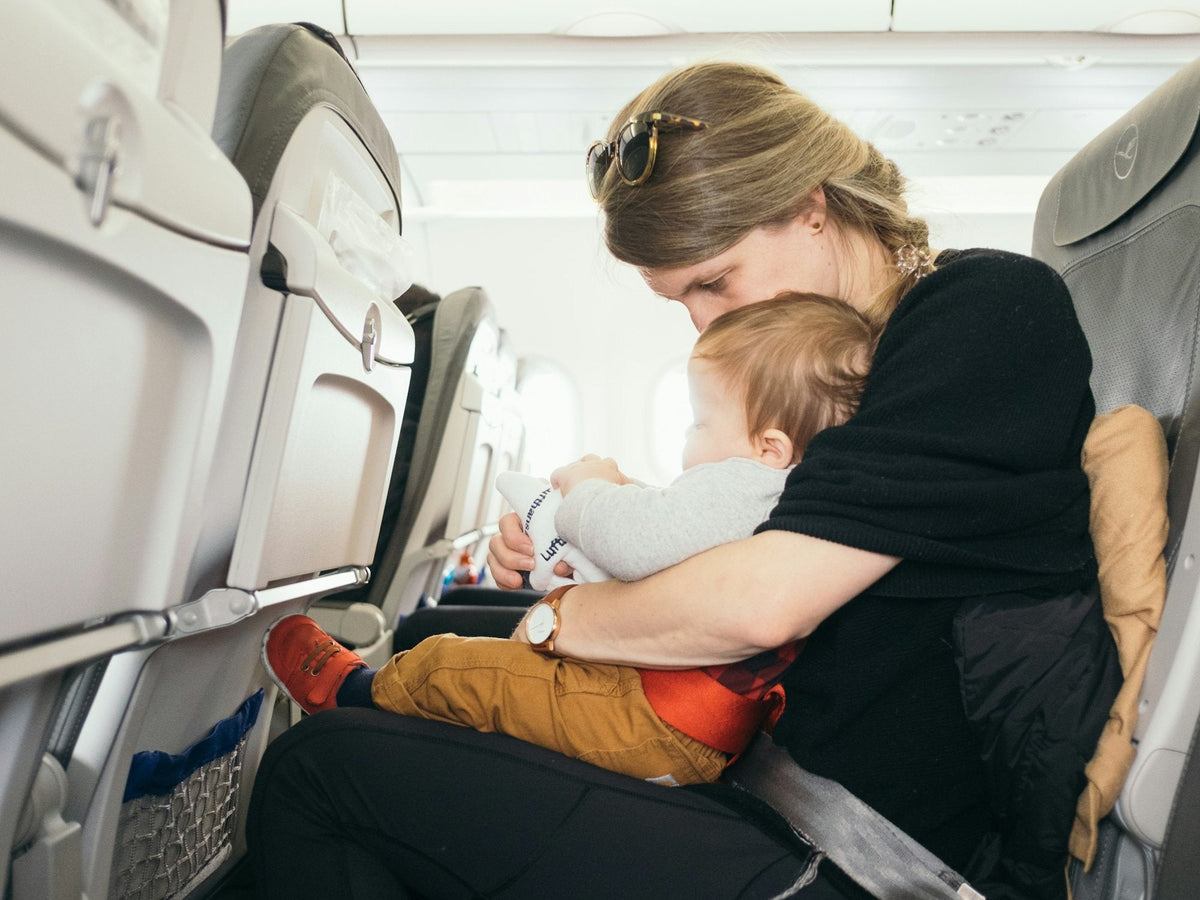
Have a bottle ready for when the plane starts down. Changes in cabin pressure can bother a baby’s ears, and the CDC suggests babies nurse or suck on a bottle during descent. [5] Not hungry by then? A few sucks may be enough.
The rest of the flight, feed the way you do at home: fairly upright, bottle close to level, and stop when they show they’re full. [6]
Cleaning bottles away from home
Bottles still need cleaning after every feed, hotel room or not. [7] A few things make that easier:
- Pack a small kit: a bottle brush kept only for feeding items, a little dish soap and a collapsible basin. The CDC advises washing feeding items in a clean basin, not straight in a sink. [7]
- Take bottles apart and squeeze soapy water through the nipple hole, then rinse and let everything air-dry on a clean towel. [7]
- Sanitize if your baby needs it. For babies under 2 months, born early or with a weakened immune system, the CDC advises sanitizing at least daily. That means boiling for 5 minutes, steaming, or a dishwasher with a heated drying or sanitizing cycle. [7]
- Bring extra bottles, so a feed never has to wait on a wash.
Packing list
- Bottles: your usual count between washes, plus one
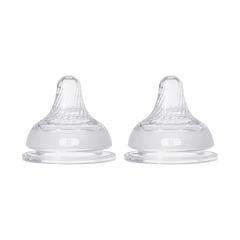
- Nipples in the flow your baby uses, plus a spare
- Breast milk in clear bottles or storage containers, labeled with the date
- Formula: measured powder in a dispenser and safe water, or ready-to-feed formula
- An insulated cooler bag and frozen ice packs
- A bottle brush, dish soap and a collapsible basin
- A clean towel or drying mat
- Bibs and burp cloths
Traveling with glass bottles
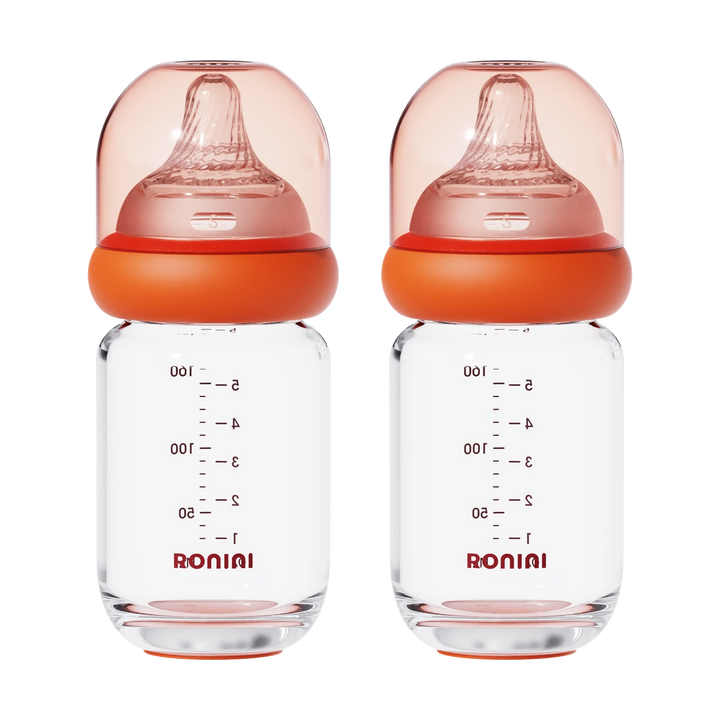
Glass bottles travel fine if you pack them with care. Carry them upright in an insulated bag with some padding. When you unpack, check each one for chips or cracks, and stop using any that’s damaged. [8]
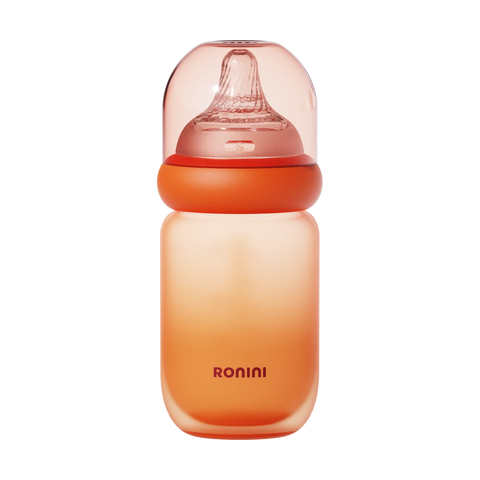
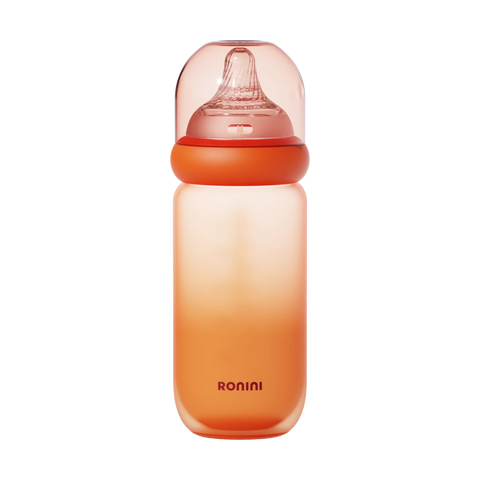
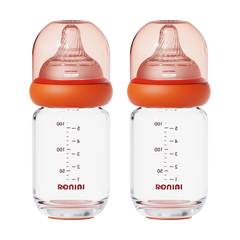
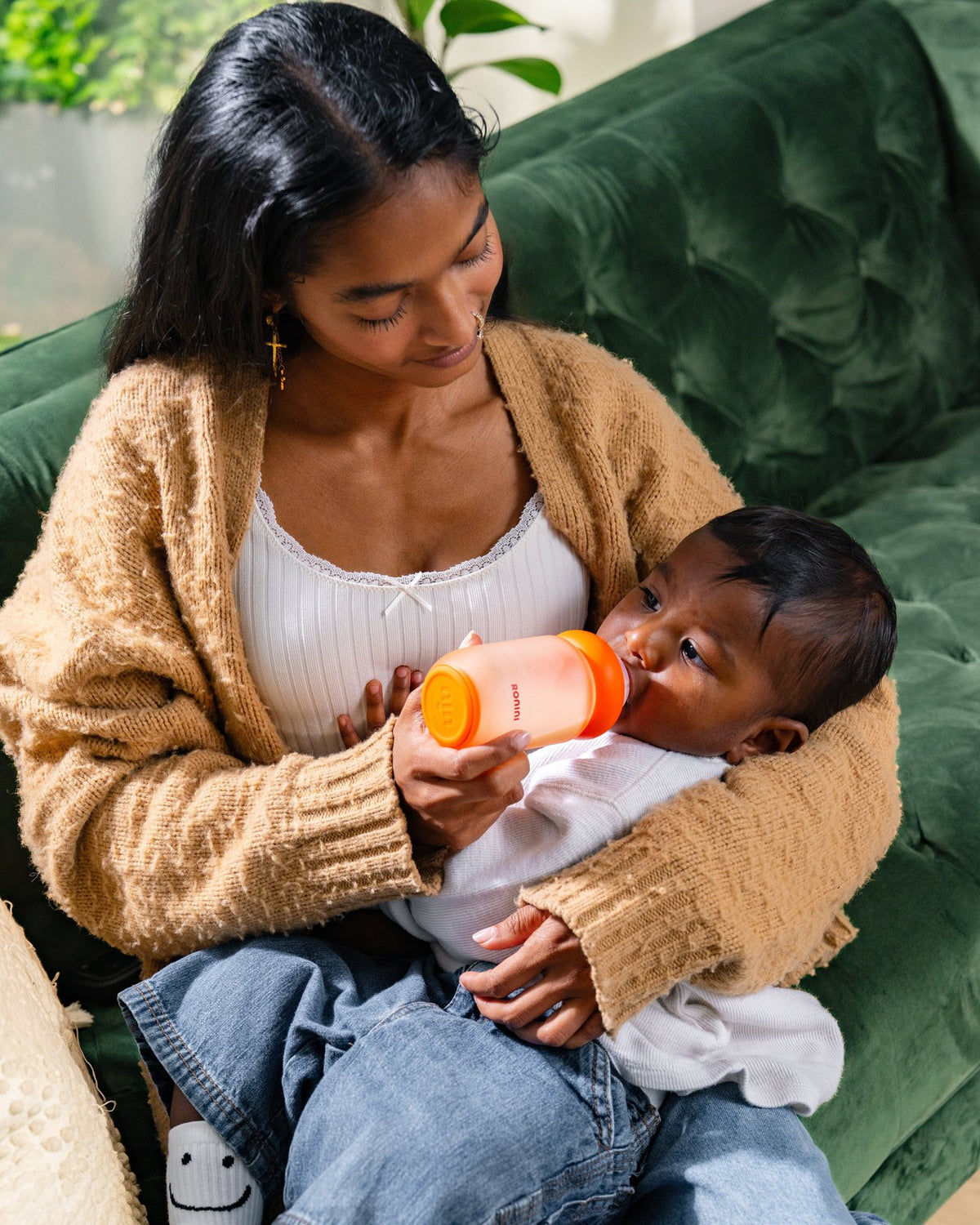
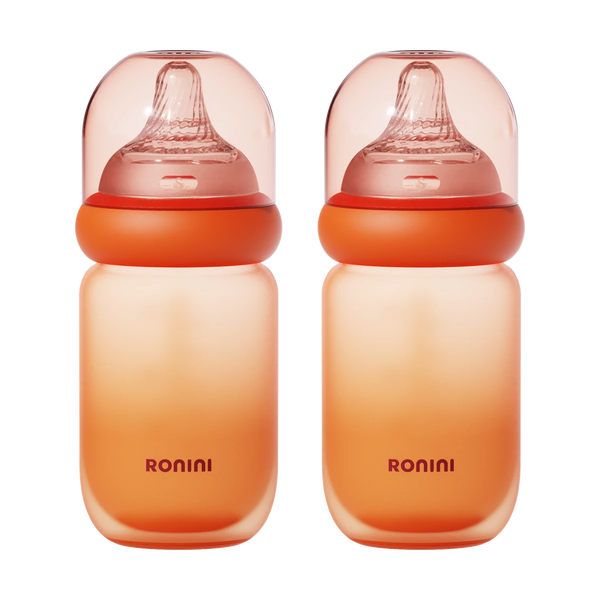
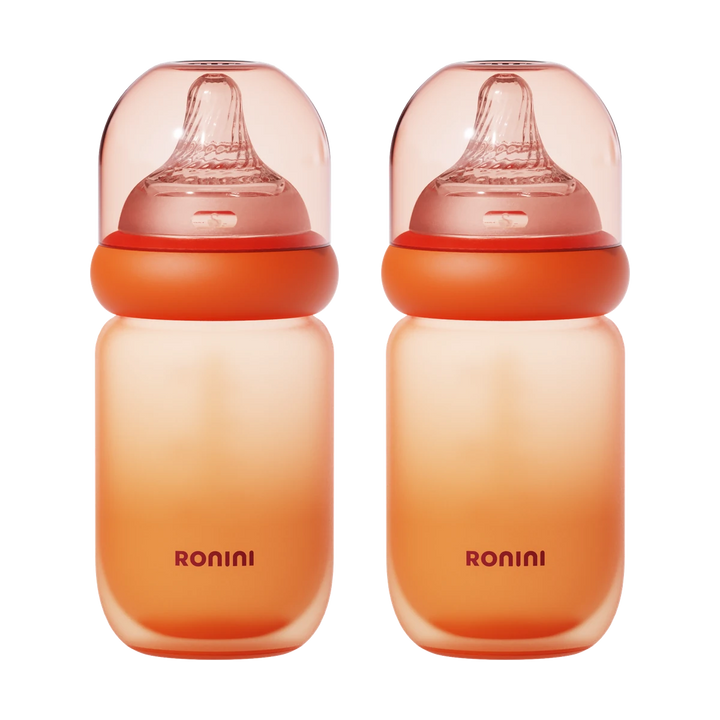
The Wrapped Glass Bottle has food-grade silicone shaped around the glass, for grip and some cushioning. It’s still glass. It can still break, so pack it the same way.
Bottles
A borosilicate glass baby bottle with a bonded silicone exterior for added grip and everyday impact protection.
From $60
Shop nowDisclosure This guide is published by Ronini, and The Wrapped Glass Bottle is our product. The travel rules come from TSA and the CDC as of October 11, 2026. Airline and airport rules outside the US can differ.
Frequently asked questions
Can I bring breast milk through TSA without my baby?
Yes. TSA says your child doesn’t need to be traveling with you for you to bring breast milk, formula or the supplies for them, ice packs included.
Is there a limit on how much breast milk or formula I can fly with?
TSA’s rules don’t set a maximum. Breast milk and formula are allowed in carry-ons in amounts over 3.4 oz, as medically necessary liquids.
Will an X-ray harm breast milk?
TSA says its X-ray machines don’t harm food or medicine. If you’d still rather skip the X-ray, tell the officer and other screening steps will be used.
Do ice packs have to be frozen solid?
No. Partly frozen or slushy ice packs, freezer packs and gel packs all go through the same screening.
How long does breast milk last in a cooler?
Up to 24 hours in an insulated cooler with frozen ice packs, the CDC says. When you arrive, use it, refrigerate it or freeze it.
How do I clean baby bottles while traveling?
Take them apart and wash them in a clean basin with hot soapy water and a brush kept for feeding items. Squeeze water through the nipple hole, rinse, and air-dry on a clean towel. If your baby is under 2 months, was born early or has a weakened immune system, sanitize at least daily.
Should my baby feed during takeoff and landing?
The CDC suggests babies nurse or suck on a bottle during descent, when cabin pressure changes. So keep one ready as the plane starts to come down.
References
Sources & references
- [1] Transportation Security Administration. What Can I Bring? Breast Milk. Checked October 11, 2026.
- [2] Centers for Disease Control and Prevention. Breast Milk Storage and Preparation. August 2026.
- [3] Centers for Disease Control and Prevention. Infant Formula Preparation and Storage. May 2026.
- [4] Transportation Security Administration. Traveling with Children. Checked October 11, 2026.
- [5] Centers for Disease Control and Prevention, CDC Yellow Book 2026. Traveling Safely with Infants and Children. December 2025.
- [6] Centers for Disease Control and Prevention. About Feeding From a Bottle. March 2026.
- [7] Centers for Disease Control and Prevention. How to Clean, Sanitize, and Store Infant Feeding Items. March 2025.
- [8] Centers for Disease Control and Prevention. About Breast Pump Hygiene (frequently asked questions). September 2024.
General information, not medical advice. Your pediatrician knows your baby best. Last reviewed October 11, 2026.
Shop the story
Feeding notes from Ronini
Practical feeding tips, new products, and news from us.
Sign up for Ronini emails. Unsubscribe anytime. Read our Privacy Policy.
Further reading
Explore The Ronini Journal Glass Bottles
 Glass Bottles
 Gifts
Gifts


