
Overview
Yes. Every glass baby bottle can break, including ours. A silicone wrap softens everyday knocks and helps keep the pieces together if it does break. Still, no glass bottle is shatterproof.
Why glass at all With glass, the milk only touches glass, and wear is easy to spot. Most glass baby bottles, ours included, use borosilicate, which copes well with hot water and boiling. [1]
What a wrap changes Silicone softens the hit when a bottle lands, and it can hold broken glass together. It doesn't make the glass itself stronger.
What doesn't change A hard landing on tile or concrete, at the wrong angle, can still crack it. So you check it after a drop, every time.

What makes a glass bottle more likely to break
| Situation | Why it matters | What helps |
|---|---|---|
| Dropped on tile, stone or concrete | Hard floors don't give, so the glass takes the whole hit | A wrap, and feeding over a rug or your lap when you can |
| Landing on the neck or shoulder | Wraps, ours included, are usually thickest at the base, not the neck | Check that area first after a fall |
| A chip or crack from an earlier knock | Damaged glass breaks more easily next time | Inspect before every use; retire a damaged bottle |
| Sudden, extreme temperature change | Even borosilicate has limits | Warm gently in water or a warmer, never the microwave |

What to do if a bottle is dropped
- Check the glass in good light. Look for chips, cracks and lines, including under the wrap at the base and around the neck.
- Feel the inside rim and the threads. A tiny chip there is easy to miss by eye.
- If you find any damage, stop using it. That goes for a wrapped bottle too, even if the silicone is still holding everything together.
- If it broke during a feed, throw the milk away. Check your baby's mouth and the area around them for any glass.
The CDC advises throwing bottles away at the first sign of damage or wear. [2] The AAP notes that glass bottles carry a risk of injury if they're dropped or broken. [3]
Our bottles break too
Glass can break, ours included.
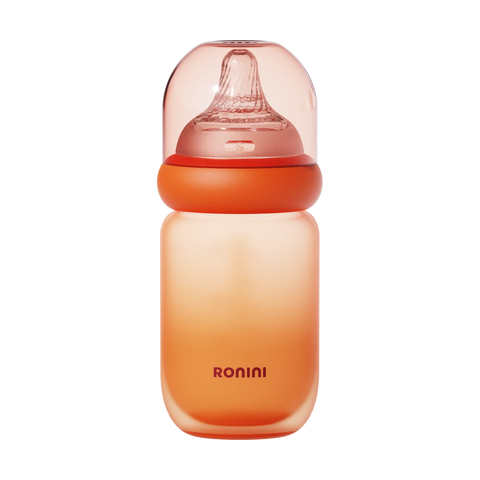
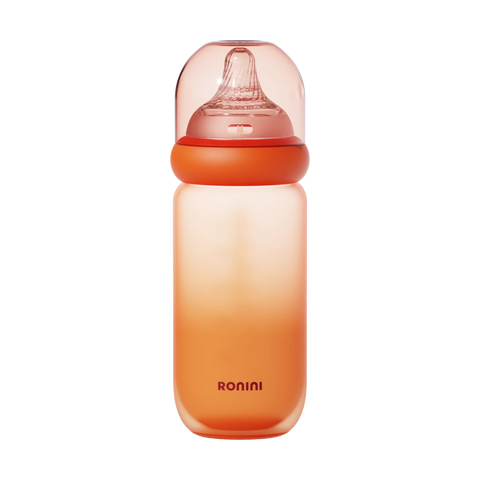
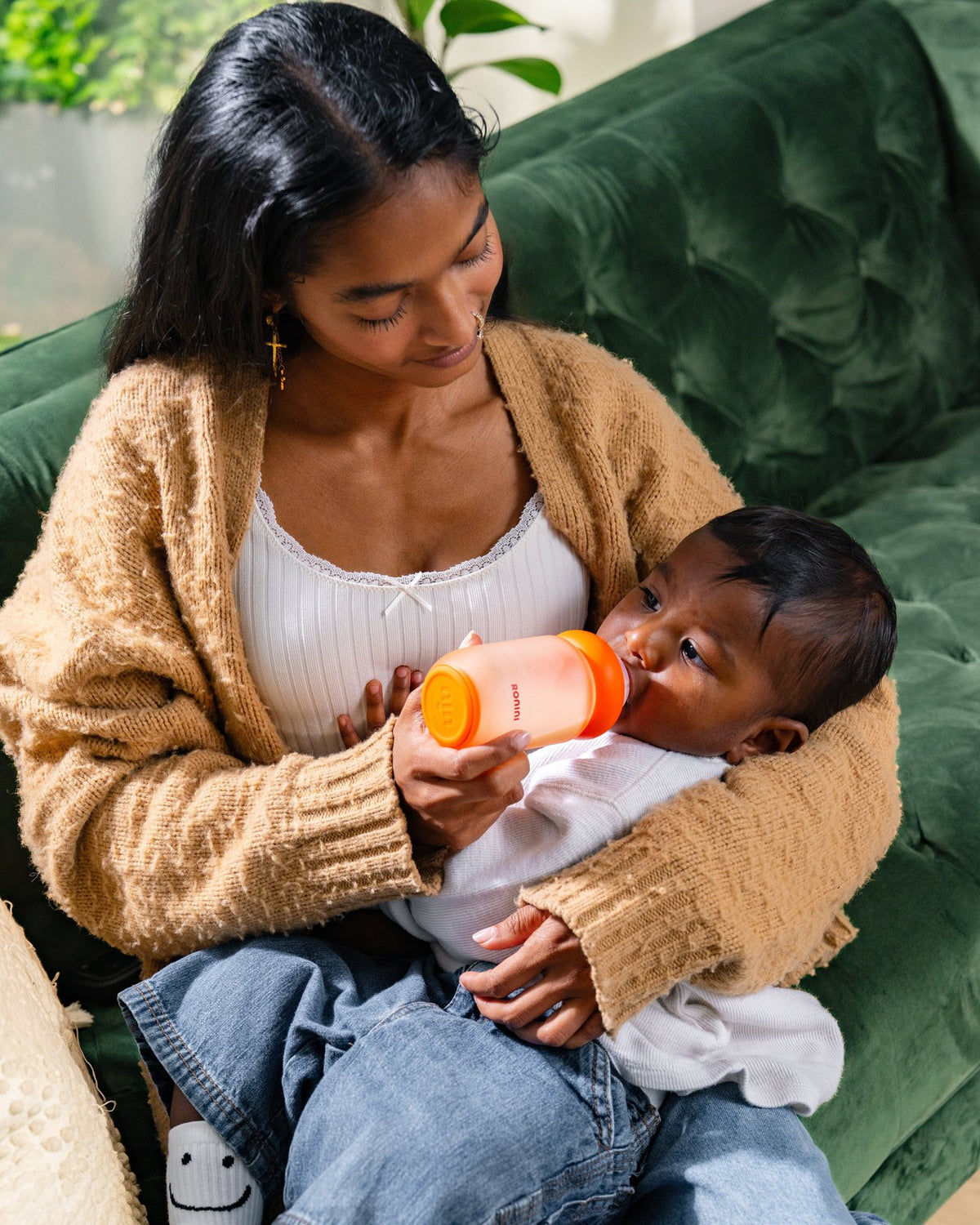
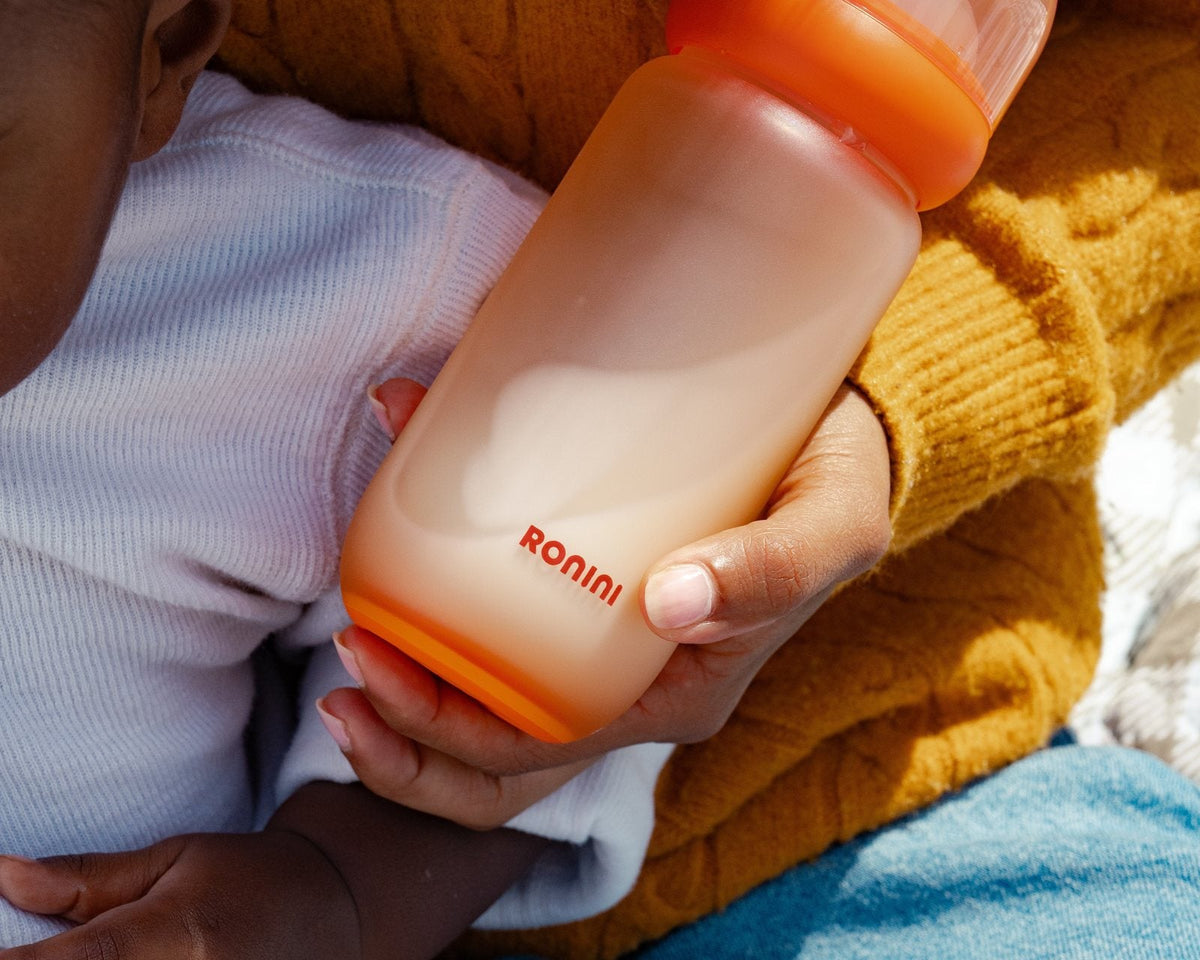
Here's what the wrap on The Wrapped Glass Bottle is for. The silicone is molded onto the glass and thickest at the base. It absorbs most drops, and it contains the glass if it does break. Most isn't all, so the checks above still apply.
If you'd rather have no glass at all for daycare or the playground, that's a fair call. Some parents keep glass for home and something else for the bag.
 Read next
Sleeve, coated or overmolded: how silicone gets on a glass baby bottle
Read next
Sleeve, coated or overmolded: how silicone gets on a glass baby bottle
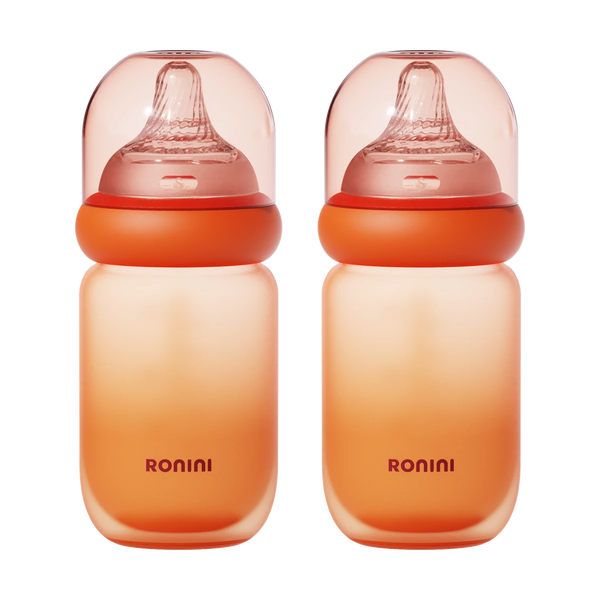
Bottles
A borosilicate glass baby bottle with a bonded silicone exterior for added grip and everyday impact protection.
From $60
Shop nowDisclosure This guide is published by Ronini, and we sell glass baby bottles. We'd rather you buy one knowing exactly what it will and won't do.
Frequently asked questions
Are glass baby bottles shatterproof?
No. No glass bottle is shatterproof, wrapped or not. A silicone wrap softens most knocks and helps hold the glass together if it breaks.
Do silicone sleeves stop glass bottles from breaking?
They make a break less likely and help contain it. They don't make the glass stronger, so a hard fall can still crack it.
What should I do if my baby's glass bottle cracks?
Stop using it straight away, even if a wrap is still holding it together. If it broke during a feed, throw the milk away and check for glass.
Is borosilicate glass stronger than regular glass?
It handles heat better. Borosilicate expands about a third as much as ordinary glass when heated, so it copes with hot water and boiling. A hard drop can still break it.
Are glass baby bottles safe?
Used with care, yes. Check them before each feed and after any drop, and retire any bottle that's chipped or cracked.
References
Sources & references
- [1] SCHOTT. Technical details of BOROFLOAT 33 borosilicate glass. Glass manufacturer data, not specific to any bottle.
- [2] Centers for Disease Control and Prevention. About Breast Pump Hygiene (frequently asked questions). September 2024.
- [3] American Academy of Pediatrics, HealthyChildren.org. Baby Bottles and Bisphenol A (BPA). September 2026.
General information, not medical advice. Last reviewed October 14, 2026.
Shop the story
Feeding notes from Ronini
Practical feeding tips, new products, and news from us.
Sign up for Ronini emails. Unsubscribe anytime. Read our Privacy Policy.
Further reading
Explore The Ronini Journal Bottle Care
 Glass Bottles
 Bottle Care


