
Overview
For most families who want glass, yes. You pay more up front and carry a heavier bottle. In return the milk only touches glass, the bottle lasts as long as it doesn't break, and the ongoing cost is mostly nipples. Whether that's worth it depends on how you feed and where.
What you're paying for A milk path of glass and silicone, and a bottle you don't replace because it looks tired. Many glass baby bottles, ours included, are borosilicate, which copes well with hot water and boiling. [1]
What it costs you More money at the start, more weight in the bag, and the chance of a break. Some daycares also have rules about glass.
What it isn't A health upgrade you can measure. BPA has been out of US baby bottles since 2012, [2] so the choice is about materials you're comfortable with, not escaping a banned chemical.

The real cost, worked out
Here's a year of exclusive bottle feeding with four of our bottles, at October 2026 prices. Swap in your own numbers.
| Four Wrapped Glass, 5 oz | Four Glass, 5 oz | |
|---|---|---|
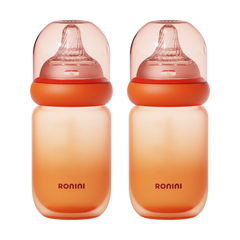
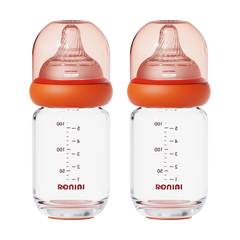
| Bottles (two 2-packs) | $120 | $80 |
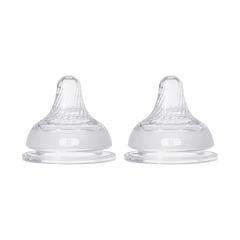
| Replacement nipples, swapped every two months (the bottles come with the first set) | $100 (ten 2-packs) | $100 (ten 2-packs) |
| First year | $220 | $180 |
| Per feed, at 8 feeds a day | About 8 cents | About 6 cents |
You buy the bottles once. Nipples are the part that keeps costing, whatever bottle you choose. The CDC notes that most manufacturers recommend replacing them every 6 weeks to every 3 months. [3]
When glass is worth it, and when it isn't
- Worth it: you feed mostly at home, you want the milk touching glass, you warm milk often, or you'd like bottles that carry on to a second baby.
- Maybe not: your daycare doesn't allow glass, you're out all day and every gram counts, or your baby is at the throwing stage.
- Both: plenty of families keep glass at home and send something else to daycare.
 Read next
Glass bottles and daycare: what the rules say and what to send
Read next
Glass bottles and daycare: what the rules say and what to send

Getting the most out of glass
- Buy fewer than you think. Enough for the feeds between washes, plus one spare.
- Check before every feed. Chips and cracks mean the bottle's done. [3]
- Warm gently. Warm water or a bottle warmer, never the microwave.
- Replace nipples, not bottles. A bottle in good shape can see you through a whole year and beyond.
Our two glass bottles
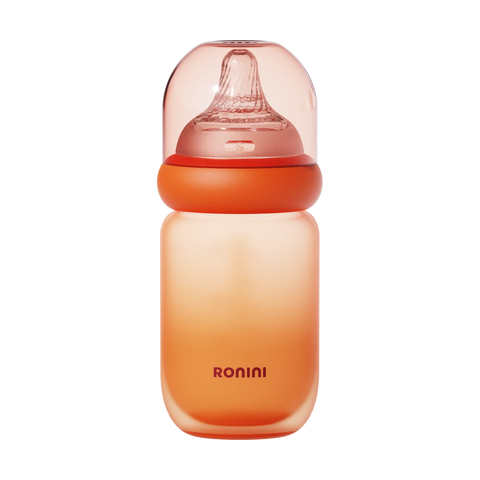
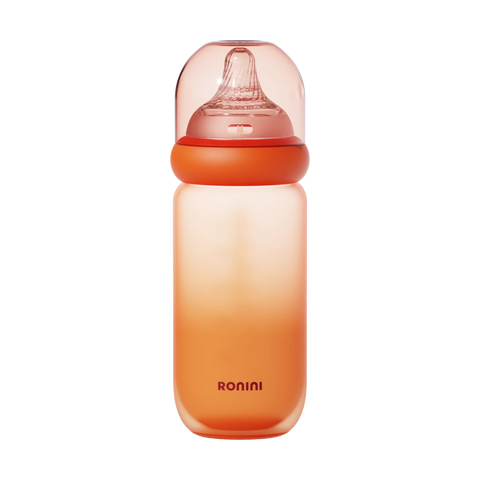
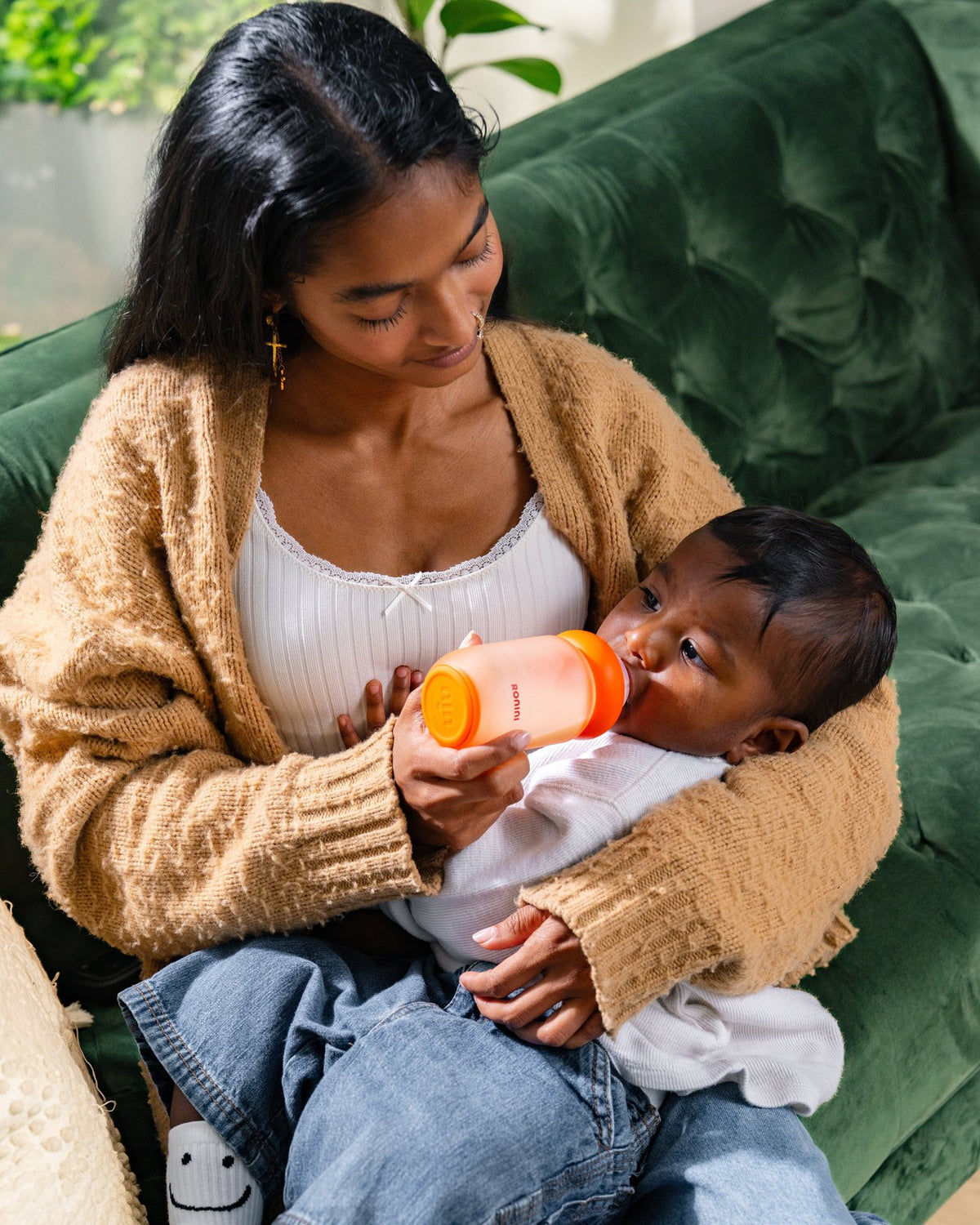
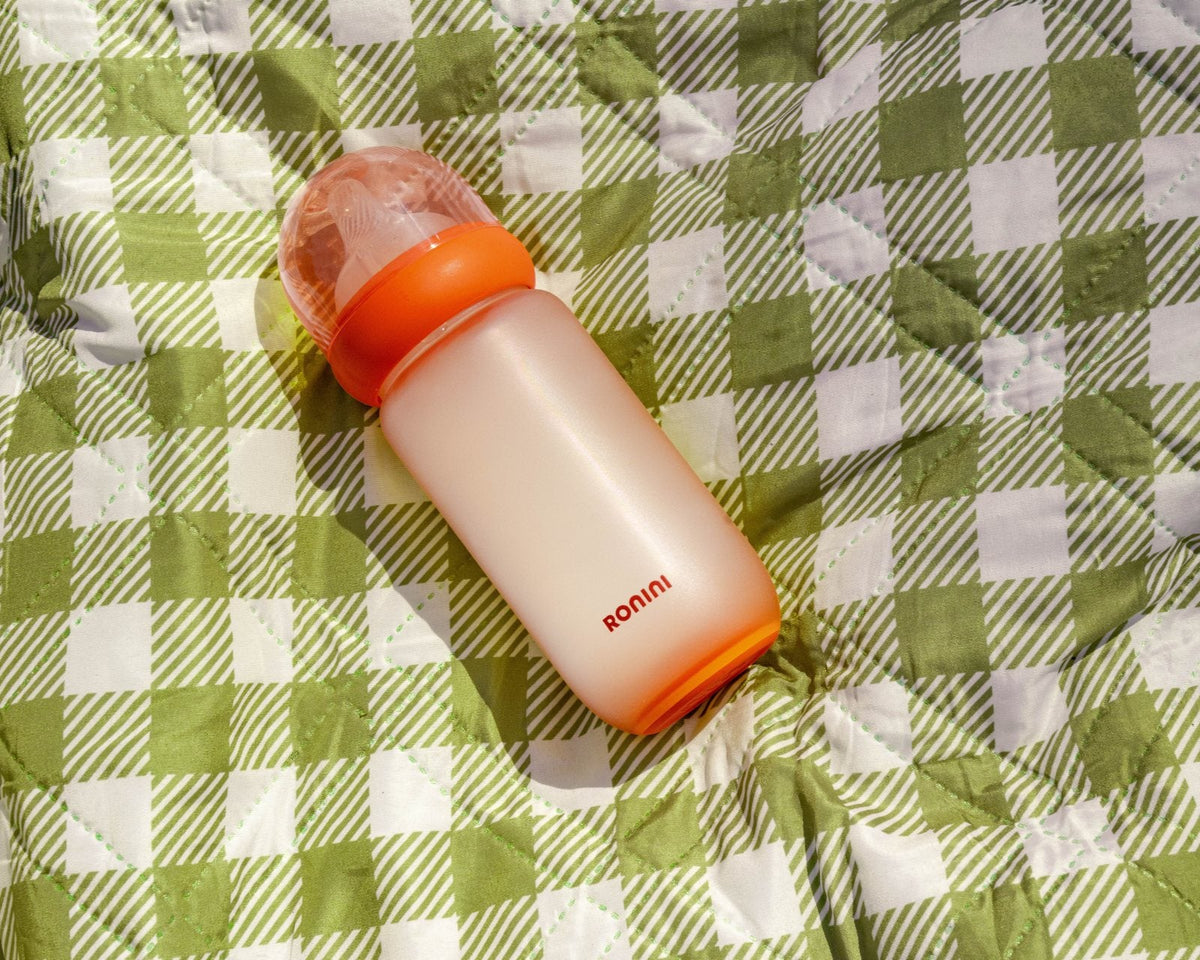
The Glass Bottle is plain borosilicate, and the one we suggest for warming. The Wrapped Glass Bottle has food-grade silicone molded on, thickest at the base: it's softer to hold, absorbs most drops and contains the glass if it does break. The 5 oz wrapped bottle weighs about 211 g empty.
If the nipple cost is the part that adds up, our subscription sends fresh nipples every two months until your baby's first birthday, with 10% off Wrapped Glass bottles.
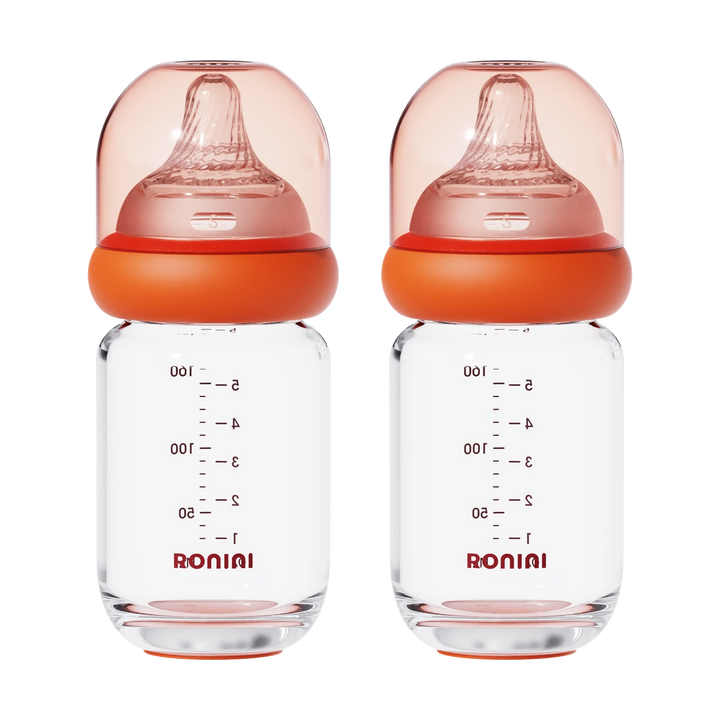
Bare borosilicate glass for everyday feeds at home. Easy to see through, with the same soft nipple and interchangeable parts as the Wrapped Glass...
Shop now
From $40
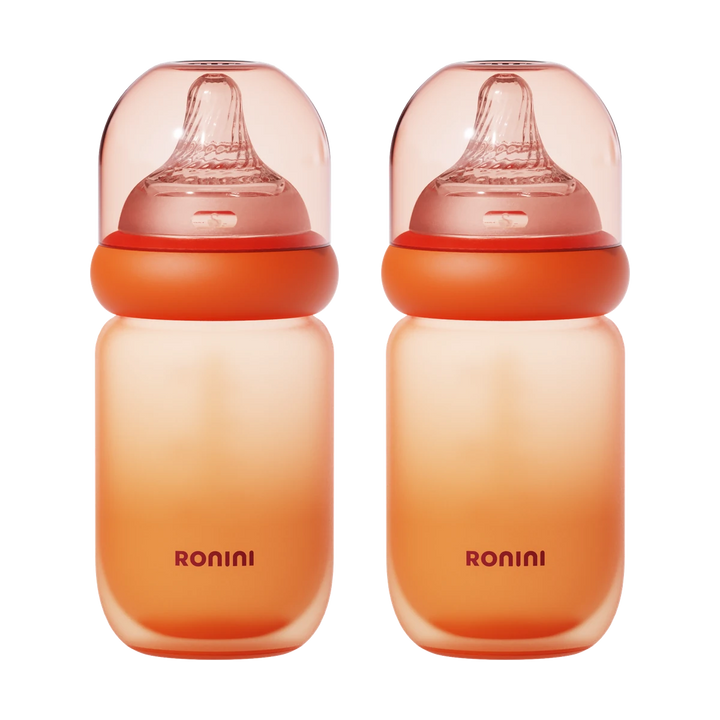
A borosilicate glass baby bottle with a bonded silicone exterior for added grip and everyday impact protection.
Shop now
From $60
Disclosure This guide is published by Ronini, and we sell glass baby bottles and nipples. The cost table uses our own prices as of October 14, 2026.
Frequently asked questions
Are glass baby bottles worth the money?
If you want glass, usually yes. The bottles last as long as they don't break, so most of what you keep spending goes on nipples.
Are glass baby bottles better than plastic?
They're different. Glass keeps the milk away from plastic and is easy to check for wear. Plastic is lighter and won't shatter. All US bottles are BPA-free, so pick what suits how you feed.
How long do glass baby bottles last?
Until they chip, crack or break. There's no set lifespan for the glass itself. The nipples are what you replace.
Why are glass baby bottles more expensive?
The material and the making cost more, and wrapped glass adds a molding step. You spend more up front and replace them less often.
References
Sources & references
- [1] SCHOTT. Technical details of BOROFLOAT 33 borosilicate glass. Glass manufacturer data, not specific to any bottle.
- [2] U.S. Food and Drug Administration. Bisphenol A (BPA): Use in Food Contact Application.
- [3] Centers for Disease Control and Prevention. About Breast Pump Hygiene (frequently asked questions). September 2024.
General information, not medical advice. Last reviewed October 14, 2026.
Shop the story
Feeding notes from Ronini
Practical feeding tips, new products, and news from us.
Sign up for Ronini emails. Unsubscribe anytime. Read our Privacy Policy.


