
Overview
Yes, you can warm a glass baby bottle. Do it gently: stand it in a bowl of warm water or use a bottle warmer, then test a few drops on your wrist. Never put any bottle in the microwave.
You might not need to warm it at all. The CDC says breast milk and infant formula don’t need to be warmed, so if your baby takes milk cold or at room temperature, that’s fine. [1]
Optional Warm milk only if your baby prefers it. [2]
Gentle heat Warm water or a bottle warmer, for a few minutes. Check the milk, not the dial.
Never The microwave or the stove. Both can heat milk unevenly, leaving hot spots that burn your baby’s mouth. [2]

Does milk need to be warm?
No. The CDC says breast milk can be served at room temperature or cold, and that formula doesn’t need warming. [1] [2] The FDA agrees on formula. [3] Under the national standards for child care, bottles can be served cold from the refrigerator. [4]
Babies differ, though. The Academy of Breastfeeding Medicine notes that most infants drink milk cool, at room temperature or warmed. [5] If yours takes it cool, skip the warming. That’s one less job at 3 am.
How to warm a bottle in warm water
- Start with fridge-cold milk. Frozen? Thaw it first (see below).
- Use warm water, not boiling. Stand the closed bottle or storage container in a bowl of warm water, or hold it under the warm tap, for a few minutes. [1] The national child care standard caps the water at 120°F (49°C) and the time at 5 minutes. [4]
- Swirl, don’t shake hard. Breast milk separates as it sits. A gentle swirl mixes the fat back in. [1]
- Test on your wrist. A few drops on the inside of your wrist should feel warm, not hot. [2]
- Feed soon. Warmed breast milk is good for 2 hours. Use formula within 1 hour of the start of a feed, and throw away what’s left. [1] [2]
Using a bottle warmer
A bottle warmer does the same job with less watching. Follow its instructions, including any setting for glass. Then test the milk on your wrist anyway, every time.
Don’t trust the setting on its own. In a 2015 lab simulation, some warming methods took milk well above body temperature. [6] The Academy of Breastfeeding Medicine suggests warming breast milk slowly, in lukewarm water no hotter than 40°C (104°F). [5]
Thawing frozen breast milk
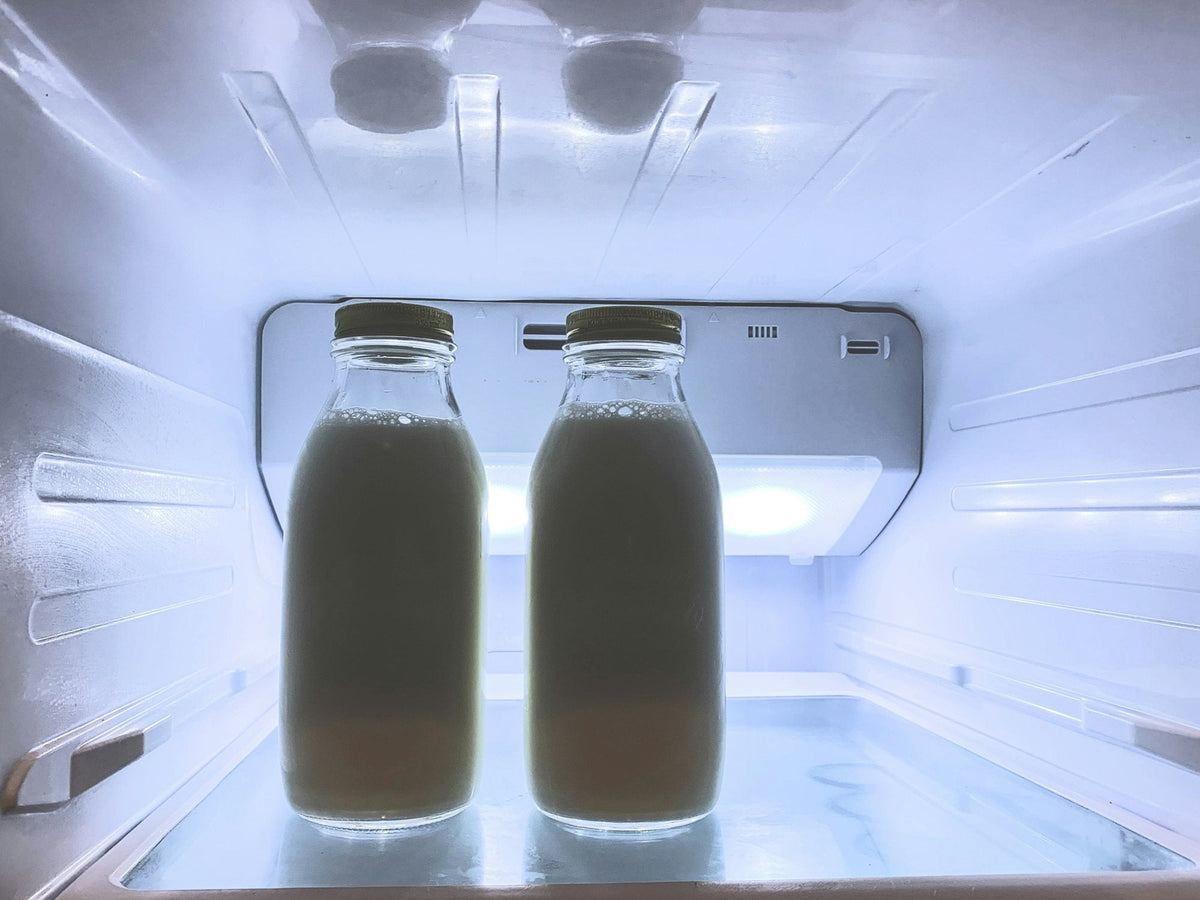
The CDC gives three ways to thaw: overnight in the fridge, in a bowl of warm or lukewarm water, or under lukewarm running water. Use the oldest milk first. [1]
| Milk | Use within |
|---|---|
| Thawed in the fridge | 24 hours, counted from when it is fully thawed |
| Brought to room temperature or warmed | 2 hours |
| Left in the bottle after a feed | 2 hours, then throw it away |
| Thawed milk | Never refreeze |
Source: CDC, Breast Milk Storage and Preparation. [1]

Why never the microwave
Microwaves heat milk unevenly. The bottle can feel cool in your hand while a pocket of milk inside is hot enough to burn your baby’s mouth and throat. [2]
Microwaving can also destroy nutrients in breast milk, the CDC says, [1] and the AAP is blunt: microwaving breast milk isn’t safe. [7] Glass or plastic, same answer.
Glass and temperature changes
Borosilicate glass copes well with warm water and boiling. When heated, it expands about a third as much as ordinary soda-lime glass, [8] and it’s what many glass baby bottles are made of, ours included.
It’s still glass. Avoid sudden jumps, like freezer straight into very hot water, and follow your bottle maker’s instructions.
Look the bottle over before every use. If it’s chipped or cracked, stop using it. The CDC advises throwing bottles away at the first sign of damage or wear, [9] and the AAP notes that glass bottles carry a risk of injury if dropped or broken. [10]
Note
If your baby is under 2 months, was born early or has a weakened immune system, the CDC advises mixing powdered formula with water that’s been boiled and cooled for about 5 minutes. Very hot water kills germs that powdered formula can carry. Let the bottle cool and test it on your wrist before feeding. [2]
Which Ronini bottle to warm
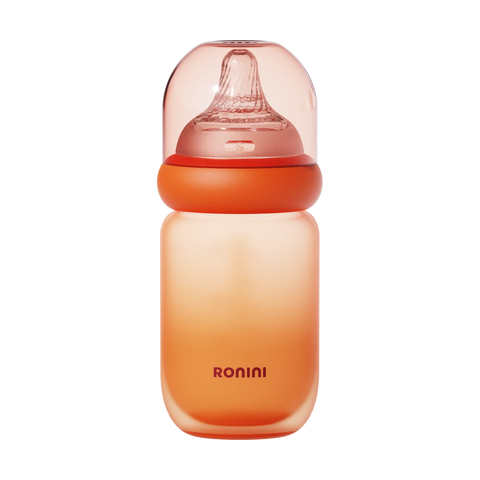
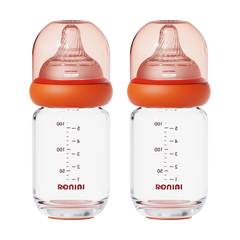
We made The Glass Bottle for warming. It’s plain borosilicate glass with no silicone layer, so warm water reaches the glass directly and the milk warms faster than in a wrapped bottle.
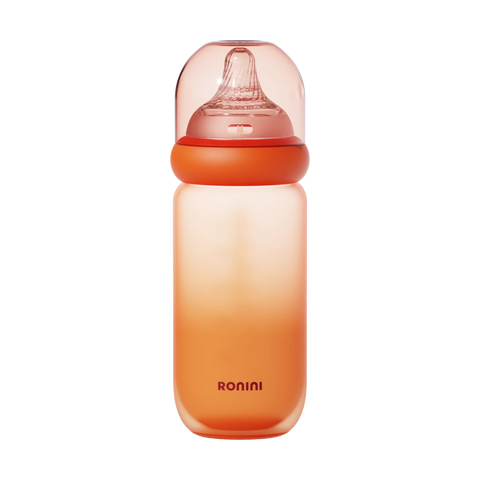
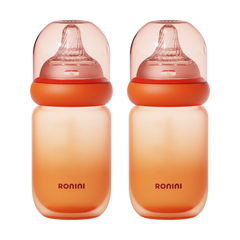
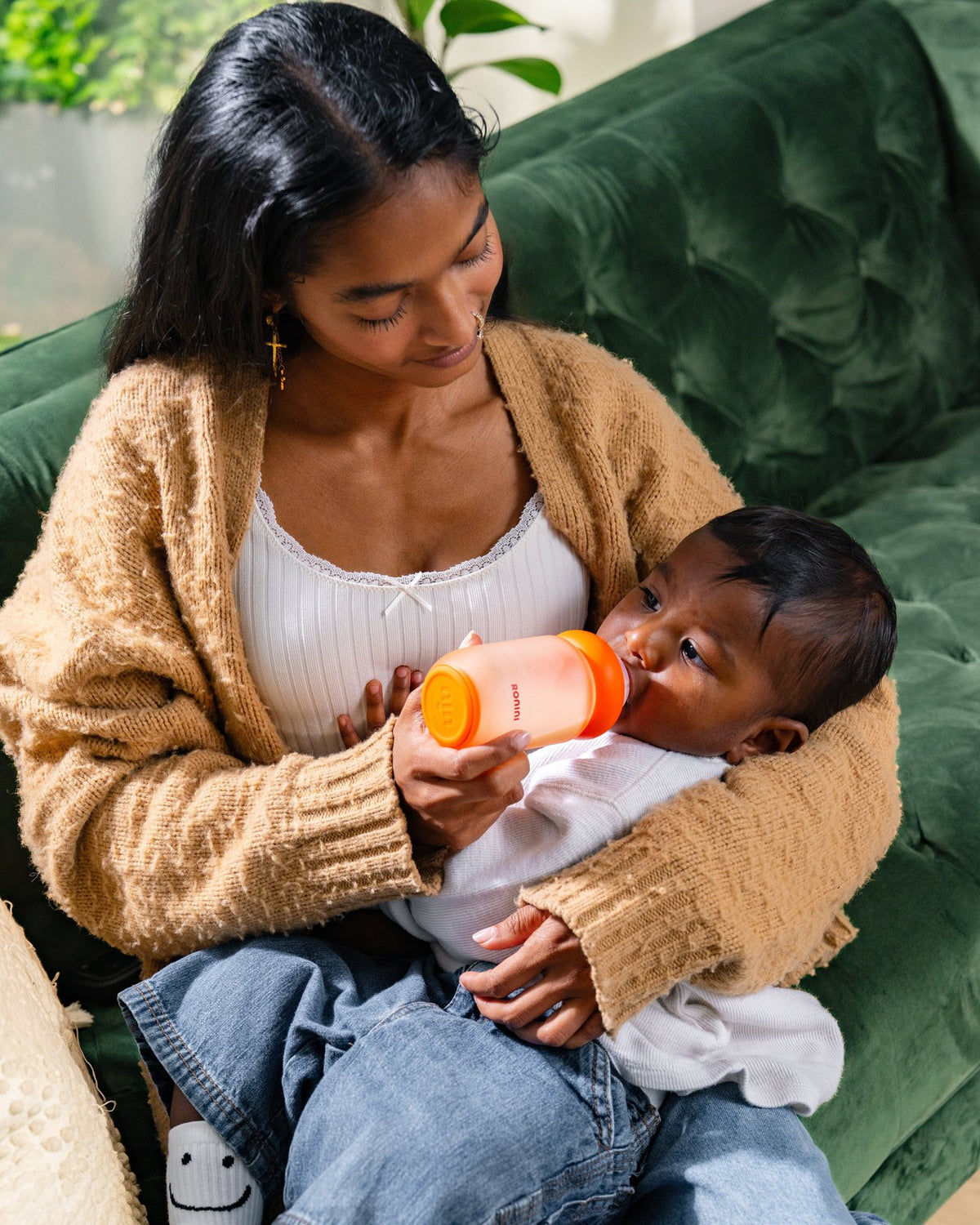
The Wrapped Glass Bottle has food-grade silicone shaped around the glass, and it works in a bottle warmer or a warm-water bath too. With either one, follow the instructions and avoid sudden temperature extremes.

Bottles
Bare borosilicate glass for everyday feeds at home. Easy to see through, with the same soft nipple and interchangeable parts as the Wrapped Glass...
From $40
Shop nowDisclosure This guide is published by Ronini, and The Glass Bottle and The Wrapped Glass Bottle are our products. The warming and storage guidance comes from the CDC, FDA, AAP and the other sources listed below, and it applies to any bottle.
Frequently asked questions
Can you warm a glass baby bottle?
Yes. Use a bowl of warm water, or a bottle warmer following its instructions. Test the milk on your wrist before feeding, and never use a microwave.
Can you microwave breast milk in a glass bottle?
No. Microwaves heat unevenly and can leave hot spots that burn a baby’s mouth, whatever the bottle is made of. The CDC also says microwaving can destroy nutrients in breast milk.
Can babies drink cold milk?
Yes. The CDC says breast milk can be served cold or at room temperature, and formula doesn’t need warming. Some babies like it warm. That’s fine too.
How warm should a baby’s bottle be?
Warm, not hot. Try a few drops on the inside of your wrist. Too hot? Let it cool first.
How long is warmed breast milk good for?
Two hours from warming. If your baby doesn’t finish, use the rest within 2 hours of the feed, then throw it away. Never refreeze thawed milk.
Can you boil glass baby bottles?
Many can be boiled to sanitize them, but check your bottle maker’s instructions. The CDC’s boiling method is 5 minutes in a pot of water, with the parts taken apart. [11]
Can I warm milk in a glass bottle straight from the freezer?
Thaw it first, in the fridge or in lukewarm water, then warm it gently. Going straight from freezer-cold to hot water is hard on any glass.
References
Sources & references
- [1] Centers for Disease Control and Prevention. Breast Milk Storage and Preparation. August 2026.
- [2] Centers for Disease Control and Prevention. Infant Formula Preparation and Storage. May 2026.
- [3] US Food and Drug Administration. Handling Infant Formula Safely: What You Need to Know. May 2024.
- [4] Caring for Our Children (AAP, APHA, National Resource Center). Standard 4.3.1.9: Warming Bottles and Infant Foods. Archived copy.
- [5] Academy of Breastfeeding Medicine. Clinical Protocol #8: Human Milk Storage Information for Home Use for Full-Term Infants. Revised 2017.
- [6] Bransburg-Zabary S and colleagues. Human Milk Warming Temperatures Using a Simulation of Currently Available Storage and Warming Methods. PLoS One. 2015. One author was employed by a baby bottle company.
- [7] American Academy of Pediatrics, HealthyChildren.org. Tips for Freezing and Refrigerating Breast Milk. July 2025.
- [8] SCHOTT. Technical details of BOROFLOAT 33 borosilicate glass. Glass manufacturer data, not specific to any bottle.
- [9] Centers for Disease Control and Prevention. About Breast Pump Hygiene (frequently asked questions). September 2024.
- [10] American Academy of Pediatrics, HealthyChildren.org. Baby Bottles and Bisphenol A (BPA). September 2026.
- [11] Centers for Disease Control and Prevention. How to Clean, Sanitize, and Store Infant Feeding Items. March 2025.
General information, not medical advice. Your pediatrician knows your baby best. Last reviewed October 11, 2026.
Feeding notes from Ronini
Practical feeding tips, new products, and news from us.
Sign up for Ronini emails. Unsubscribe anytime. Read our Privacy Policy.
Further reading
Explore The Ronini Journal Bottle Care
 Glass Bottles
 Bottle Care


