
Overview
Check every nipple before every feed, and replace it at the first sign of wear, no matter its age. Past that, no health agency sets a replacement schedule.
The schedules out there come from bottle brands, and they run from every 7 weeks to every 3 months. The CDC notes that most manufacturers recommend every 6 weeks to every 3 months, and that nipples should be replaced for each child. [1]
Every feed Look and feel. No tears, cracks, thinning, stickiness, swelling or change of color. Spot any of those and throw the nipple away. [2]
On a schedule Use your bottle maker’s interval as a backstop. A nipple can look fine after months of heat and cleaning, and this way it still gets swapped.
For a new baby Start with new nipples, even if the bottles are hand-me-downs. [1]

What health authorities say
Health guidance is about condition, not the calendar.
- CDC. Bottle nipples break down over time. Inspect them before each use, throw them away at the first sign of damage or weakness, and replace them for each child. [1]
- Caring for Our Children, the national health and safety standards for child care programs, says not to use nipples that are discolored, thinning, tacky or ripped. [3]
- Health Canada. Inspect nipples before and after each use and throw out any that show wear and tear. Replace them more often while your baby is teething. Never make the holes bigger. [4]
- Nationwide Children’s Hospital. Weak or worn-out nipples are more likely to tear or be a choking hazard, and must be replaced right away. [2]
- MedlinePlus, from the National Library of Medicine: throw out cracked or torn nipples, because small pieces can come off and cause choking. [5]
What bottle brands recommend
Each brand’s own wording, from its own website on October 11, 2026. Not one of them cites a study or a standard for its interval.
| Brand | Replacement guidance |
|---|---|
| Lansinoh | Every 7 weeks, or sooner if you notice tears, warping, thinning, stickiness or discoloration [6] |
| Tommee Tippee | Every two months, or at the first sign of any damage or weakness [7] |
| Ronini | Every two months, sooner if you see any sign of wear [8] |
| Dr. Brown’s | Check every two to three months for signs it needs replacing, including milk coming out faster, discoloration and residue that will not wash off [9] |
| Hegen | Every 2 to 3 months, or immediately if signs of wear and tear appear [10] |
| Philips Avent | Every 3 months for hygienic reasons; inspect before each use and replace at the first signs of damage or weakness [11] |
| Pura | When worn, torn, or if there is loose silicone [12] |
So the numbers don’t agree. Each one is a brand’s call about its own material and design, and there’s no shared rule behind them.
Signs a nipple is worn
Check in good light, before each feed. Look for:
- Tears, cracks or splits, especially around the hole and where the nipple meets the base.
- Thinning. The silicone looks or feels thinner than a new nipple.
- Stickiness or swelling, a tacky feel or a shape that’s puffed up.
- A change of color, cloudiness, or residue that won’t wash off.
- A change in the feed, like milk suddenly coming faster than it used to.
Nationwide Children’s also describes a quick strength test. Pull hard on the tip of the nipple. It should spring back to its original shape, and if it doesn’t, throw it away. [2]

What wears a nipple out
Heat and daily use wear out every nipple. Silicone lasts longer than latex, [5] but it still wears.
Boiling is hard on them. The NHS notes that teats tend to get damaged faster when they’re boiled, and asks parents to check regularly for tears and cracks. [13] Round after round of steaming and dishwasher cycles takes a toll too.
So does the bottle brush. So do teething and being sucked on many times a day, which is why Health Canada suggests replacing nipples more often while a baby is teething. [4]
Wear can change how a nipple feeds before it looks damaged. If feeds on an older nipple suddenly go faster, swap in a new one in the same flow before you decide your baby needs a different flow.
Hand-me-downs and a second baby
Glass bottles with no chips or cracks can go to a second baby. The nipples should be new: the CDC says to replace bottle nipples for each child. [1]
Check the collars, caps and any valves or vents as well. Replace anything that’s cracked or doesn’t fit snugly anymore.
How to keep nipples in good shape
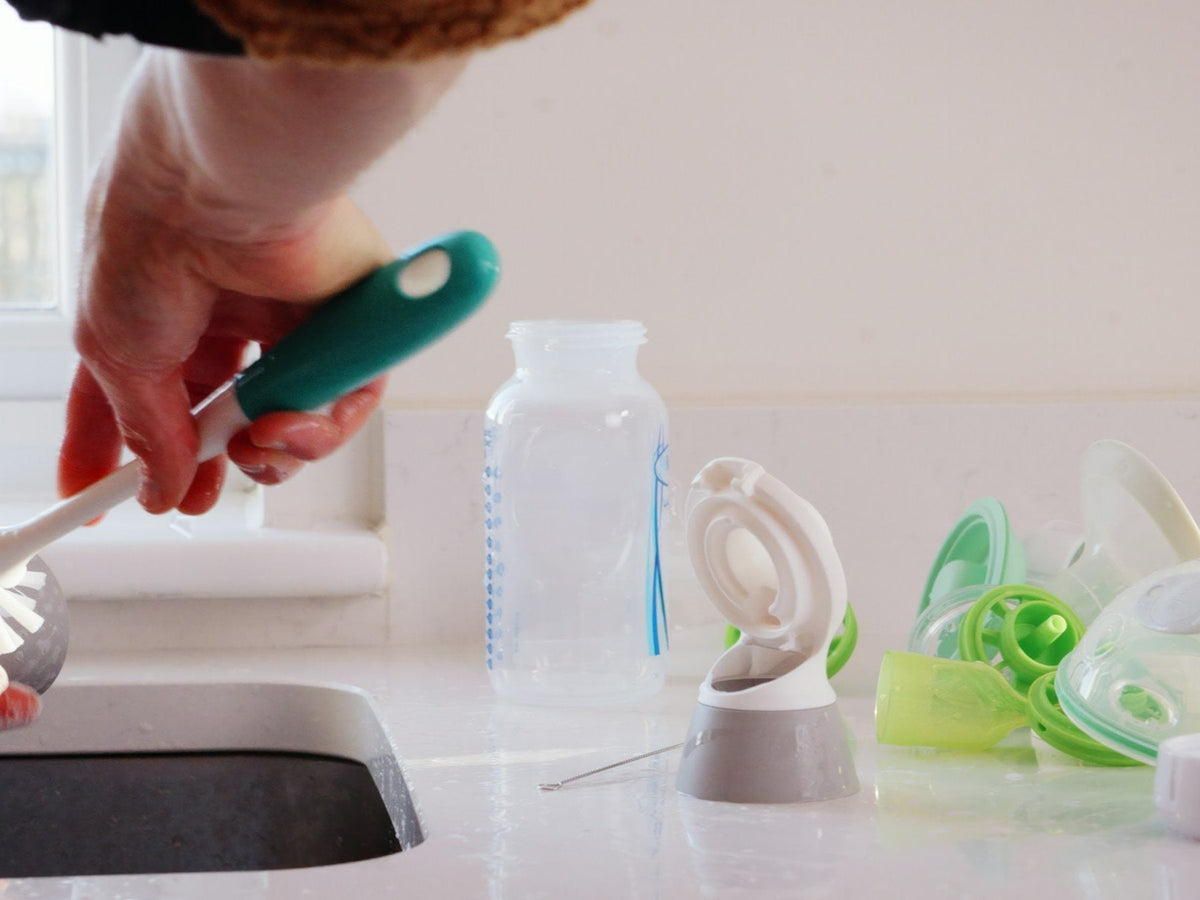
- Wash after every feed. Take the bottle apart, wash the nipple in hot soapy water, and squeeze water through the hole. [14]
- Sanitize as often as your baby needs. The CDC advises at least daily for babies under 2 months, born early or with a weakened immune system. For older, healthy babies, daily sanitizing may not be needed if parts are cleaned carefully. [14]
- Air-dry. Let parts dry fully on a clean towel. Don’t rub them dry. [14]
- Never cut or stretch the hole. Use the next flow instead. [4]
- Keep a spare. With a spare nipple in each flow you use, a damaged one never has to stay in rotation.
Why Ronini sends new nipples every two months
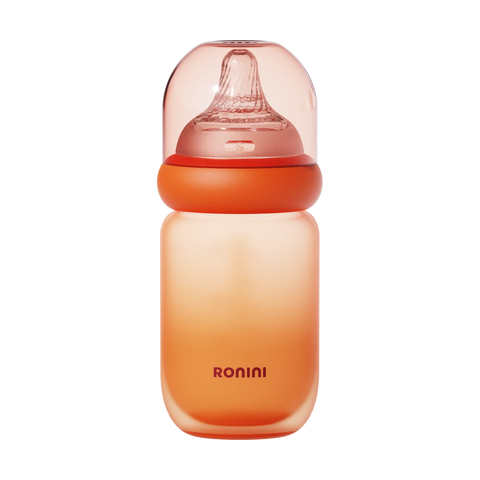
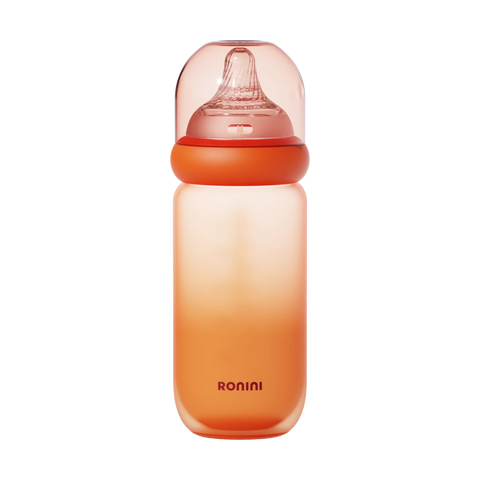
Our nipples are food-grade silicone. We recommend replacing them every two months, which sits inside the range most bottle makers use.
A Ronini subscription sends new nipples every two months until your baby’s first birthday. The replacement shows up before you’ve had to think about it, and a worn nipple is less likely to be mistaken for a change in your baby.
Two months is our schedule. It isn’t a health rule, and a damaged nipple shouldn’t wait for the next box.
Accessories
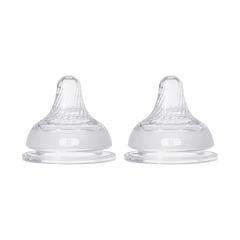
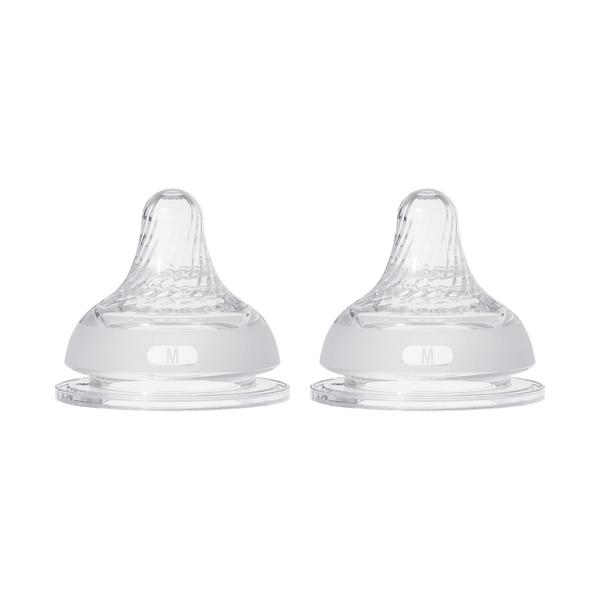
Food-grade silicone nipples in four flows named by pace: Drop, Sip, Stream and Rapid. Two nipples per pack. All four flows fit both Ronini...
$10
Shop nowDisclosure This guide is published by Ronini. We sell nipples and a subscription that replaces them, which is why we’ve said plainly that no health agency sets a replacement interval. Brand guidance is quoted from each brand’s website as of October 11, 2026.
Frequently asked questions
How often should you replace bottle nipples?
As soon as one shows any wear. Otherwise, follow your bottle maker’s interval: brands say anything from every 7 weeks to every 3 months. No health agency sets a fixed schedule.
Do bottle nipples really need to be replaced if they look fine?
Wear isn’t always easy to see. Some changes show up first as a faster feed or a tacky feel, and a brand’s interval is the backstop for that. If you keep a nipple past it, check it carefully and do the pull test before each use.
Do I need new nipples for a second baby?
Yes. The CDC says to replace bottle nipples for each child. Glass bottles in good condition can be reused.
Should I replace nipples more often during teething?
Health Canada suggests it. Teeth can nick or wear silicone, so look closely while they’re coming in and replace at the first sign of damage.
How do I know if a nipple is too worn?
Tears, cracks, thinning, stickiness, swelling, a change of color, or a flow that suddenly changes. Then pull hard on the tip. If it doesn’t spring back to shape, toss it.
Do I need to replace the bottles too?
Not on a schedule. Check every bottle before use and stop using any that’s chipped, cracked or damaged. Glass bottles that stay in good condition can last a long time.
References
Sources & references
- [1] Centers for Disease Control and Prevention. About Breast Pump Hygiene (frequently asked questions: replacing bottle nipples and pacifiers). September 2024.
- [2] Nationwide Children’s Hospital. Choosing a Bottle Flow Rate (Helping Hands HH-IV-244). 2021.
- [3] Caring for Our Children (AAP, APHA, National Resource Center). Standard 4.3.1.10: Cleaning and Sanitizing Equipment Used for Bottle Feeding. Archived copy.
- [4] Health Canada. Baby bottles, pacifiers and teething necklaces. November 2025.
- [5] MedlinePlus, US National Library of Medicine. Buying and caring for baby bottles and nipples. Reviewed April 2025.
- [6] Lansinoh. Sterilizing your baby’s bottles: a guide. Checked October 11, 2026.
- [7] Tommee Tippee. A parent’s guide to baby bottle nipples. Checked October 11, 2026.
- [8] Ronini. Subscription.
- [9] Dr. Brown’s. Getting started with Dr. Brown’s nipples. Checked October 11, 2026.
- [10] Hegen. Baby bottle teat size guide. Checked October 11, 2026.
- [11] Philips Avent. Which Natural Response nipple suits my baby best? Checked October 11, 2026.
- [12] Pura. Cleaning and care. Checked October 11, 2026.
- [13] NHS. Sterilising baby bottles. Reviewed February 2023.
- [14] Centers for Disease Control and Prevention. How to Clean, Sanitize, and Store Infant Feeding Items. March 2025.
General information, not medical advice. Your pediatrician knows your baby best. Last reviewed October 11, 2026.
Shop the story
Feeding notes from Ronini
Practical feeding tips, new products, and news from us.
Sign up for Ronini emails. Unsubscribe anytime. Read our Privacy Policy.
Further reading
Explore The Ronini Journal Bottle Care
 Bottle Feeding
 Bottle Care


