

Overview
On a bottle box, "anti-colic" almost always means a vent. Venting does a real, measurable job. What no bottle has shown in a good trial is that it prevents colic, so it's worth knowing what you're paying for.
What the word means A vent lets air into the bottle as milk leaves it. Without one, a vacuum builds up behind the nipple. Brands put the vent in the nipple, in the base, or in a tube that carries air to the top of the bottle.
What venting does It keeps the milk moving. In one bench study, an unvented bottle stopped flowing in 8 of 10 trials, and the same bottle with its vent held steady for 20 minutes. [1]
What it hasn't shown The largest trial so far followed 1,041 babies in 2026. Two vent designs, no significant difference in tummy discomfort or colic. [2]

The three kinds of vent
| Where the vent is | How air gets in | The trade-off |
|---|---|---|
| In the nipple | A small valve or slit lets air in while your baby feeds. | Fewer parts to wash. Air comes in near the milk, so you may see bubbles rise. |
| In the base | A valve in a screw-on bottom lets air in at the far end. | Air enters away from the nipple. One more seal to clean and check for leaks. |
| A tube or insert | A tube carries air past the milk to the space at the top. | Air skips the milk entirely. More parts, and the tube has to suit the bottle and the fill level. |
None of them is proven better for colic. In the 2026 trial, base vents and nipple vents scored the same on the main measures. [2] The authors did see less crying during and after feeds with base vents. They called it exploratory, though, because the trial wasn't built to test it.
What colic is, and why a bottle can't promise to fix it
Colic is long, hard crying in a healthy baby who won't settle the way they usually do. The American Academy of Pediatrics says about one in five babies get it. Ordinary fussing peaks at around 3 hours a day by 6 weeks, then eases off by 3 to 4 months. [3]
Nobody knows exactly what causes it. Swallowed air is one theory. Reviews of the research haven't found a single cause. [4]
So the claim is hard to prove, and regulators have noticed. In 2024 the UK's advertising regulator ruled against a major bottle brand's "prevent colic" ads because the evidence wasn't strong enough. [5]

What to look for instead of the label
- A vent that works. If the nipple flattens halfway through a feed, air isn't getting in.
- The right flow for your baby. Gulping, coughing or milk running down the chin can mean it's too fast. Long, frustrated feeds can mean it's too slow. Go by how your baby feeds, not the age on the box.
- A nipple your baby latches on to well. A wide, soft base lets their lips flange out and hold a seal.
- Paced feeding. Hold your baby upright, keep the bottle nearly level and let them take breaks. It slows things down with any bottle.
 Read next
Paced bottle feeding, step by step
Read next
Paced bottle feeding, step by step
 Read next
Is the bottle flow right? Signs a nipple is too fast or too slow
Read next
Is the bottle flow right? Signs a nipple is too fast or too slow
Why our box doesn't say "anti-colic"
We built the things parents look for in an anti-colic bottle, then left the word off the box. The trials don't back it up for any bottle, ours included. We'd rather show you what each part does.
- Venting in every nipple: a vent at the base of the nipple lets air into the bottle as your baby drinks.
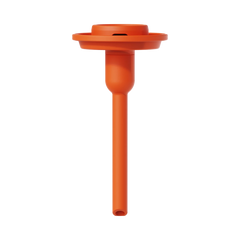
- The Venting Tube, if you want it: an all-silicone tube that carries incoming air past the milk to the top of the bottle, so the air doesn't bubble through the feed. It's sized for the 5 oz bottle. In the 8 oz, fill to 5 oz (160 ml) or less. Patent pending.
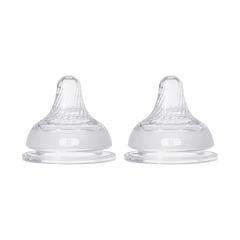
- Flows named by pace: Drop, Sip, Stream and Rapid. You pick by how your baby feeds.
- A soft nipple: German Wacker silicone at 20 Shore A, shaped with breastfed babies in mind and designed in consultation with an IBCLC.
If that's what you hoped "anti-colic" meant, it's all here.
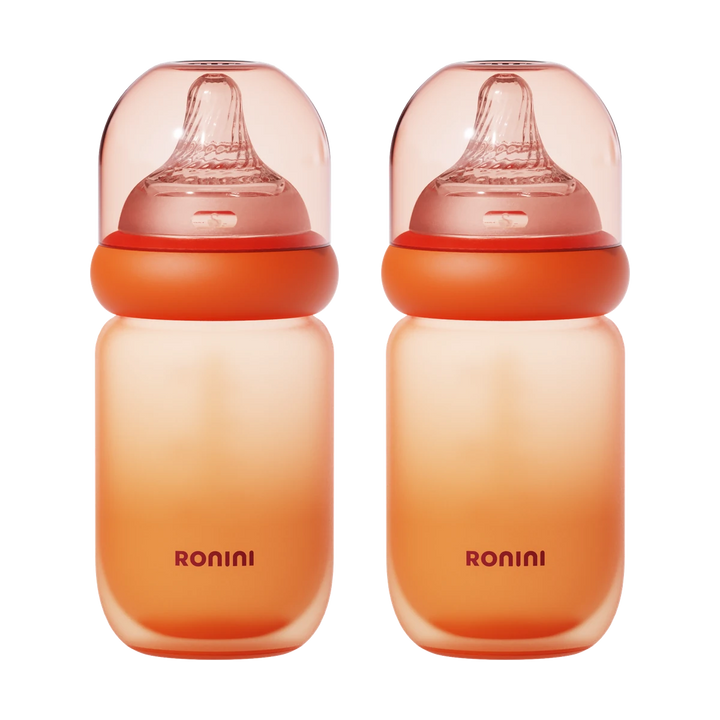
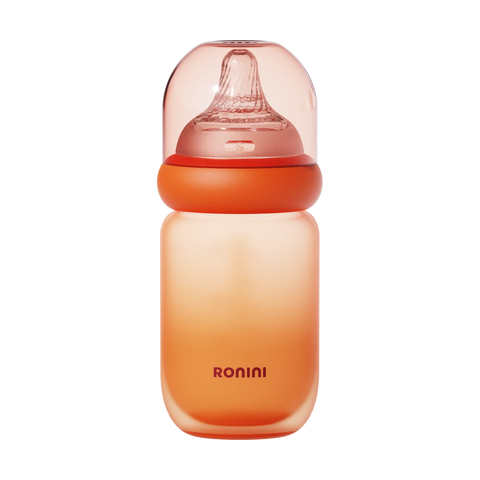
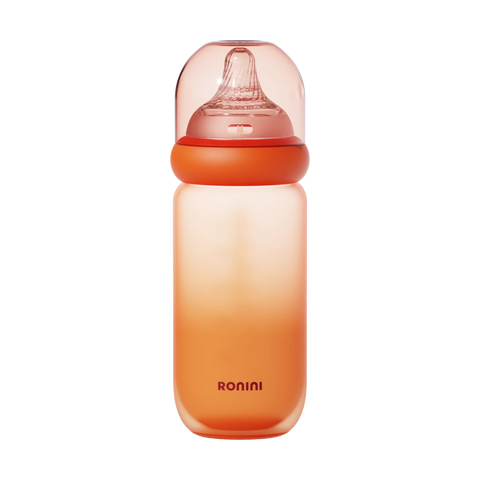
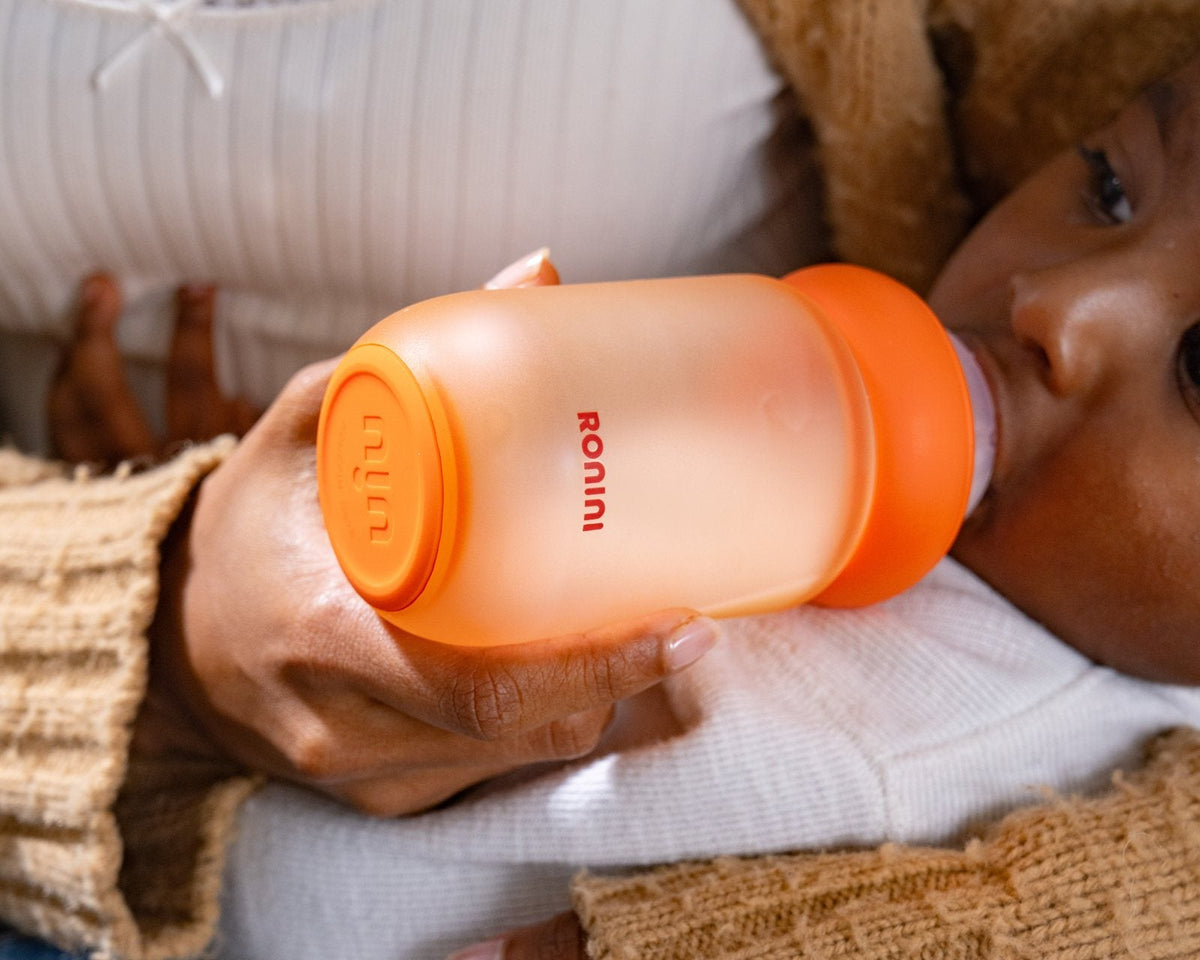
A borosilicate glass baby bottle with a bonded silicone exterior for added grip and everyday impact protection.
Shop now
From $60
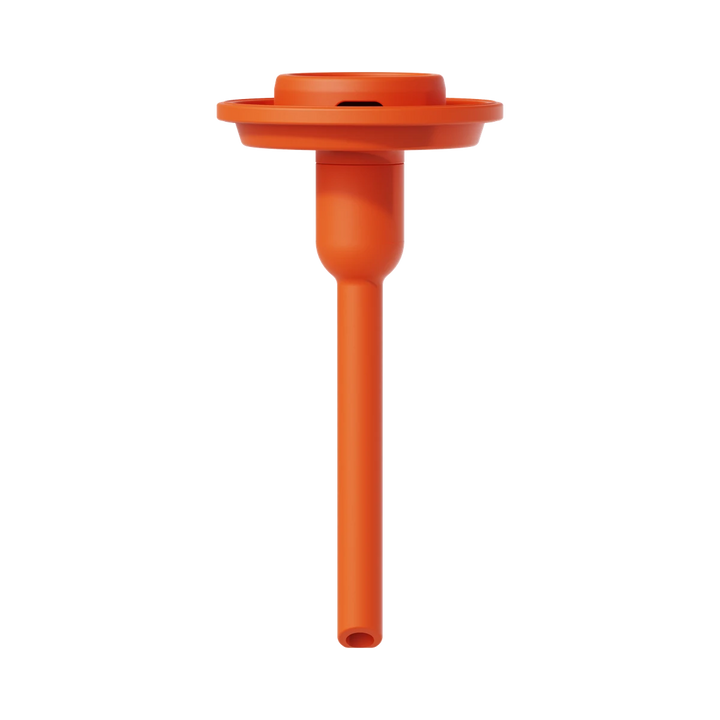
An optional food-grade silicone tube that gives incoming air a separate route during feeding. Two tubes per pack. Sized for 5 oz bottles; in...
Shop now
$10
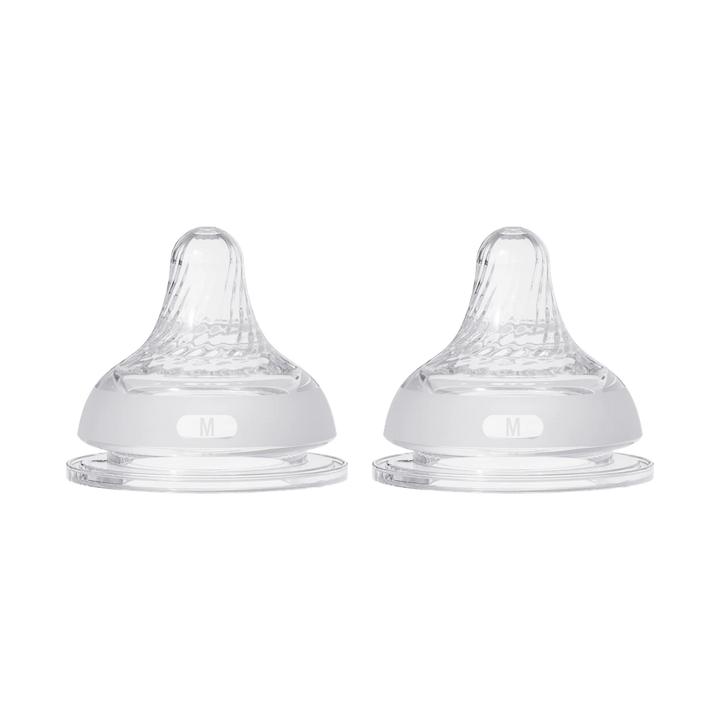
Food-grade silicone nipples in four flows named by pace: Drop, Sip, Stream and Rapid. Two nipples per pack. All four flows fit both Ronini...
Shop now
$10
Disclosure This guide is published by Ronini, and we sell baby bottles and a venting accessory. Every study and ruling above is linked, so you can read them yourself.
Frequently asked questions
Do anti-colic bottles actually work?
The vent does its job: it stops a vacuum from slowing or stopping the flow. Whether that prevents colic hasn't been shown. The biggest trial, 1,041 babies, found no colic difference between two vent designs.
What is the best bottle for a colicky baby?
No bottle is proven to treat colic. Look for a vent that works, a flow that suits your baby and a nipple they latch on to well, and try paced feeding. If the crying is long or worries you, call your pediatrician.
Is Ronini an anti-colic bottle?
It has what people mean by the term: a vent in every nipple, an optional Venting Tube that keeps air out of the milk, and four flows. We don't call it anti-colic, because no bottle has been shown to prevent colic.
Are base-vented bottles better than nipple-vented bottles?
Not for colic, on what we know now. The 2026 trial found no real difference. A hint of less crying with base vents still needs a trial designed to test it.
When should I call the doctor about crying?
Any time you're worried. Call straight away if your baby has a fever, is vomiting, isn't feeding or gaining weight, or the crying sounds different or won't stop. Your pediatrician can rule out other causes.
References
Sources & references
- [1] Exploring Alternative Methods to Reduce Milk Flow Rate From Infant Bottle Systems: Bottle Angle, Milk Volume, and Bottle Ventilation. American Journal of Speech-Language Pathology 32(5). September 2023.
- [2] Liu Y, Ding YF, et al. Feeding Bottles With Different Venting Methods and Gastrointestinal Discomfort in Infants: A Randomized Clinical Trial. JAMA Network Open. March 2026.
- [3] American Academy of Pediatrics, HealthyChildren.org. Colic Relief Tips for Parents.
- [4] Daelemans S, Peeters L, Hauser B, Vandenplas Y. Recent advances in understanding and managing infantile colic. F1000Research. 2018.
- [5] Advertising Standards Authority. Ruling on Mayborn (UK) Ltd. September 2024.
General information, not medical advice. Your pediatrician knows your baby best. Last reviewed October 14, 2026.
Shop the story
An optional food-grade silicone tube that gives incoming air a separate route during feeding. Two tubes per pack. Sized for 5 oz bottles; in...
Shop now
$10
Food-grade silicone nipples in four flows named by pace: Drop, Sip, Stream and Rapid. Two nipples per pack. All four flows fit both Ronini...
Shop now
$10
A borosilicate glass baby bottle with a bonded silicone exterior for added grip and everyday impact protection.
Shop now
From $60
Feeding notes from Ronini
Practical feeding tips, new products, and news from us.
Sign up for Ronini emails. Unsubscribe anytime. Read our Privacy Policy.
Further reading
Explore The Ronini Journal Bottle Feeding
 Bottle Feeding
 Bottle Feeding


