

Overview
Paced bottle feeding puts your baby in charge of how fast a bottle feed goes and when it ends. It works with breast milk or formula, at any age. The CDC and UNICEF UK both describe bottle feeding this way, [1] [2] though the research on its long-term effects is still early.
The idea A bottle can pour faster than a baby wants to drink. Pacing gives the speed back to your baby.
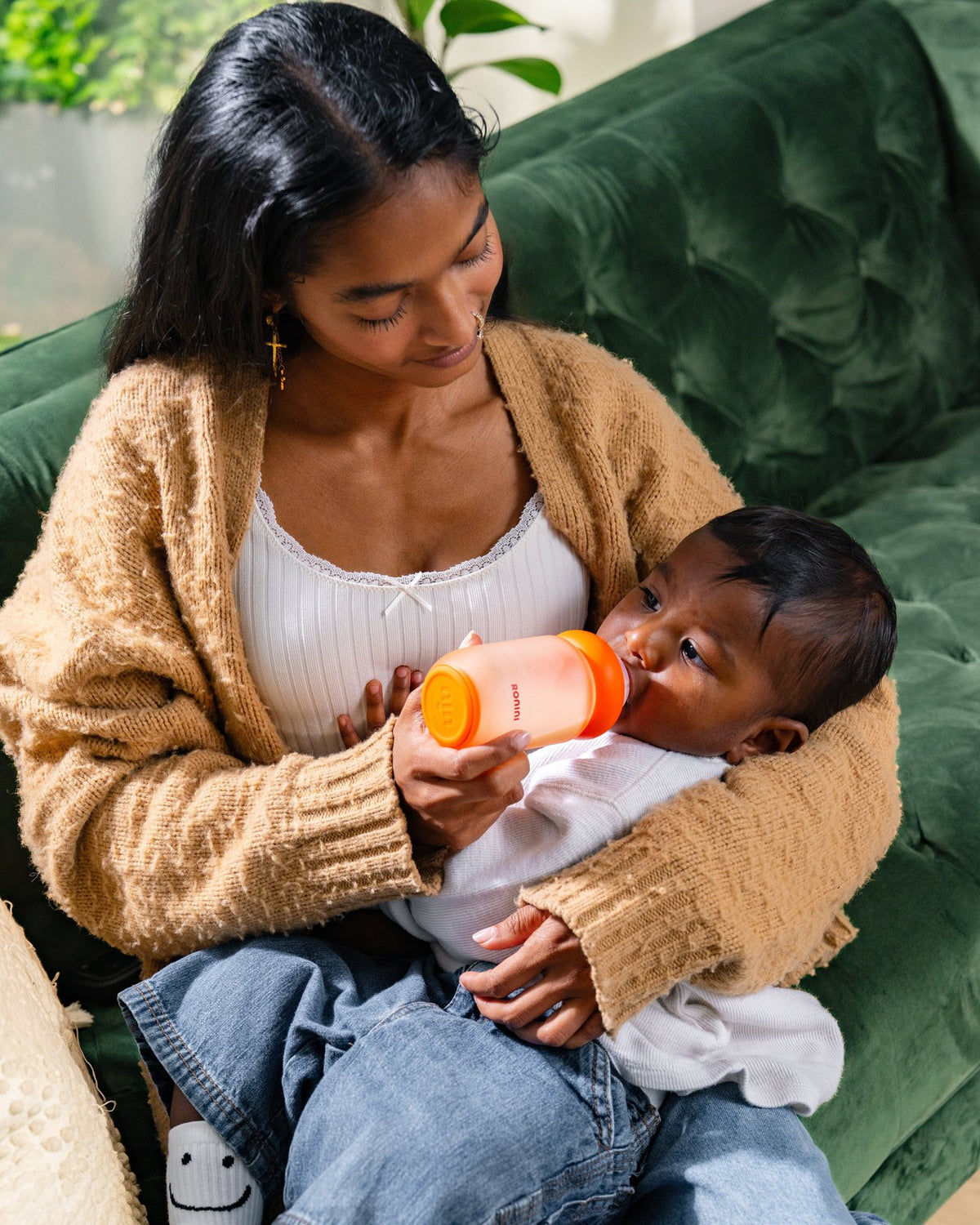
The basics Hold your baby fairly upright, with the bottle close to level so milk only comes when they suck. Let them take breaks. When they show they’re full, stop, even if there’s milk left.
Who it is for Every bottle-fed baby, and especially babies who also breastfeed. It’s also what you teach anyone else who gives a bottle.

Where paced feeding comes from
The method goes back to Dee Kassing, who described it in the Journal of Human Lactation in 2002. Her aim was to let breastfed babies use their mouths and set their own pace on a bottle, much as they do at the breast. [3]
UNICEF UK calls the same approach responsive bottle feeding. [2] The CDC doesn’t use either name. Its bottle feeding steps are the same, though. [1]
Step by step
- Start before crying. Offer the bottle at the early hunger signs: hands to mouth, turning toward the bottle, lip smacking. Crying often comes late, so calm a crying baby first. [4]
- Hold your baby close and fairly upright. Keep their head higher than their tummy, never flat, and hold them where you can see their face. Don’t prop the bottle. Someone should always be holding your baby for it. [2] [1]
- Invite, don’t push. Rub the nipple gently against your baby’s upper lip. Wait for a wide mouth, then let them draw it in. [2]
- Keep the bottle nearly level. Close to horizontal, tipped just enough that milk sits at the tip of the nipple. That way milk only flows while your baby is sucking. [2]
- Follow their breaks. Splayed fingers and toes, milk spilling out of the mouth, a pause in sucking, turning away: any of these can mean your baby wants a rest. Lower the bottle or take the nipple out so the flow stops, and wait until they show they want more. [2]
- Burp along the way. The AAP suggests burping a bottle-fed baby after every 2 to 3 oz (60 to 90 ml). [5] Switching arms halfway is a natural time to do it.
- Stop when they’re done. A closed mouth, turning away and relaxed hands mean your baby has had enough. [4] Don’t push them to finish. Forcing a feed can mean they take more than they need. [2]
How long a paced feed takes
There’s no required length. La Leche League says a bottle typically takes about 15 to 20 minutes. [6] MedlinePlus puts it at about 20, and suggests a nipple with a smaller hole if your baby is eating faster. [7]
Some feeds will be long and some short, and the CDC says that’s normal. [8] The ones worth a second look sit at either end. A feed that’s gone in a few minutes, with gulping. Or one that drags on while your baby works hard. Both point to the nipple flow.
What the research shows
Paced feeding is widely recommended. It hasn’t been tested in large trials, though, and it isn’t proven to prevent overfeeding, colic or breastfeeding problems. Here’s what is known:
- Bottles make it easy to finish. A CDC and FDA study of 1,250 infants compared babies fed only from bottles with babies fed only at the breast. In late infancy, the bottle-fed babies were much more likely to empty the bottle or cup: 68% against 27%, whatever the milk. [9]
- Pacing slows feeds without changing how much babies drink. A small 2025 study of 29 infants found paced feeds were longer and slower, with no significant difference in the amount taken. The authors call it preliminary evidence. [10]
- Parents who pace push less. Fewer than half of the 197 mothers in a 2023 survey had heard of paced feeding. The ones who used it were much less likely to encourage their baby to finish the bottle. [11]
- In premature babies, pacing shortened the pauses in breathing during feeds in a small 2025 study. [12] The Academy of Breastfeeding Medicine says pacing may be beneficial, especially for preterm infants. [13]

Common mistakes
| Mistake | Why it matters | Instead |
|---|---|---|
| Tipping the bottle steeply | Gravity pushes milk out faster than your baby is sucking | Keep the bottle close to level, with milk just at the tip |
| Laying your baby flat | Harder to swallow and breathe comfortably | Hold them fairly upright, head higher than tummy |
| Propping the bottle | The CDC links propping with choking, ear infections, tooth decay and eating more than needed [1] | Always hold your baby for a bottle |
| Waiting until your baby is crying hard | A frantic baby gulps | Feed on early hunger signs |
| Pushing to finish the bottle | Your baby may take more than they need | Stop at fullness signs, even with milk left |
| A flow that’s too fast | Pacing is hard if milk pours out | Try a slower nipple |
Teaching someone else
Pacing matters most when someone else is holding the bottle: a partner, a grandparent, the sitter, daycare. Show them once. Then watch them try.
UNICEF UK suggests that in the early weeks, parents or main caregivers give most of the feeds, which helps babies feel secure. [2] For everyone else, a short note on the fridge does the job: the flow you use, your baby’s hunger and fullness signs, and how you pause and burp.
When to stop pacing
You don’t have to. Hunger and fullness signs change as your baby grows and starts solid foods, [4] but the idea doesn’t: your child decides how much. The bottle steps just matter less once your baby drinks from a cup, which the AAP suggests offering from about 6 months. [14]
Which nipple helps
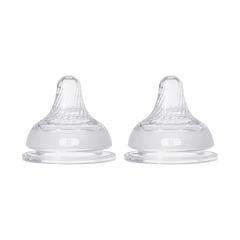
No bottle or nipple has been shown to be best for paced feeding. What you want is a flow slow enough for your baby to keep up with, and a nipple that stays full of milk when the bottle is nearly level.
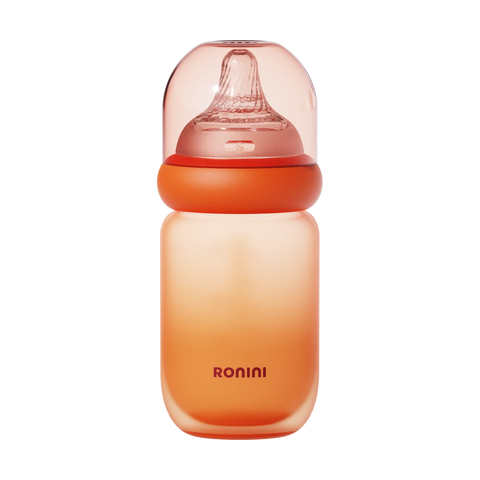
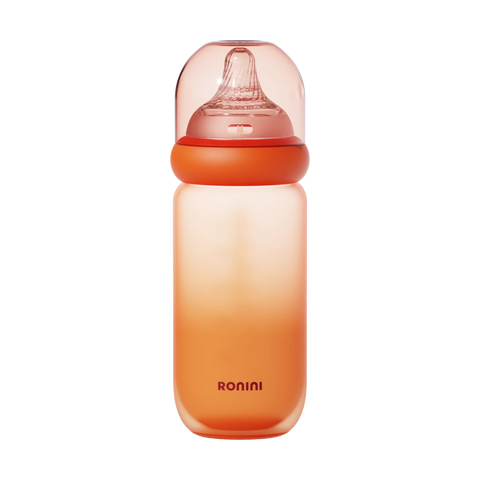
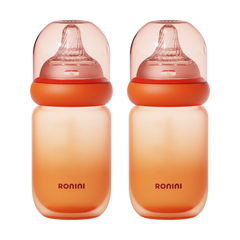
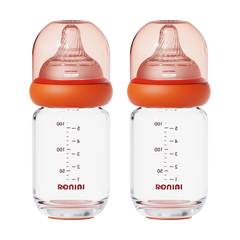
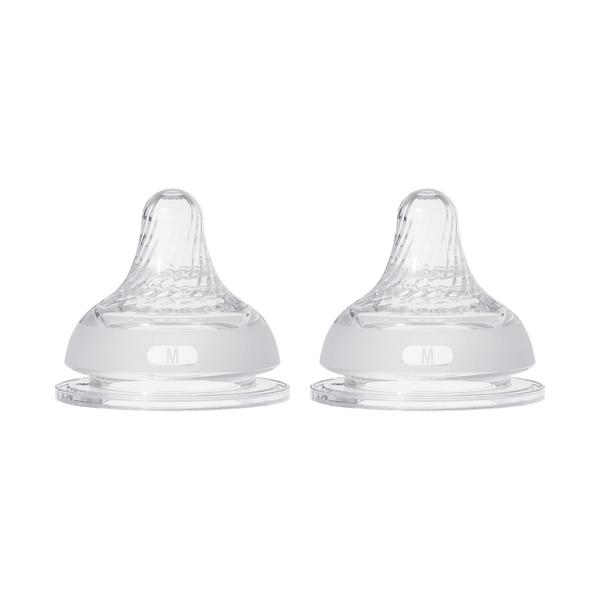
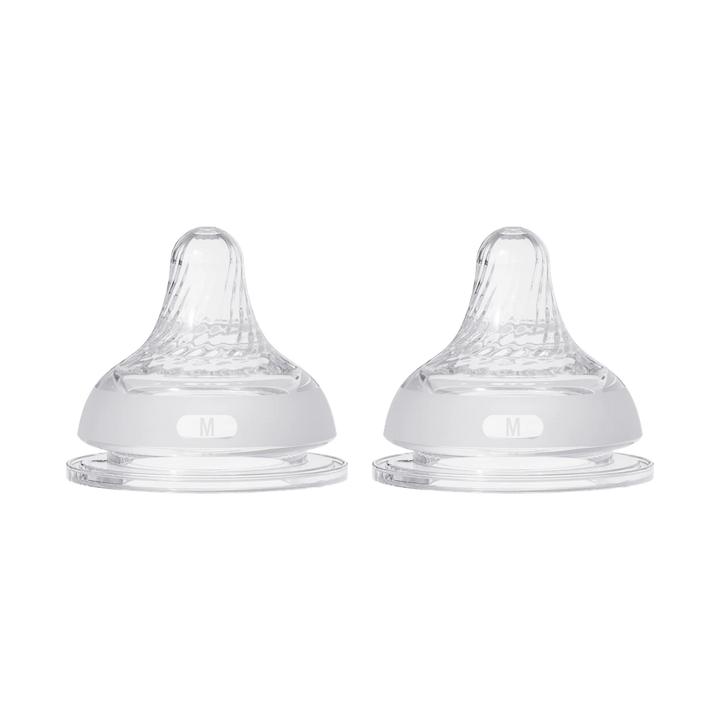
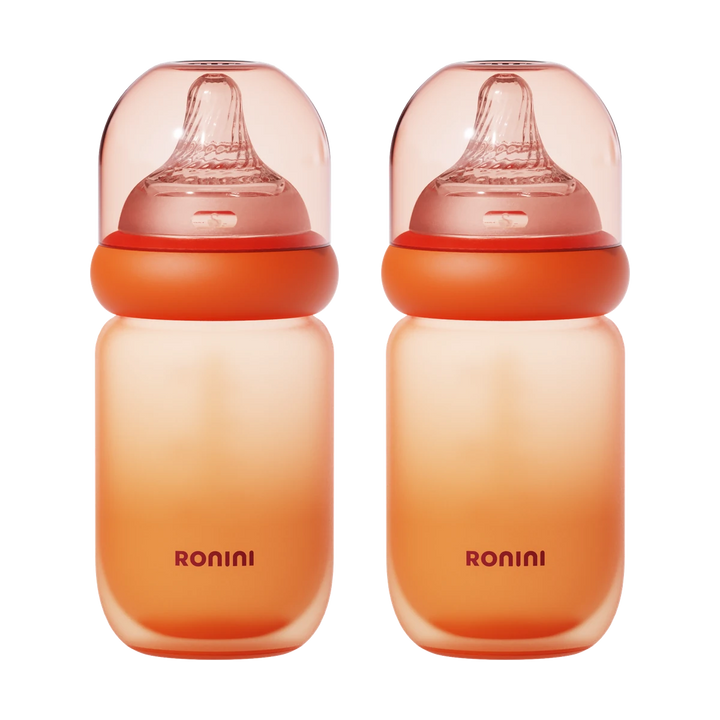
For pacing, we suggest Drop, our slowest flow. Sip is the one that comes on our 5 oz (160 ml) bottle. The Ronini nipple is food-grade silicone. And if feeds are already calm on the flow you have, there’s no reason to switch.
Accessories
Food-grade silicone nipples in four flows named by pace: Drop, Sip, Stream and Rapid. Two nipples per pack. All four flows fit both Ronini...
$10
Shop nowDisclosure This guide is published by Ronini, and The Nipple is our product. The steps come from the CDC, UNICEF UK and the AAP and work with any bottle.
Frequently asked questions
What is paced bottle feeding?
Bottle feeding where your baby sets the pace. You hold them fairly upright, keep the bottle close to level so milk only flows when they suck, and stop when they show they’re full.
Is paced feeding only for breastfed babies?
No. It started as a way to bottle feed breastfed babies, but the steps are the same for formula. The CDC’s bottle feeding advice covers breast milk and formula alike.
What are the downsides of paced feeding?
Feeds can take longer, and it takes practice. Everyone who gives your baby a bottle has to learn it too. There’s also not much research on its long-term effects.
How long should a paced bottle feed take?
No set time. La Leche League says about 15 to 20 minutes is typical, and the CDC notes some feeds are long and some short. Watch your baby, not the clock.
Does paced feeding help with gas?
It hasn’t been studied for gas. Pausing to burp is part of it, though, and the AAP suggests burping a bottle-fed baby after every 2 to 3 oz.
At what age do you stop paced feeding?
There’s no set age. The steps matter as long as your baby uses a bottle, and the idea behind them, letting your child decide how much to eat, carries on after that.
Can I pace feed in a side-lying position?
Some feeding specialists use an elevated side-lying position, mostly studied in premature babies. If you’d like to try it, ask your pediatrician or a lactation consultant to show you how.
References
Sources & references
- [1] Centers for Disease Control and Prevention. About Feeding From a Bottle. March 2026.
- [2] UNICEF UK Baby Friendly Initiative. Infant formula and responsive bottle feeding. Updated November 2024.
- [3] Kassing D. Bottle-feeding as a tool to reinforce breastfeeding. Journal of Human Lactation. 2002.
- [4] Centers for Disease Control and Prevention. Signs Your Child Is Hungry or Full. March 2026.
- [5] American Academy of Pediatrics, HealthyChildren.org. Baby Burping, Hiccups and Spit-Up. December 2024.
- [6] La Leche League International. Bottles and Other Tools. March 2025.
- [7] MedlinePlus, US National Library of Medicine. Colic and crying: self-care. Reviewed July 2025.
- [8] Centers for Disease Control and Prevention. How Much and How Often to Feed Infant Formula. April 2026.
- [9] Li R, Fein SB, Grummer-Strawn LM. Do infants fed from bottles lack self-regulation of milk intake compared with directly breastfed infants? Pediatrics. 2010.
- [10] Ventura AK, Drewelow K, Richardson M. Does paced bottle-feeding improve the quality and outcome of bottle-feeding interactions? Early Human Development. 2025.
- [11] Ventura AK, Drewelow K. Knowledge and Use of Paced Bottle-Feeding Among Mothers of Young Infants. Journal of Nutrition Education and Behavior. 2023.
- [12] Hübl and colleagues. Effect of feeding in elevated side-lying and paced bottle feeding on swallow-breathe coordination in healthy preterm infants. Early Human Development. 2025.
- [13] Academy of Breastfeeding Medicine. Clinical Protocol #3: Supplementary Feedings in the Healthy Term Breastfed Neonate. Revised 2017.
- [14] American Academy of Pediatrics, HealthyChildren.org. From Bottle to Cup. July 2023.
General information, not medical advice. Your pediatrician knows your baby best. Last reviewed October 11, 2026.
Shop the story
Feeding notes from Ronini
Practical feeding tips, new products, and news from us.
Sign up for Ronini emails. Unsubscribe anytime. Read our Privacy Policy.
Further reading
Explore The Ronini Journal Bottle Care
 Bottle Feeding
 Bottle Feeding


