
Overview
The feeding part of a registry can be short. A few small bottles, spare nipples, something to clean and dry them with. Most of the rest can wait until you know how feeding is going.
Start small Until the baby's here, you won't know if you'll mostly breastfeed, pump, use formula or mix. Register for a starter set. Adding bottles later takes one order.
Check what touches the milk For a non-toxic registry, look at the bottle body and the nipple. Glass and silicone are the easiest to check. BPA has been out of US baby bottles for over a decade, so "BPA-free" on its own tells you very little. [1]
Spend where it gets used You'll pick up a bottle eight or more times a day for months. That's where a better object pays for itself. A gadget that does one job usually doesn't.

The checklist
| Item | How many | Why |
|---|---|---|
| Bottles, 5 oz | 2 if you plan to breastfeed; 4 to 6 if you plan to formula feed or pump | Small bottles suit the early months. Add more once you know your routine. |
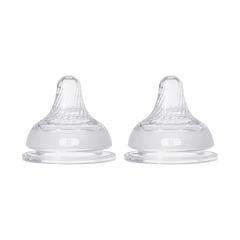
| Spare nipples | A 2-pack in the slowest flow, and one in the next | Newborns usually start slow. Nipples wear out before bottles do. |
| Bottle brush | 1, plus a small nipple brush | Every bottle gets cleaned after every feed. [2] |
| Drying rack or a clean towel | 1 | Parts need to air-dry fully before you put them away. [2] |
| A way to sanitize | Your dishwasher, or a pot for boiling | A dishwasher with hot water and heated drying, or a sanitize cycle, does the job. A steam sterilizer is optional. [2] |
| Burp cloths | 6 or more | You'll go through more of these than anything else here. |
| Milk storage bags or containers | Only if you plan to pump | Clean, food-grade containers with tight lids, or bags made for breast milk. [3] |

What you can skip, at least for now
- A bottle warmer. The CDC says breast milk and formula don't need warming. Plenty of babies take milk cool or at room temperature. [3] If yours wants it warm, a bowl of warm water works.
- A dedicated sterilizer. A dishwasher with a sanitize setting or heated drying can stand in. [2]
- Big bottles. 8 oz bottles come in when feeds reach 6 to 8 oz, often around 6 months for formula-fed babies. Lots of breastfed babies never need them. [4]
- Ten of one brand. Some babies refuse their first bottle. Register for a small set and check the return policy.
 Read next
How many baby bottles do you need?
Read next
How many baby bottles do you need?
If you want one nicer thing
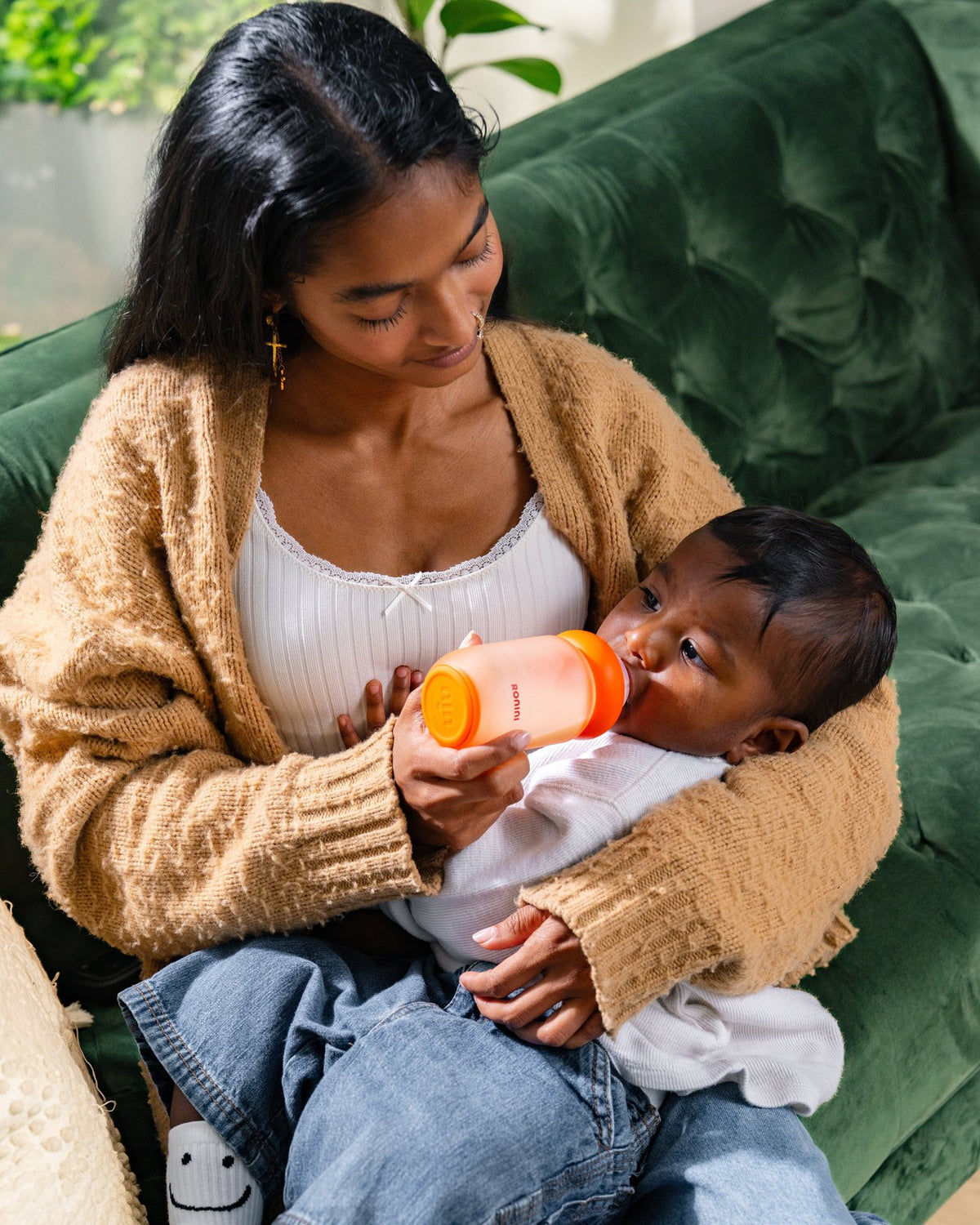
Make it the bottle. You'll hold it at 3 am and across the table at brunch, for most of a year. Glass is easy to trust, and a good glass bottle is nice to hold.
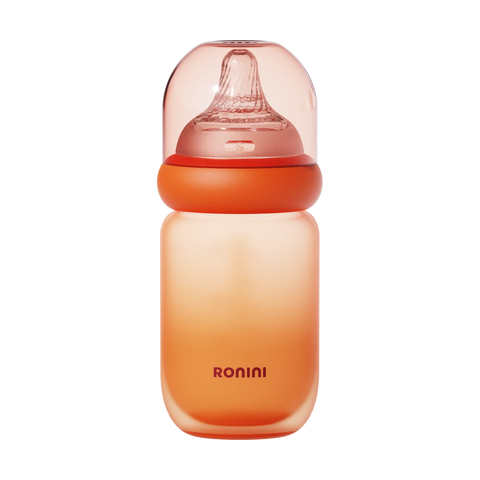
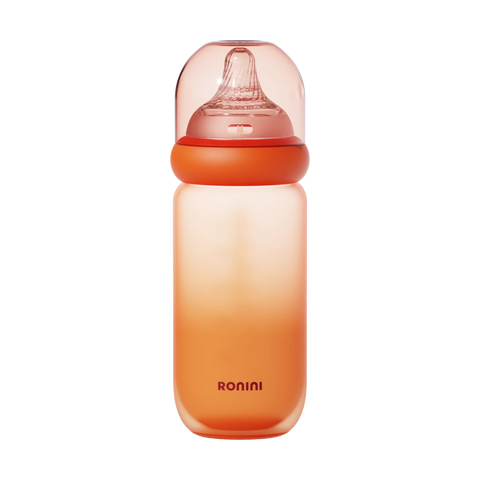
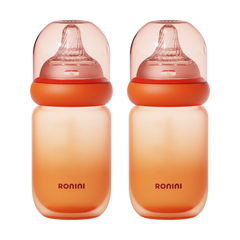
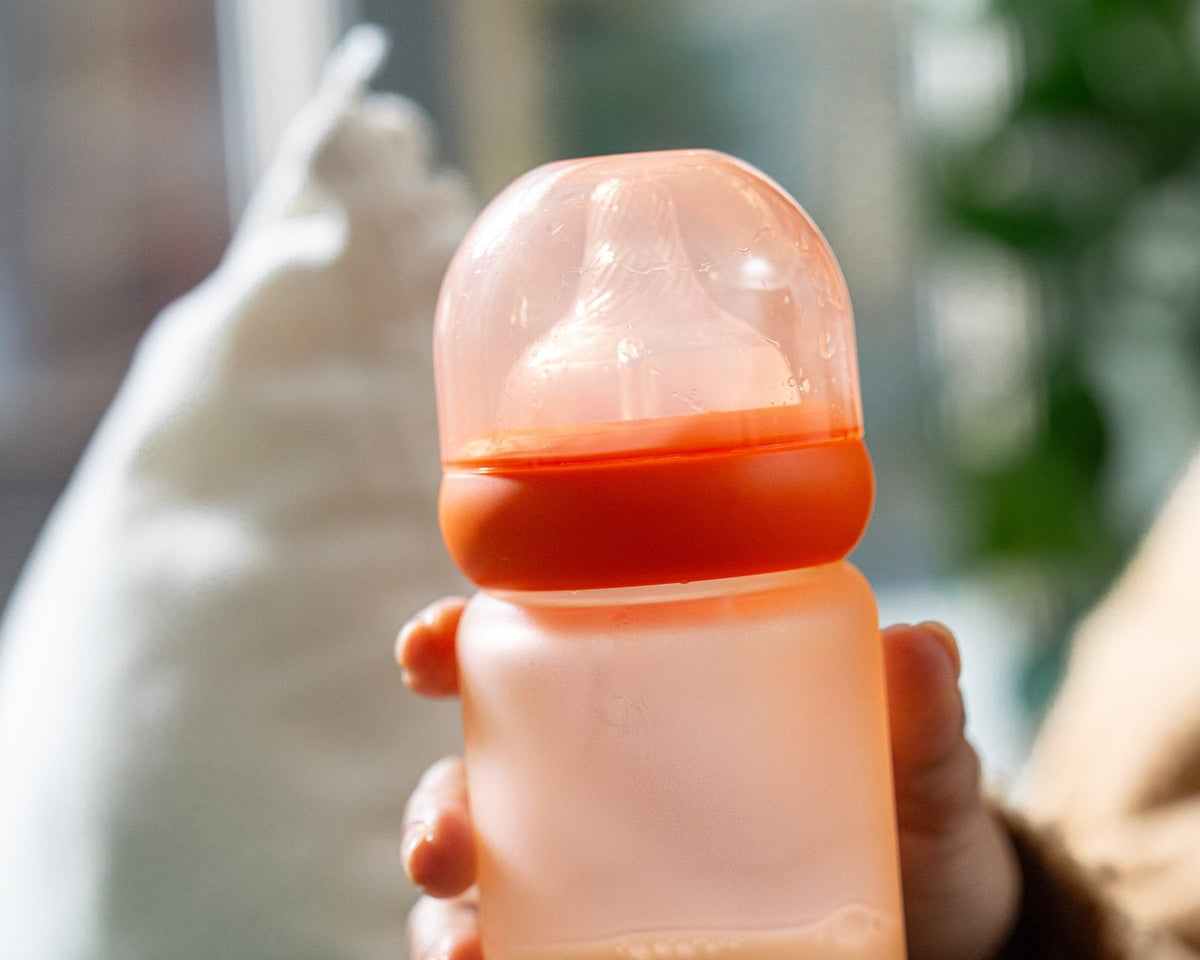
- The Wrapped Glass Bottle: borosilicate glass with food-grade silicone molded on, thicker at the base. Soft in the hand. It absorbs most drops and contains the glass if it does break, but inspect it after any fall. 5 oz and 8 oz 2-packs.
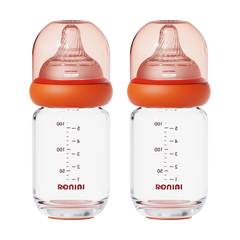
- The Glass Bottle: plain borosilicate glass. It's the one we suggest for warming. Same sizes.
- The Duo: one 2-pack of each, in the same size.
The 5 oz comes with Sip nipples and the 8 oz with Stream. Everything that touches the milk is glass or food-grade silicone, and the independent lab report is on our safety page.
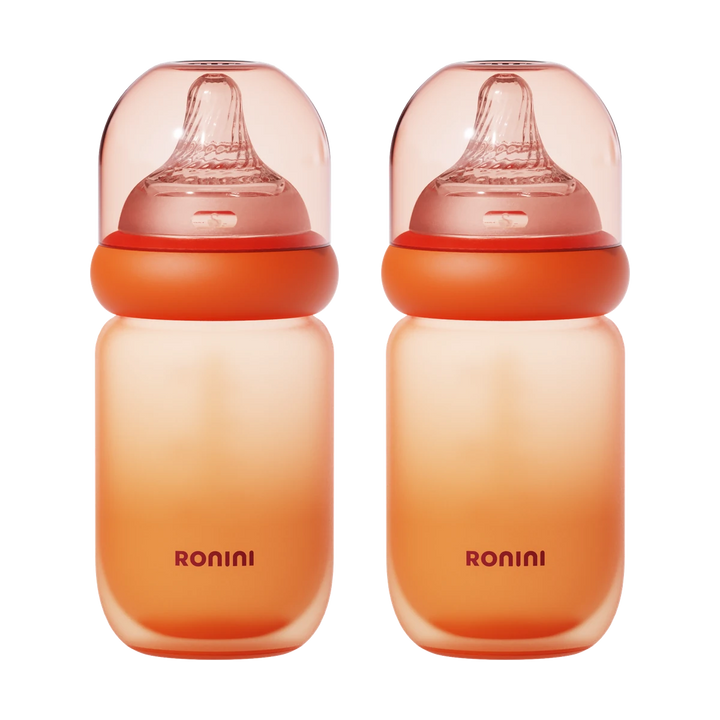
A borosilicate glass baby bottle with a bonded silicone exterior for added grip and everyday impact protection.
Shop now
From $60
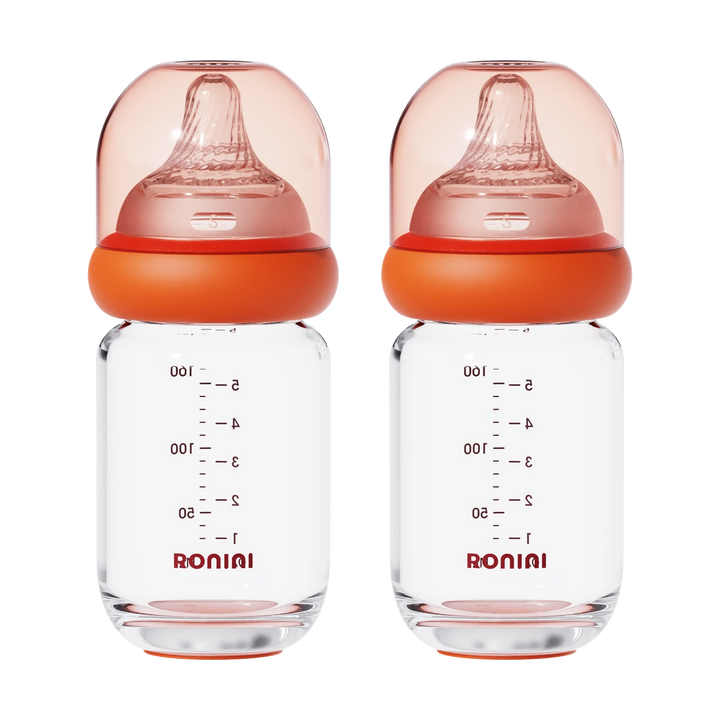
Bare borosilicate glass for everyday feeds at home. Easy to see through, with the same soft nipple and interchangeable parts as the Wrapped Glass...
Shop now
From $40
Disclosure This list is published by Ronini, and we sell baby bottles and nipples. Everything else on it is a category, not a brand, so pick your own.
Frequently asked questions
How many bottles should I put on my baby registry?
Two 5 oz bottles if you plan to breastfeed, four to six if you'll formula feed or pump. Add more once you know how often you feed and wash.
What makes a baby bottle non-toxic?
Start with what touches the milk. Glass and silicone are simple to check. Every US baby bottle is BPA-free now, so look for more than that, like published lab results for lead and other metals.
What's on a minimalist baby registry for feeding?
A few small bottles, spare nipples, a brush, a drying rack and burp cloths. Your dishwasher can sanitize. Leave the warmer and the big bottles off until you know you need them.
Are glass baby bottles a good registry gift?
If the parents want glass, yes. It lasts, it doesn't hold onto smells or stains, and wear is easy to spot. Choose a small size and a slow flow for a newborn.
Do I need a bottle sterilizer?
Not necessarily. The CDC says a dishwasher with hot water and heated drying, or a sanitize setting, works. So does boiling for five minutes.
References
Sources & references
- [1] U.S. Food and Drug Administration. Bisphenol A (BPA): Use in Food Contact Application.
- [2] Centers for Disease Control and Prevention. How to Clean, Sanitize, and Store Infant Feeding Items. March 2025.
- [3] Centers for Disease Control and Prevention. Breast Milk Storage and Preparation. August 2026.
- [4] American Academy of Pediatrics, HealthyChildren.org. Amount and Schedule of Baby Formula Feedings.
General information, not medical advice. Your pediatrician knows your baby best. Last reviewed October 14, 2026.
Shop the story
Feeding notes from Ronini
Practical feeding tips, new products, and news from us.
Sign up for Ronini emails. Unsubscribe anytime. Read our Privacy Policy.
Further reading
Explore The Ronini Journal Bottle Feeding
 Bottle Feeding
 Glass Bottles


