


Overview
The right flow is one your baby can keep up with. Suck, swallow, breathe, in a steady rhythm, with a break whenever they need one and a calm baby at the end. No baby has to move up at a set age. [1]
Too fast Gulping, coughing or choking. Hard swallows, extra drool, milk running out of the mouth, a baby who turns away from the bottle. Stop the feed for a moment, then try a slower nipple. [1]
Too slow Feeds start taking longer than they used to. Lots of quick sucking with few swallows, a nipple that flattens, fussing halfway through. Check the assembly and the nipple’s wear before you go one step faster. [1]
About right Steady sucks and swallows with short pauses. A relaxed body. A baby who stops on their own once they’re full.

Signs at a glance
Watch the whole feed, not one moment of it. A very hungry baby may gulp at the start, and plenty of babies slow down toward the end.
| What you see | What it can mean | What to try first |
|---|---|---|
| Gulping, coughing, choking or sputtering | Milk is coming faster than your baby can swallow | Pause, sit your baby more upright and hold the bottle closer to level. Try a slower nipple at the next feed. |
| Milk spilling from the corners of the mouth, extra drooling | The flow may be too fast | As above |
| Wide eyes, splayed fingers and toes, pulling off the bottle | Your baby needs a break | Tip the bottle down to stop the flow and let them rest |
| Very quick sucking with few swallows | Too little milk is coming with each suck | Check that the nipple isn’t blocked or flattened and the collar isn’t over-tightened |
| Feeds getting much longer, fussing mid-feed | The flow may now be too slow for your baby | After those checks, try one step faster for a few feeds |
| Nipple flattening during the feed | Air isn’t getting back into the bottle as milk leaves | Loosen the collar slightly, clear the vent, and check that the nipple sits flat |
| Dozing off suddenly early in the feed | Sometimes a way of taking a break from a fast flow, sometimes plain tiredness | Pause and burp. If your baby wakes and wants more, slow things down. |
When the flow is too fast
Too fast means more milk than your baby can comfortably swallow. MedlinePlus, from the National Library of Medicine, is blunt about it: if your baby is choking or spitting up, the flow is too fast. [2]
Right then, stop. Let your baby breathe. Sit them up a little more and bring the bottle closer to level, so milk only comes out when they suck. [3]
UNICEF UK says to lower the bottle and cut off the flow when your baby tells you they need a break. They stop sucking, turn their head, push the bottle away. [4]
Next feed, go one nipple slower. Don’t widen the hole. The USDA WIC feeding guide warns that milk runs too fast through a large hole and a baby could choke, and says never to alter a nipple to change its flow. [5] Health Canada agrees that making nipple holes bigger isn’t safe. [6]
Fast flow can also mean gulped air. The American Academy of Pediatrics (AAP) lists slowing the flow as one way to help a gassy bottle-fed baby. [7]
When the flow may be too slow
A slow flow means your baby works harder for each swallow. That isn’t a problem by itself. Some babies, especially ones who also breastfeed, stay on a slow flow for as long as they take a bottle.
Before you size up, rule out the things that make any nipple feel slow:
- Assembly. The nipple should sit flat in the collar. Make the collar snug, but don’t crank it: screwed down too hard, it squeezes the seal and changes how milk comes through.
- The vent. If your bottle has a vent or air hole, make sure it’s clean. Dried milk blocks them.
- Wear. An old nipple can feed differently from a new one. Try a fresh nipple in the same flow before you decide the flow is wrong.
- Your baby. Sleepiness, a cold, teething, a busy day. Any of these can slow feeds for a while.

Flow names and age labels
There’s no shared standard for flow names or ages, so they mean different things at different brands. When researchers measured 26 types of nipples from 15 brands, the fastest flowed about 50 times faster than the slowest. [8]
Their conclusion: a nipple’s name doesn’t give clear information about its flow. Even nipples with the same label from one brand didn’t always match. [8]
A later study of 375 nipples found that packaging didn’t accurately reflect flow, [9] and a 2025 study noted that flow levels aren’t labeled consistently across manufacturers. [10] So if you switch brands, or daycare uses a different bottle, watch the first few feeds closely.
Use the age on the box as a starting point. The NHS says the move to a faster teat should be led by your baby. [11]
How to change flow
- Do the checks first. Assembly, vent, wear. Sometimes a fresh nipple in the same flow is all it takes.
- Change one thing at a time. Move one step. Keep the bottle and the position the same, or you won’t know what made the difference.
- Give it a few feeds. One bad feed can happen for lots of reasons. Look at the pattern over two or three.
- Go back if the signs come back. Gulping, coughing or spilled milk on the faster flow means it’s time to return to the slower one.
- Keep pacing. On any flow, hold the bottle close to level and let your baby take breaks.
When it is not the nipple
Not every hard feed is a flow problem. Coughing at the start can just mean a very hungry baby. Slow, sleepy feeds can follow a vaccination, a cold or a long day.
Arching, crying during feeds, refusing to feed or frequent forceful spit-up are worth a call to your pediatrician, since they can point to reflux or another problem. [12] And if your baby struggles to suck, swallow and breathe on every nipple you try, ask whether a feeding evaluation would help.
Important
Call your pediatrician right away if your baby vomits forcefully after feeds, has green or bloody vomit, or seems to be in pain while feeding. If your baby can’t breathe, or chokes on something you can’t clear, call 911. [13]
How Ronini’s four flows line up
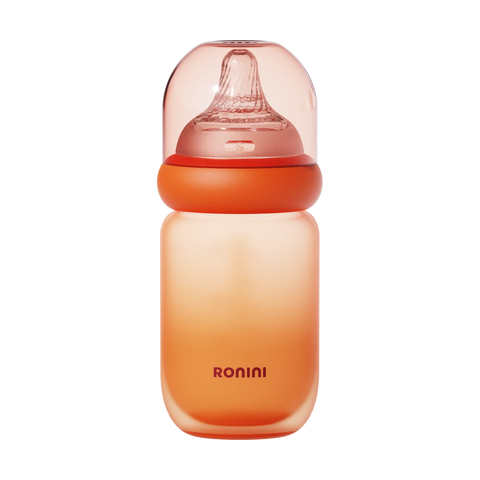
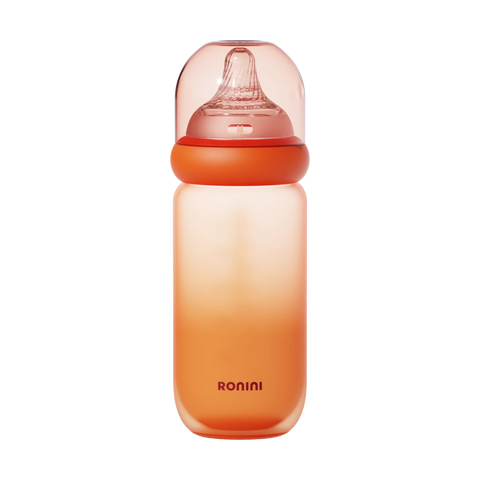
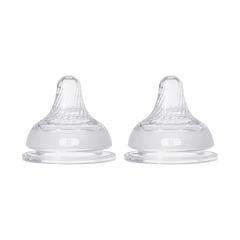
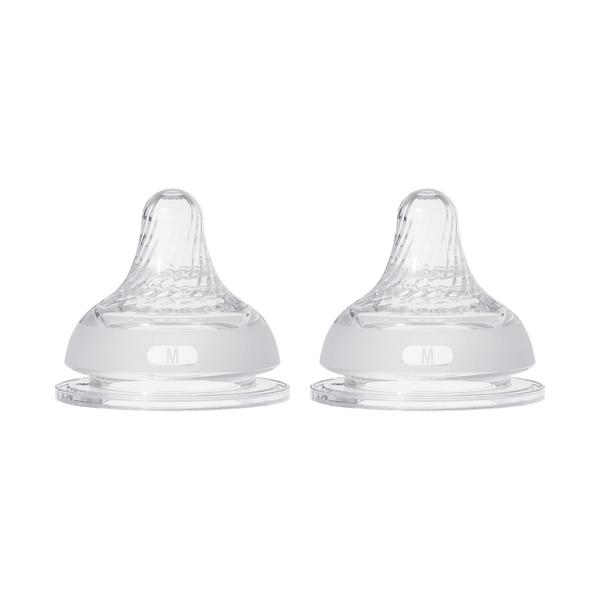
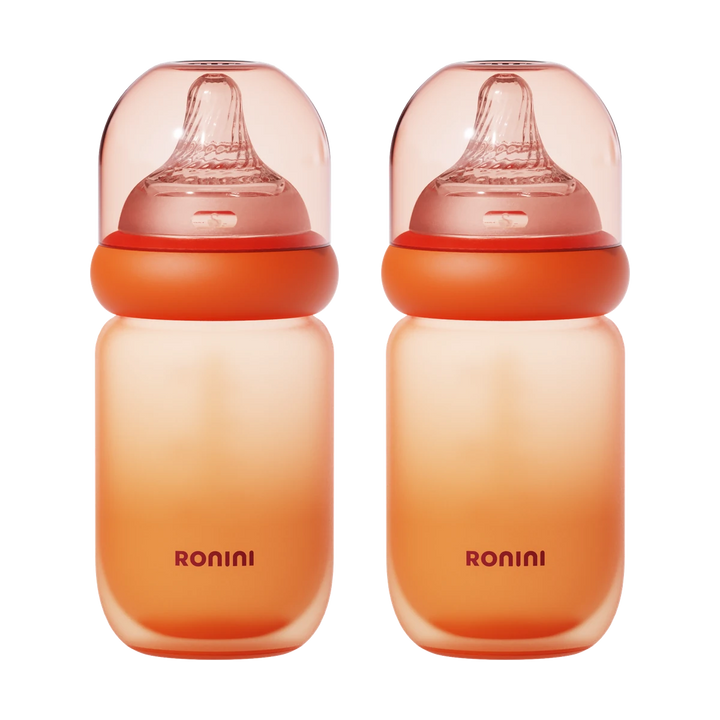
We name our nipples by pace, not age. Drop is the slowest, then Sip, then Stream, and Rapid is the fastest. Sip comes on the 5 oz (160 ml) bottle and Stream on the 8 oz (240 ml) bottle, and all four flows fit both sizes.
The box gives an age to start from: 0+ months for Drop and Sip, 3+ months for Stream, 6+ months for Rapid. Your baby’s signs count for more than the box does.
The Ronini nipple is food-grade silicone, designed in consultation with an IBCLC. A subscription sends new nipples every two months until your baby’s first birthday, so you’re less likely to mistake a worn nipple for a flow problem.
Accessories
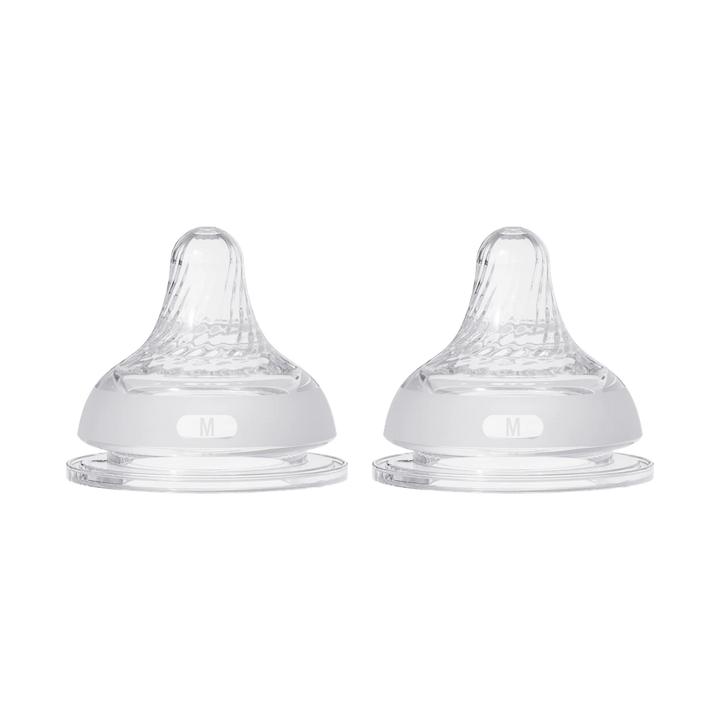
Food-grade silicone nipples in four flows named by pace: Drop, Sip, Stream and Rapid. Two nipples per pack. All four flows fit both Ronini...
$10
Shop nowDisclosure This guide is published by Ronini, and The Nipple is our product. The signs and steps above come from the health sources listed below, and they apply to any brand of bottle.
Frequently asked questions
What are the signs that a nipple flow is too fast?
Gulping, coughing, choking, hard swallowing, extra drooling, milk spilling from the mouth and pulling away from the bottle. Pause, bring the bottle closer to level, and go one nipple slower next time.
What are the signs that a nipple flow is too slow?
Longer feeds than before, quick sucking with few swallows, a nipple that collapses, fussing mid-feed. Before you change flow, make sure the nipple isn’t worn or blocked and the collar isn’t too tight.
When should I move up a nipple size?
When the too-slow signs show up and the checks don’t fix them. Not on a birthday. Nationwide Children’s Hospital says there’s no need to move up a level based on age, and some babies use the same level the whole time they bottle feed.
Can the wrong flow cause gas or spit-up?
A fast flow can make a baby gulp, which can mean more swallowed air. The AAP’s advice for a gassy bottle-fed baby starts with slowing the flow. Spit-up is common and usually nothing to worry about, but forceful vomiting, or vomit that’s green or has blood in it, needs a call to your pediatrician.
Are nipple levels the same across brands?
No. There’s no shared standard, and researchers have measured very different flows between brands, even between nipples with the same label. Go by your baby, not the number on the box.
Should a breastfed baby use a slow flow nipple?
Often, yes. Nationwide Children’s notes that babies fed at the breast and by bottle may benefit from a slower nipple, and the NHS suggests a slow-flow teat when mixed feeding.
How long should a bottle feed take?
No US health agency sets a number. La Leche League says a bottle typically takes about 15 to 20 minutes. [14] A much quicker feed, with gulping or coughing, points to a flow that’s too fast.
Can I make a nipple faster by cutting it?
No. A bigger hole can make milk flow too fast and cause choking, and a cut nipple can tear. Use the next flow up.
References
Sources & references
- [1] Nationwide Children’s Hospital. Choosing a Bottle Flow Rate (Helping Hands HH-IV-244). 2021.
- [2] MedlinePlus, US National Library of Medicine. Buying and caring for baby bottles and nipples. Reviewed April 2025.
- [3] Centers for Disease Control and Prevention. About Feeding From a Bottle. March 2026.
- [4] UNICEF UK Baby Friendly Initiative. Infant formula and responsive bottle feeding. Updated November 2024.
- [5] USDA WIC. Infant Nutrition and Feeding Guide. 2019.
- [6] Health Canada. Baby bottles, pacifiers and teething necklaces. November 2025.
- [7] American Academy of Pediatrics, HealthyChildren.org. Gas Relief for Babies. January 2025.
- [8] Pados BF and colleagues. Milk Flow Rates from Bottle Nipples Used After Hospital Discharge. MCN, The American Journal of Maternal/Child Nursing. 2016.
- [9] Pados BF, Park J, Dodrill P. Know the Flow: Milk Flow Rates From Bottle Nipples Used in the Hospital and After Discharge. Advances in Neonatal Care. 2019.
- [10] Crandall and colleagues. Infant feeding behavior development to 12 months with typical and slower-flow artificial nipples. Appetite. 2025.
- [11] NHS Best Start in Life. Things you need for formula feeding. December 2025.
- [12] American Academy of Pediatrics, HealthyChildren.org. GER and GERD (Reflux). December 2024.
- [13] American Academy of Pediatrics, HealthyChildren.org. When Your Child Needs Emergency Medical Services. August 2025.
- [14] La Leche League International. Bottles and Other Tools. March 2025.
General information, not medical advice. Your pediatrician knows your baby best. Last reviewed October 11, 2026.
Shop the story
Feeding notes from Ronini
Practical feeding tips, new products, and news from us.
Sign up for Ronini emails. Unsubscribe anytime. Read our Privacy Policy.
Further reading
Explore The Ronini Journal Bottle Feeding
 Bottle Feeding
 Bottle Feeding


