
Overview
Plenty of breastfed babies push the bottle away at first. What tends to help is short, relaxed tries over several days: a calm baby, someone other than the breastfeeding parent offering, and a slow flow held close to level.
The USDA WIC program notes it can take several days for a baby to adjust, so start practicing a week or two before you need bottles to work. [1] If your baby isn’t getting enough to drink in the meantime, call your pediatrician.
Timing Offer the bottle when your baby is calm, not too hungry and not too full. [2]
Who A partner, grandparent or caregiver often has more luck than the breastfeeding parent. [2]
How Slow flow, small amount, bottle close to level. Stop before anyone gets upset.

Why breastfed babies refuse bottles
Because a bottle isn’t the breast. The nipple feels different. Milk can come faster or slower, and the person, the smell and the position all change too. Some babies take to it at once and some need time, and you can’t tell in advance which one you have. [3]
Breastfeeding experts disagree on whether early bottles cause “nipple confusion.” One review found some evidence for bottles and very little for pacifiers. It couldn’t settle whether bottles cause breastfeeding problems or just go along with them. [4]
So there’s no need to fear the bottle, or to hurry it.
When to introduce a bottle
There’s no single right age, and the advice differs:
- La Leche League mentions holding off on a bottle for at least 4 weeks, so breastfeeding is well established. [3]
- The NHS suggests 6 to 8 weeks of breastfeeding only before mixed feeding. [5]
- If you’re going back to work, the CDC suggests starting to pump a few weeks before, to build up milk and get your baby used to a bottle. [6] WIC suggests one or two bottle feeds a day in the week or two before you return. [1]
A one-week plan
- Pick the moment. Go for a calm baby who’s only a little hungry, say an hour or two after a breastfeed. The AAP suggests starting with about half an ounce. [7]
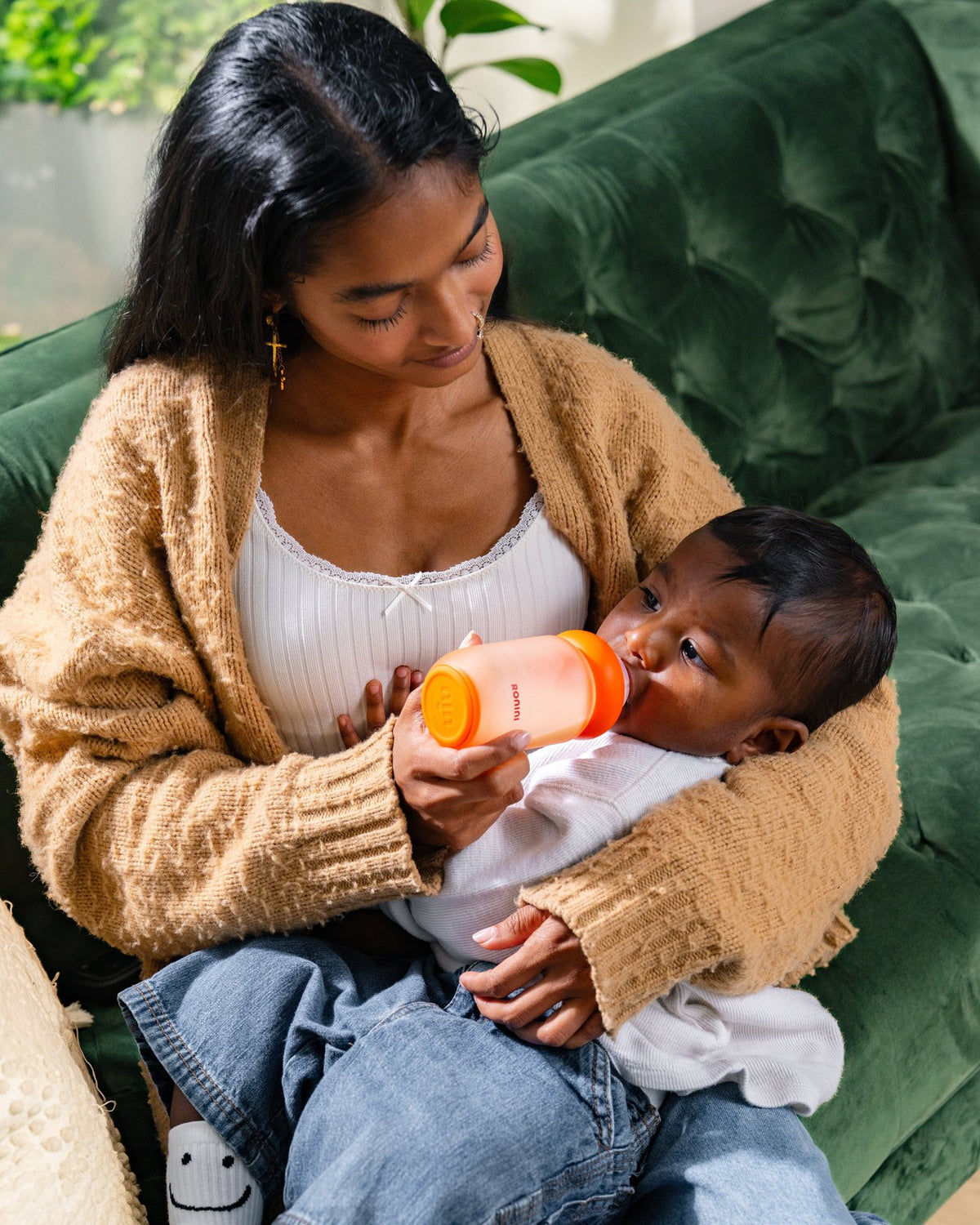
- Hand it over. Someone else offers the bottle, ideally away from where your baby usually breastfeeds. Some babies do better if the breastfeeding parent is close by but out of the room. [8]
- Go slow. Use a slow-flow nipple and hold the bottle close to horizontal, so milk only comes when your baby sucks. [5] [3] Rub the nipple gently on their upper lip and let them draw it in.
- Keep it short. Stop if your baby gets upset, or after about ten minutes, and try again later. [7] A bottle that ends in tears makes the next one harder.
- Try again, a little differently. Over the next few days, change one thing at a time. Try another time of day or another room. Then the position, or milk warmed a little.
- Then change the nipple or the vessel. Still refused after several days? The AAP suggests a different kind of nipple, or a cup. [7]
What to try, one change at a time
| Try | Why it can help |
|---|---|
| A different person | A breastfed baby may take a bottle more easily from someone other than the breastfeeding parent. [2] |
| A calmer moment | A frantic, very hungry baby is less willing to try something new. [2] |
| A slower flow | A slow-flow nipple is closer to the pace of the breast. [5] |
| Milk temperature | Milk doesn’t need to be warmed, [9] but some babies take it more readily at a temperature they’re used to. |
| A different nipple shape | No nipple is proven to work best for breastfed babies, so it comes down to your baby. [10] |
| A cup | Some babies who refuse a bottle will take milk from a cup. [7] |

What not to do
- Don’t wait until your baby is starving. The CDC advises introducing a bottle when your baby is calm and not too hungry or full. [2]
- Don’t force it. Pushing the nipple in, or holding on to a baby who’s struggling, makes bottles feel worse. WIC’s advice is not to force your baby to finish a bottle. [1]
- Don’t cut or enlarge the nipple hole to speed things up. Milk flows too fast and your baby can choke. [11]
- Don’t change everything at once. Swap the bottle, the nipple, the person and the time on the same day, and you won’t know which one worked.
When to call your pediatrician
The AAP says to call your pediatrician right away if your baby has fewer than six wet diapers a day, a dry mouth, fewer tears or a sunken soft spot. [12] Call too if your baby refuses feeds at the breast as well as the bottle, or isn’t gaining weight.
A baby who won’t take the bottle while you’re apart may drink less until you’re back together. Keep an eye on the total they take.
If the bottle is still refused after a couple of weeks, or feeding is hard in other ways, a lactation consultant (IBCLC) or a pediatric feeding specialist is worth seeing.
Where our nipples fit
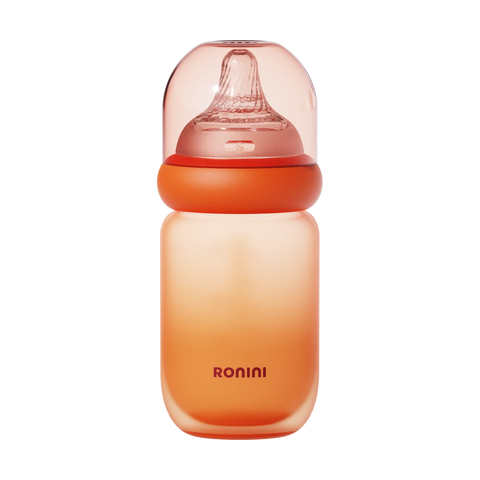
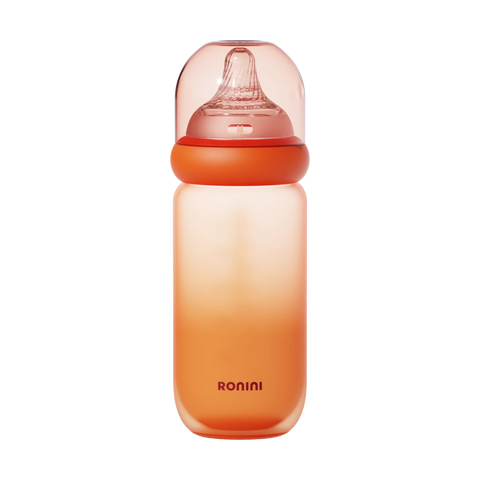
For a breastfed baby starting bottles, we suggest our two slowest flows: Drop, the slowest, and Sip. The Ronini nipple is food-grade silicone and was designed in consultation with an IBCLC.
No bottle or nipple guarantees a baby will take it. That includes ours. The steps above matter more than the brand.
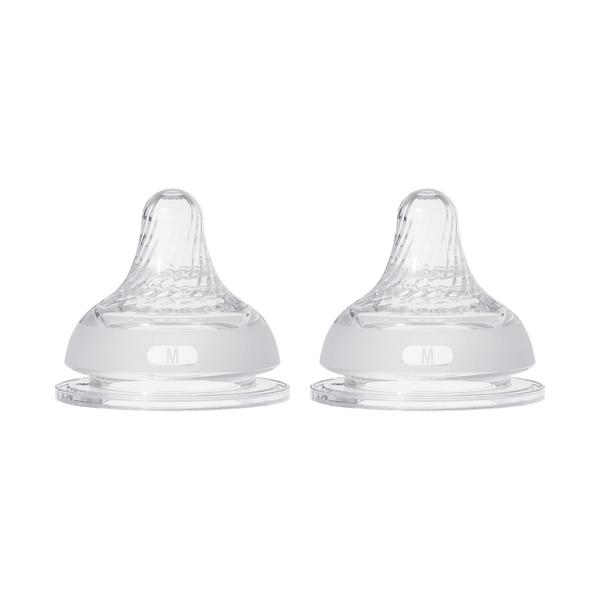
Accessories
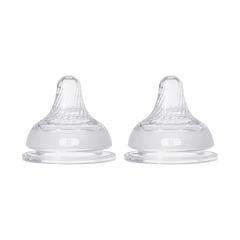
Food-grade silicone nipples in four flows named by pace: Drop, Sip, Stream and Rapid. Two nipples per pack. All four flows fit both Ronini...
$10
Shop nowDisclosure This guide is published by Ronini, and The Nipple is our product. The advice comes from the CDC, AAP, NHS, USDA WIC and La Leche League and applies to any bottle.
Frequently asked questions
Why is my baby suddenly refusing the bottle?
A baby who took bottles before can start refusing them after a change: a new nipple, or a worn one that feeds differently, teething, a cold, a stretch of breastfeeding only. Go back to short, calm tries with someone else offering, and check the nipple for wear.
How long does bottle refusal last?
There’s no set time. WIC notes a baby may take several days to adjust to a bottle, which is why starting a week or two early gives you room.
What age should I introduce a bottle to a breastfed baby?
Advice varies. La Leche League mentions waiting at least 4 weeks and the NHS 6 to 8, so breastfeeding is going well first. If you’re returning to work, start practicing a week or two before.
What bottle is best for a breastfed baby?
None has been shown to work best. A 2025 review of bottles marketed as breast-like found almost no good evidence for those claims. A slow flow and paced feeding matter more than the brand.
Should I let my baby get really hungry so they take the bottle?
No. A very hungry baby is more likely to get upset and refuse. Offer it when your baby is calm and only a little hungry.
Can a baby who refuses bottles drink from a cup?
Some can, and the AAP suggests trying a cup if a baby keeps refusing the bottle. Ask your pediatrician or a lactation consultant to show you how to cup feed safely.
References
Sources & references
- [1] USDA WIC Breastfeeding Support. Using Bottles with a Breastfed Baby.
- [2] Centers for Disease Control and Prevention. About Feeding From a Bottle. March 2026.
- [3] La Leche League International. Nipple Confusion.
- [4] Zimmerman E, Thompson K. Clarifying nipple confusion. Journal of Perinatology. 2015.
- [5] NHS Best Start in Life. Introduction to mixed feeding. February 2026.
- [6] Centers for Disease Control and Prevention. 5 Tips for Returning to Work and Breastfeeding. August 2026.
- [7] American Academy of Pediatrics, HealthyChildren.org. Introducing the Bottle. 2009.
- [8] La Leche League International. Introducing a Bottle to a Breastfed Baby. 2018.
- [9] Centers for Disease Control and Prevention. Breast Milk Storage and Preparation. August 2026.
- [10] Maxwell C, Self A, Bould H. A Descriptive Investigation of Infant Feeding Bottles Marketed in the UK Designed to Replicate Breastfeeding and the Evidence That Underpins Them. Maternal and Child Nutrition. 2025.
- [11] USDA WIC. Infant Nutrition and Feeding Guide. 2019.
- [12] American Academy of Pediatrics, HealthyChildren.org. Signs of Dehydration in Infants and Children. September 2019.
General information, not medical advice. Your pediatrician knows your baby best. Last reviewed October 11, 2026.
Feeding notes from Ronini
Practical feeding tips, new products, and news from us.
Sign up for Ronini emails. Unsubscribe anytime. Read our Privacy Policy.
Further reading
Explore The Ronini Journal Bottle Feeding
 Glass Bottles
 Glass Bottles


