
Overview
The best material is the one that fits how you feed. Glass gives you a clear, rigid bottle. Plastic keeps things light. Silicone offers a soft grip. Then there’s the rest of the bottle: the nipple, the parts you’ll clean, and how it feels in your hand.
Glass Choose glass if you value a rigid, transparent and odor resistant bottle and are comfortable with extra weight and breakage precautions.
Plastic Choose plastic if low weight, drop resistance, price and childcare acceptance matter most. Inspect wear and avoid microwaving food or formula in plastic when possible. [1]
Silicone Choose silicone if you want a soft, grippy and shatter resistant body. Check the exact construction and product specific testing instead of relying on the words food grade alone.

Comparison at a glance
The table compares common characteristics of the bottle body. Individual products may differ, so the manufacturer's current instructions remain the controlling source for care and temperature limits.
|
Decision factor |
Glass |
Plastic |
Silicone body |
|---|---|---|---|
|
Everyday weight |
Heaviest |
Lightest |
Light |
|
Breakage |
Can break |
Drop resistant |
Shatter resistant |
|
Odor and staining |
Usually low retention |
May cloud or retain odor with wear |
May retain scented detergent odor |
|
Volume visibility |
Rigid and usually clear |
Rigid and clear or translucent |
Flexible walls may affect level reading |
|
Care |
Follow thermal shock guidance |
Avoid unapproved heat and inspect wear |
Check limits for the complete assembly |
|
Best fit |
Home use and clear inspection |
Travel daycare and light handling |
Grip and low breakage concern |
|
Main trade off |
Weight and breakage |
Wear and polymer questions |
Flexibility and product specific quality |
Glass, plastic and silicone in detail
Glass baby bottles
Glass offers a rigid, nonporous body that makes residue, fill levels and damage easy to see. It generally resists odor and discoloration better than plastic or silicone. Glass is heavier and can break. The American Academy of Pediatrics consumer guidance notes the injury risk if a glass bottle breaks. [2]
A removable silicone sleeve can improve grip and add some cushioning. A permanently molded exterior can reduce sleeve movement and gaps. Neither construction makes glass unbreakable. Inspect the glass before every use and discard any chipped or cracked bottle.
Plastic baby bottles
Plastic performs well when weight, price and drop resistance determine the choice. In the United States, FDA regulations no longer provide for BPA based polycarbonate resins in baby bottles because those uses were abandoned. FDA also states that its review supports the safety of currently authorized BPA uses. [3]
The label BPA free does not describe every other property of a bottle. Check the polymer, condition and care instructions. The AAP recommends avoiding microwaving food or beverages, including formula, in plastic when possible. Replace a bottle that is deeply scratched, warped, sticky, cracked or no longer assembles securely. [1]
Silicone baby bottles
Silicone bodied bottles are soft, quiet when dropped and easy to grip. Flexible walls may support controlled squeezing, but they can also make the fill line harder to read or move milk when pressed. Strongly scented detergent may leave an odor, so follow the manufacturer's cleaning instructions.
Food grade silicone is not a complete product specification. United States food contact rules include requirements for rubber articles intended for repeated use, but the finished product, formulation and intended conditions still matter. Look for named materials, traceable testing and clear use limits. [4]
Evidence on microplastics and heat
A 2020 Nature Food laboratory study found that polypropylene infant feeding bottles released microplastics under specific preparation conditions. Temperature and sterilization procedures affected measured release. [5]
The study demonstrated exposure potential. It did not establish that bottle use causes a specific health outcome in infants. The World Health Organization evidence review identifies continuing uncertainty and research needs around human exposure to microplastics. [6]
Do not change formula preparation temperatures based on a social post or a bottle material claim. The CDC advises caregivers to follow the formula label and gives additional hot water precautions for infants younger than two months, premature infants and infants with weakened immune systems because powdered formula is not sterile. [7]
If formula preparation guidance conflicts with a bottle's care limits, ask a pediatric clinician and use a compatible preparation container.
Five-part decision path
- Start with the nonnegotiable Daycare policy, caregiver hand strength, breakage concerns, travel frequency or cleaning time may eliminate choices before material preference does.
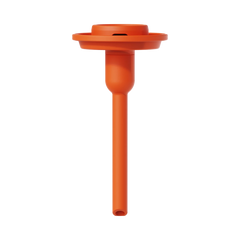
- Map the full milk path List the body, nipple, collar, vent, straw and valve materials. Do not stop at the bottle body.
- Count cleaning steps More components create more surfaces to disassemble, wash, rinse, dry and reassemble correctly.
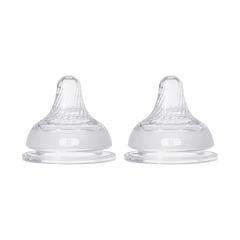
- Choose nipple flow by feeding behavior Coughing, leaking milk, very long feeds, nipple collapse or frustration can indicate a mismatch. Age labels are a starting point rather than a deadline.
- Start with the setup you’ll use most. Think about feeding, cleaning and who will use the bottle before adding more.

Wrapped glass bottle construction
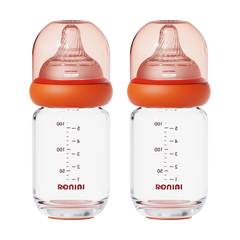
A wrapped glass bottle combines a glass vessel with an exterior silicone layer. The design aims to preserve a glass milk contact body while adding grip and cushioning. The key construction question is whether the exterior is a removable sleeve or permanently molded onto the glass.
Ronini Wrapped Glass Bottle
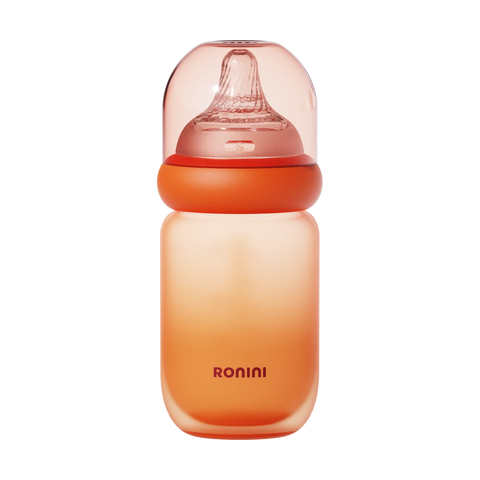
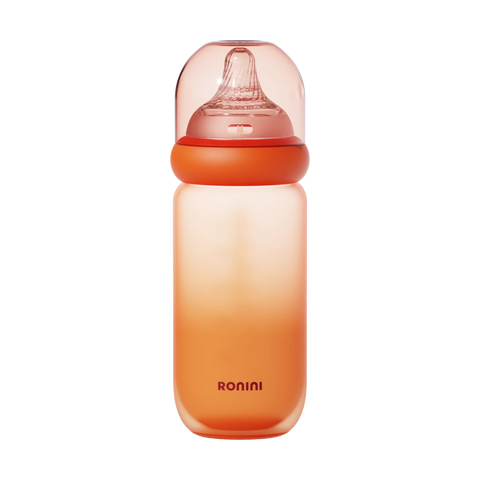
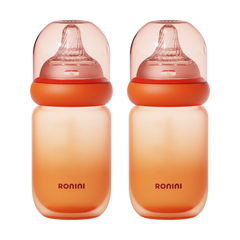
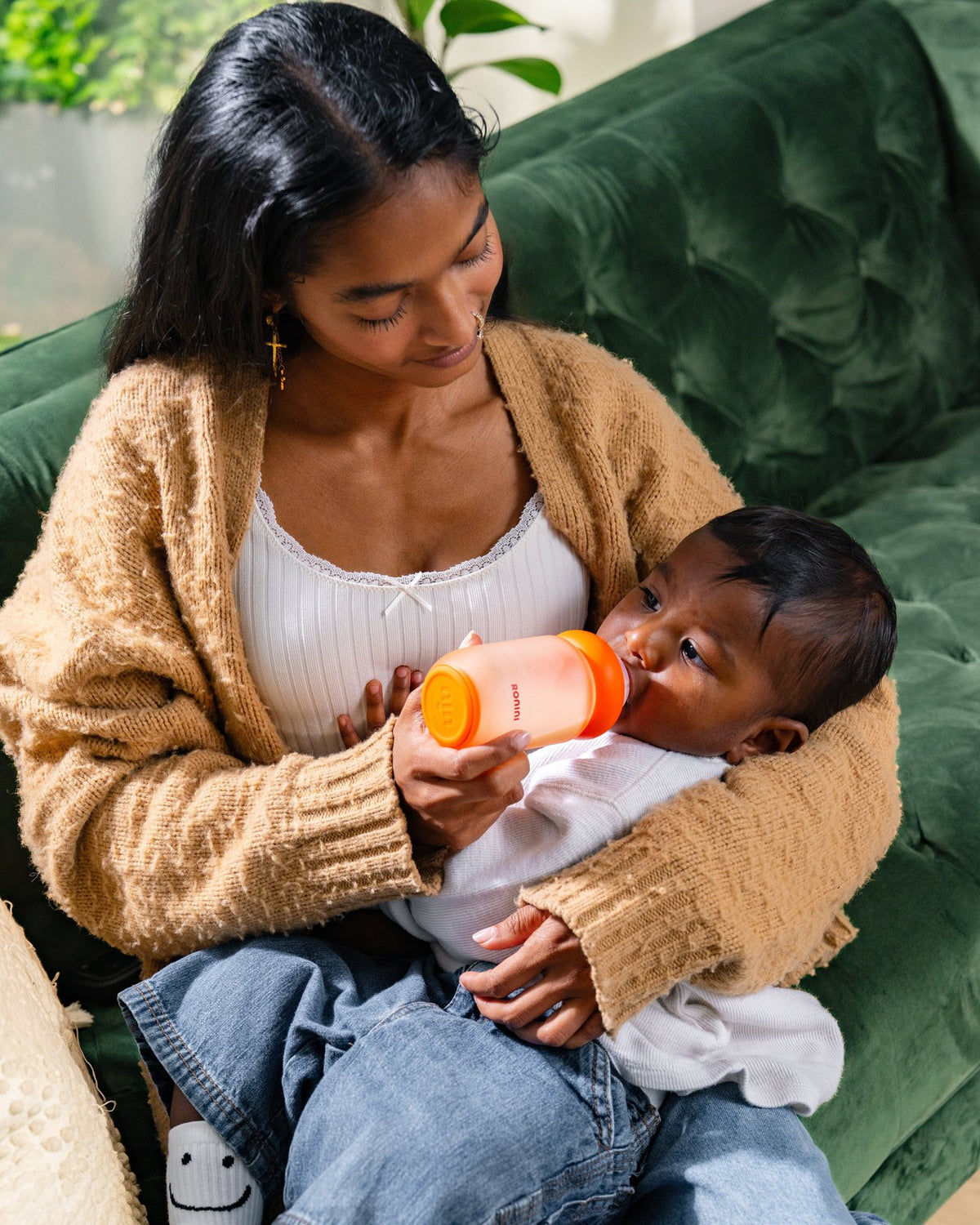
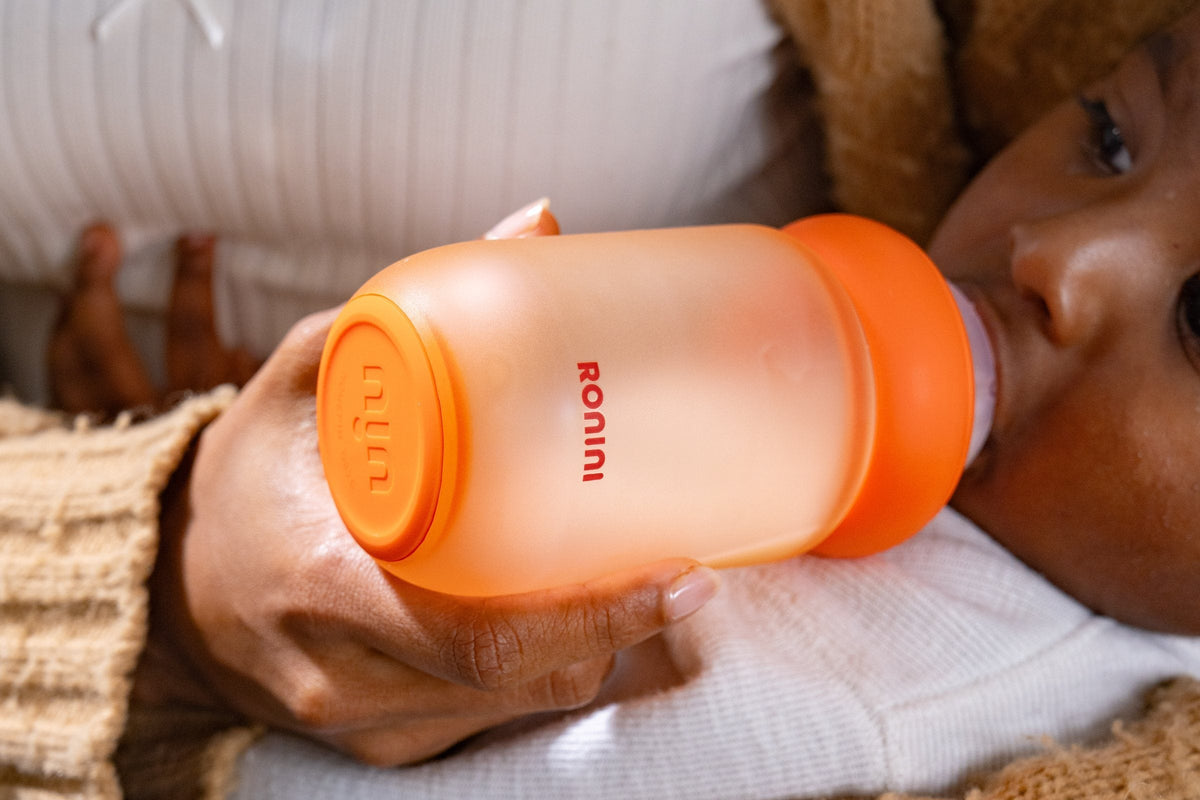
Our Wrapped Glass Bottle pairs borosilicate glass with silicone shaped directly around the outside. The wrap stays in place, with extra thickness at the base and no separate sleeve to wash. Both sizes use the same four-flow nipple system.
See the independent test results and the components covered in the report. [8]
Meet the Wrapped Glass Bottle · How we choose materials

Disclosure This guide is published by Ronini and the Ronini bottle is our product. Competing products are included to make the comparison useful. Product descriptions come from official manufacturer pages reviewed for this guide. Availability and specifications can change.
Product recommendations
The recommendations match products to use cases. They are not a universal ranking. Prices are omitted because they change frequently. Verify the model, materials and current instructions before purchase.
|
Product |
Body |
Best for |
Main trade off |
|---|---|---|---|
|
Borosilicate glass with permanent silicone exterior |
Glass plus integrated grip |
Heavier than plastic and still breakable |
|
|
Borosilicate glass |
Mainstream bare glass option |
Weight breakage and model verification |
|
|
Glass with removable vent system |
Vented glass format |
More parts to clean and sleeve may be separate |
|
|
Polypropylene body |
Travel and childcare |
Inspect wear clouding and scratches |
|
|
Silicone body |
Soft grip and wide opening |
Flexible walls and different warming feel |
|
|
Collapsible silicone body |
Soft body with stable base |
Squeeze pressure and assembly fit |
Frequently asked questions
What is the safest baby bottle material
There is no universally safest material. Choose a compliant bottle that can be cleaned, inspected and used correctly, then consider weight, breakage, milk contact parts and nipple fit.
Are glass baby bottles dangerous if they break
Glass can break and cause injury. Inspect it before each use, follow the manufacturer's instructions, never use a chipped or cracked bottle and check whether the childcare provider allows glass.
Do silicone baby bottles leach chemicals
Silicone is a family of materials rather than a guarantee. Product formulation, manufacturing, use conditions and testing matter. Review the exact milk contact materials and product specific compliance documentation.
Are plastic baby bottles BPA free
Major manufacturers commonly label baby bottles BPA free, and United States regulations no longer provide for BPA based polycarbonate resins in baby bottles. The label does not describe every other material property.
Do plastic baby bottles release microplastics
A laboratory study reported release from polypropylene feeding bottles under specific preparation conditions. Temperature affected release. The study did not establish infant health effects.
Can I microwave a baby bottle
Do not microwave infant formula. Microwaving can heat unevenly and create hot spots. Follow CDC and formula label instructions together with the bottle maker's approved warming method.
Can a baby take a glass bottle to daycare
Policies vary. Some providers prohibit glass while others allow it with a protective exterior or labeling. Ask before buying a set.
How often should bottles and nipples be replaced
Follow the manufacturer and replace any part with cracks, chips, deep scratches, clouding, tears, swelling, stickiness, weakened markings or loss of fit. Nipples usually wear sooner than rigid bodies.
Does material determine whether a baby accepts the bottle
Usually not by itself. Nipple shape, flow, venting, milk temperature, caregiver technique and feeding skills can matter more. Seek clinical help for coughing, choking, pain, poor weight gain or persistent difficulty.
References
Sources & references
- [1] American Academy of Pediatrics Food Additives and Child Health
- [2] HealthyChildren.org Baby Bottles and Bisphenol A
- [3]United States Food and Drug Administration Bisphenol A Use in Food Contact Application
- [4] Electronic Code of Federal Regulations 21 CFR 177.2600 Rubber Articles Intended for Repeated Use
- [5] Li D and colleagues Microplastic Release from Polypropylene Feeding Bottles Nature Food 2020
- [6] World Health Organization Dietary and Inhalation Exposure to Nano and Microplastic Particles 2022
- [7] United States Centers for Disease Control and Prevention Infant Formula Preparation and Storage
- [8] Independent lab test report · August 28, 2026
- [9] Philips Avent Glass Natural Response Baby Bottle Official Product Page
- [10] Dr Browns Glass Bottles Official Collection
- [11] Philips Avent Natural Response Plastic Baby Bottle Official Product Page
- [12] Comotomo Gen 2 Baby Bottle Official Product Page
- [13] Dr Browns Silicone Baby Bottle Official Product Page
Feeding notes from Ronini
Practical feeding tips, new products, and news from us.
Sign up for Ronini emails. Unsubscribe anytime. Read our Privacy Policy.
Further reading
Explore The Ronini Journal Gifts
Gifts Bottle Feeding
 Bottle Feeding


