
Overview
"Non-toxic" isn't a defined term for baby products. No agency signs off on it before it goes on a box. What you can check are the labels and laws underneath it, and that's what this list is built from.
Know the legal floor Every children's product sold in the US has to meet limits for lead and certain phthalates, and has to be tested by a CPSC-accepted lab. [1] That's the minimum. A brand bragging about it is bragging about being legal.
Spend your attention close to the baby The mattress they sleep on for most of the day. The sheets and clothes on their skin. Anything that ends up in their mouth, which in a few months is everything.
Ask for specifics The FTC treats "non-toxic" as a promise that a product is safe for people and for the environment, and expects evidence for both. [2] A good brand can name the test, the standard and the part it covers. A vague answer is an answer too.

What the labels actually check
| Label | What it checks | What it doesn't |
|---|---|---|
| Children's Product Certificate | Lead (100 ppm, or 90 ppm in paint) and eight phthalates, tested by an accepted lab. [1] [3] | It's the legal minimum for every children's product, not a "non-toxic" mark. |
| OEKO-TEX Standard 100 | The finished fabric, tested for harmful substances down to the thread and buttons. Class 1 is the strictest, for babies and children up to 3. [4] | It isn't organic, and it says nothing about farming or working conditions. |
| GOTS | Organic fiber (95% or more to say "organic") and how the fabric is processed, from spinning to sewing. [5] | Textiles only. |
| GREENGUARD Gold | Chemical emissions into the air from furniture and mattresses. [6] | Emissions only, not what's inside the material. |
| CertiPUR-US | Foam made without formaldehyde, regulated phthalates, lead or mercury, with low emissions. [7] | The foam, not the whole mattress. |
| EWG Verified | Full ingredient disclosure, fragrance ingredients included, and nothing from EWG's unacceptable list. [8] | Only some product types. Air fresheners and laundry pods can't get it at all. |
Sleep: start with the mattress
If you only upgrade one thing, make it the crib mattress. Federal rules require crib mattresses to pass an open-flame test. [9] The useful question is how a brand passes it. A barrier fabric or wool, or added flame-retardant chemicals?
California went further. Since 2020, every part of a crib mattress, and of other infant sleep products, has to stay under 1,000 ppm of covered flame retardants. [10]
CertiPUR-US tells you about the foam. GREENGUARD Gold tells you what the finished mattress gives off. An organic cover will carry GOTS.
Then keep the crib bare: a fitted sheet, nothing else, baby on their back. [11] No label on this page matters more than that.
Car seats: ask about the fabric
Every car seat has to pass a federal burn-rate test. [12] The rule sets how slowly the material burns, not how the brand gets there. Some seats use chemical flame retardants. Others use wool or fabrics that resist flame on their own. California's flame-retardant limit doesn't cover car seats, because they fall under federal vehicle rules. [10]
A few brands say they've dropped added flame retardants. Clek says its current fabrics are flame-retardant free, and its merino blend, Mammoth, has none added at all. [13] Nuna says its whole car seat line uses FR-free materials. [14] Chicco's claim covers its ClearTex models. [15] Check the exact fabric before you register for one. Within a single model, it can differ.
And a pricier seat isn't a safer one in the crash-test sense. They all meet the same federal standard. [16]
Clothes and sheets
OEKO-TEX Standard 100 tests the finished fabric. GOTS means organic. They're different labels, and a sleeper can carry one, both or neither. [4] [5]
Pajamas have a quirk. Children's sleepwear has to pass a flame test unless it's snug-fitting, or it's an infant garment sized 9 months or smaller. Snug-fit pajamas carry a tag that reads "Wear snug-fitting, not flame resistant." [17] That tag doesn't promise the fabric is untreated. It does tell you it didn't need to be.
Bath and skin
Go fragrance-free. The AAP's advice here is short: fragrance-free lotion, a simple wash with few ingredients, fragrance-free wipes or plain water, and no talc powder. [18]
Part of the reason is the label itself. Under US rules, a whole fragrance blend can be listed as one word. [19] You can't check what you can't see.
Anything that goes in the mouth
Pacifiers, teethers, cups and spoons for babies all count as child care articles, so the phthalate limits apply to them. [20] The pacifier rule itself is about shape and strength: a shield that can't fit in the mouth, no cords, and a strangulation warning on the package. [21]
The FDA warns against teething necklaces, amber ones included, and against numbing gels with benzocaine or lidocaine. For sore gums it points to a clean finger or a firm rubber teether that isn't liquid-filled or frozen. [22]
For dishes, the AAP suggests not microwaving food or milk in plastic, keeping plastics out of the dishwasher where you can, and choosing glass or stainless steel when possible. [23] Melamine plates are fine for serving, but the FDA says not to heat food on them in the microwave. [24]
Bottles have their own list, with how many to get and what you can leave off.
 Read next
The feeding section of a baby registry: a short, non-toxic list
Read next
The feeding section of a baby registry: a short, non-toxic list
Toys and cleaning
Toys follow the same lead and phthalate limits, plus a toy standard that caps other heavy metals in anything a child could mouth. [25] Where people get caught out is gear that skips the rules: unbranded marketplace listings, and painted toys old enough to predate the paint limit.
For laundry, fragrance-free detergent is the easy win, since everything you wash ends up against their skin. EWG won't verify air fresheners or plug-ins at all, so leave those out of the nursery. [8]

Before you add anything to the registry
- Find the actual claim. "Non-toxic" or "clean" alone tells you nothing. Look for a named standard or a test.
- Check which part it covers. CertiPUR-US covers the foam. A car seat claim might cover the fabric and not the foam under it.
- Ask for results. Brands that go past the legal minimum usually publish them. If one won't share, take that into account.
- Look at the date. Formulas and suppliers change. A recent report is worth more than an old one.
- Get the basics right first. A bare crib and a properly installed car seat do more for a baby than any label.
Where we fit
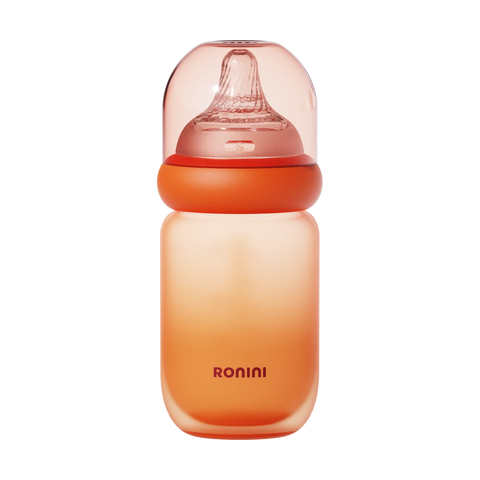
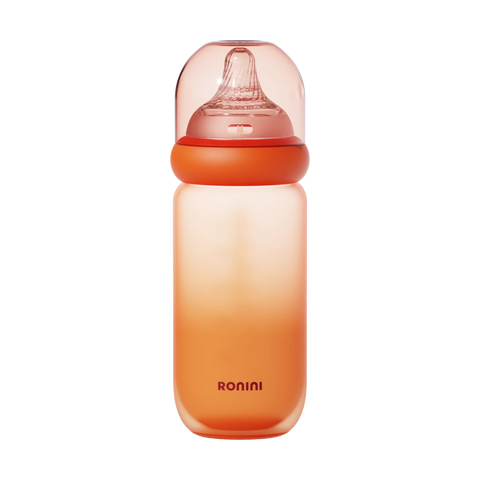
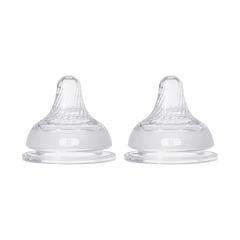
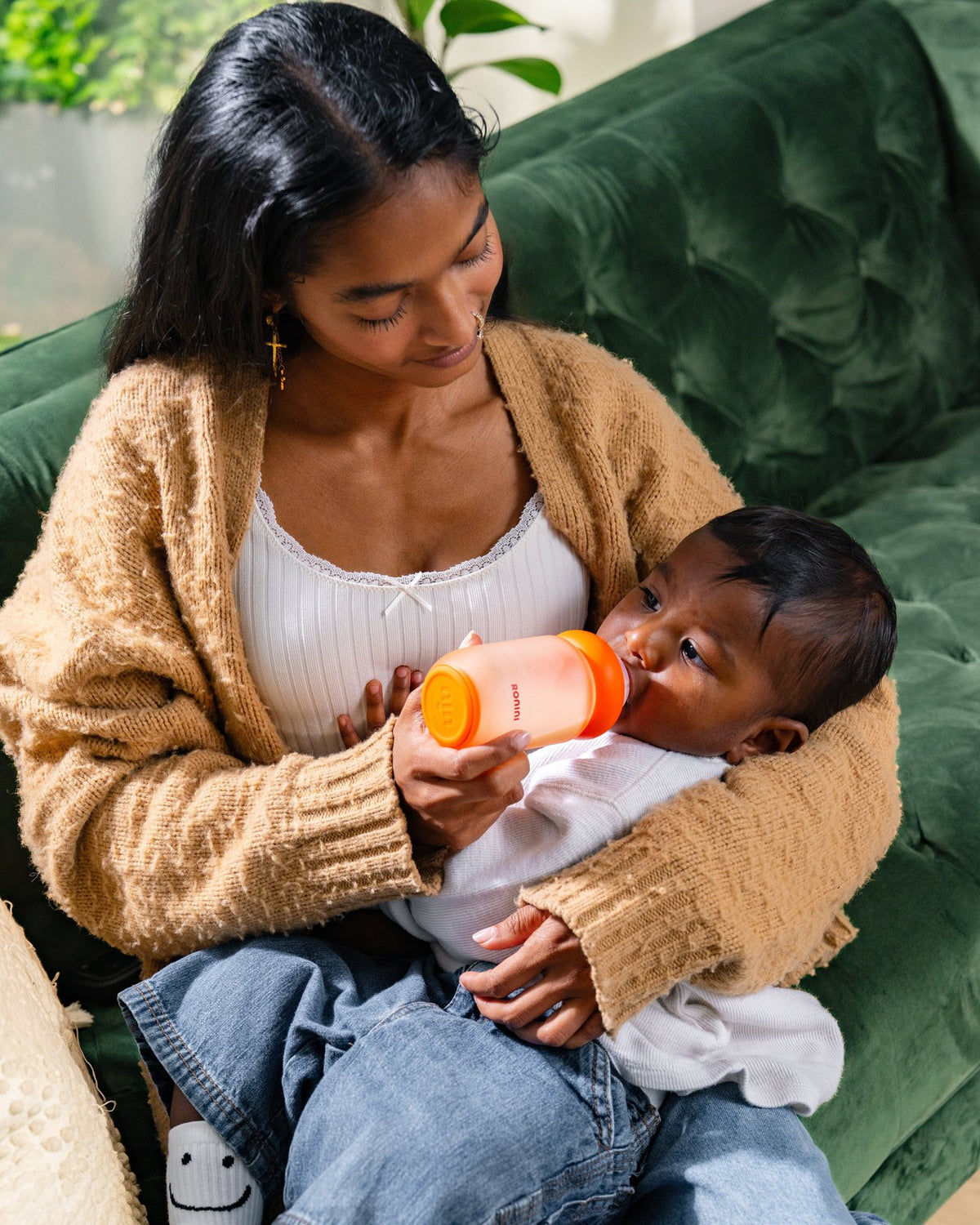
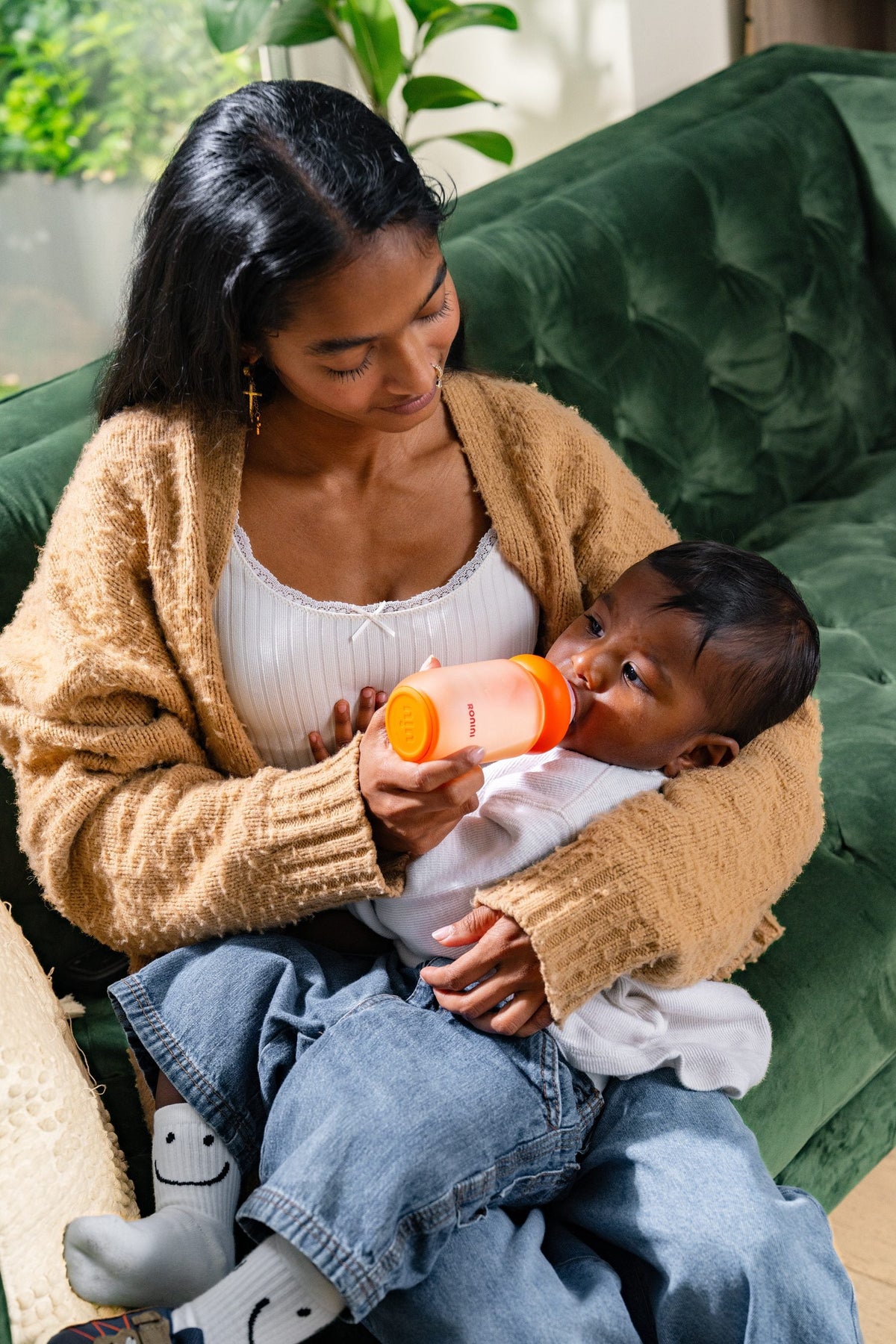
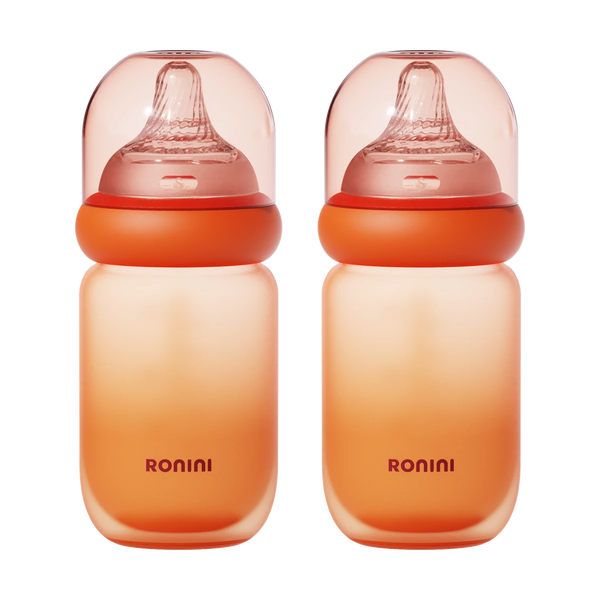
We make glass baby bottles, so feeding is the one category here where we have a stake. Everything that touches the milk in a Ronini bottle is borosilicate glass or food-grade silicone. The cap and collar are plastic, and they don't touch the milk.
We had every part tested by an independent lab for lead, cadmium, phthalates, BPA, BPS and BPF, and published the results part by part.
Bottles
A borosilicate glass baby bottle with a bonded silicone exterior for added grip and everyday impact protection.
From $60
Shop nowDisclosure This guide is published by Ronini, and we sell glass baby bottles. The brands named in the car seat section are there because they publish a claim you can check. Nobody paid to be included.
Frequently asked questions
What does non-toxic mean on baby products?
Legally, nothing specific. The FTC says a brand that uses it needs evidence the product is safe for people and the environment. In practice, look past the word to the standard or test behind it.
Is OEKO-TEX the same as organic?
No. OEKO-TEX Standard 100 tests the finished fabric for harmful substances. GOTS is the organic standard. Some products carry both.
Do car seats have flame retardants?
Many do. Every seat has to pass a federal burn test, and chemicals are one way to pass it. Some brands use wool or naturally flame-resistant fabrics instead and say so on their sites. Check the specific fabric, not just the model.
What should a non-toxic baby registry include?
A crib mattress with a clear answer on flame retardants, OEKO-TEX or GOTS sheets and sleepers, fragrance-free bath products and detergent, and feeding gear with published lab results. Keep the rest short.
Are glass baby bottles non-toxic?
Borosilicate glass is one of the simpler materials to check. Still ask for lab results on every part, the nipple included, and on any sleeve or coating.
References
Sources & references
- [1] U.S. Consumer Product Safety Commission. Total Lead Content FAQ.
- [2] 16 CFR 260.10, Non-toxic claims (FTC Green Guides). Legal Information Institute, Cornell Law School.
- [3] 16 CFR 1307.3, Prohibition of children's toys and child care articles containing specified phthalates. Legal Information Institute.
- [4] OEKO-TEX. OEKO-TEX Standard 100.
- [5] Global Organic Textile Standard. Labelling.
- [6] UL Solutions. UL GREENGUARD Certification.
- [7] CertiPUR-US.
- [8] Environmental Working Group. EWG Verified licensing criteria: cleaning products. October 2024.
- [9] 16 CFR 1633.2, Mattress flammability (open flame): definitions. Legal Information Institute.
- [10] California Bureau of Household Goods and Services. AB 2998 frequently asked questions. October 2019.
- [11] U.S. Consumer Product Safety Commission. Safe Sleep.
- [12] 49 CFR 571.302, Flammability of interior materials (FMVSS 302). Legal Information Institute.
- [13] Clek. Our fabrics.
- [14] Nuna. FR-free materials.
- [15] Chicco USA. Non-toxic car seats.
- [16] AAA. Car seat FAQs.
- [17] 16 CFR 1615.1, Standard for the flammability of children's sleepwear: definitions. Legal Information Institute.
- [18] American Academy of Pediatrics, HealthyChildren.org. How to Choose Safer Personal Care Products. October 2024.
- [19] U.S. Food and Drug Administration. Fragrances in Cosmetics.
- [20] 16 CFR 1307.2, Definitions (child care article). Legal Information Institute.
- [21] U.S. Consumer Product Safety Commission. Pacifiers: business guidance.
- [22] U.S. Food and Drug Administration. Safely Soothing Teething Pain in Infants and Children. June 2024.
- [23] American Academy of Pediatrics, HealthyChildren.org. AAP Says Some Common Food Additives May Pose Health Risks to Children. July 2018.
- [24] U.S. Food and Drug Administration. Melamine Tableware: Questions and Answers.
- [25] U.S. Consumer Product Safety Commission. Toy Safety: business guidance.
General information, not medical advice. Your pediatrician knows your baby best. Last reviewed October 15, 2026.
Shop the story
Feeding notes from Ronini
Practical feeding tips, new products, and news from us.
Sign up for Ronini emails. Unsubscribe anytime. Read our Privacy Policy.
Further reading
Explore The Ronini Journal Gifts
Gifts Bottle Feeding
 Glass Bottles


